Range Rover's global managing director says he isn't bothered that Chinese brands are building cars that look like his. Martin Limpert told Australian outlet CarSales that imitation is "probably a bit of a badge of honor" and that Land Rover takes it as a compliment.
"If other brands copy our designs, it is a signal that within the luxury world our design seems to be inspirational," Limpert said. "What is important for us is to stay the original."
The cars he's talking about
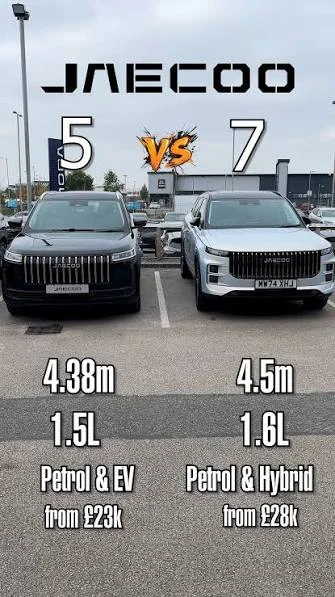
The specific irritants are the Jaecoo J5 and J7, sold by the Chinese group Chery, which British press have nicknamed Temu Range Rovers after the discount shopping app. The J7 in particular borrows heavily from the Velar and the Evoque: the flush door handles, the floating roof, the slim lights, the whole calm-slab look Land Rover spent 15 years making its own. They cost a fraction of the real thing and they're selling well in Britain.
Limpert's argument is that the original still wins on substance. Customers "want the best of the best" and will "pay the extra money" for it, he said, pointing to five decades and five generations of British design and engineering behind the badge.
This is a change of tone, and there's history
Land Rover hasn't always been this relaxed. Former chief executive Ralf Speth called the copying "very disappointing" and pushed the intellectual property argument hard, and the company took it to court.
It won, too. The Landwind X7, an Evoque lookalike, was the subject of a long fight that ended in May 2021 when the Beijing Intellectual Property Court upheld a ruling against Landwind, finding five design features copied and ordering the company to apologize, pay compensation, and stop. The court treated the Evoque's appearance as protected under China's unfair competition law.
So the company's public stance has moved from litigation to flattery in about five years. That probably says less about Land Rover's feelings and more about the size of the problem. Suing one small automaker over one model is winnable. Responding to an entire industry that has absorbed your design language is not, and complaining about it in public makes you sound rattled.
What copying actually costs
Here's the part that matters for anyone judging cars on looks. A design's value is partly scarcity of appearance. The Range Rover shape worked because it read as expensive from a hundred yards, and it read as expensive because only expensive cars looked like that.
When a $30,000 crossover borrows the proportions, the signal degrades for everyone, including the people who paid six figures for the real one. That's the actual damage, and it isn't solved by being a good sport about it. Land Rover's real answer is the one Limpert gestures at: keep moving, so the copies are always chasing.
Worth testing on the crowd. Put a Range Rover against its cheapest imitator on WhipJury and see how many people can pick the original when there's no badge to go on. If you want the broader picture on the brands doing this, start with who BYD, Nio, Zeekr, and Leapmotor actually are.
Sources:
Limpert's quotes to CarSales and the Jaecoo models: Carscoops
The Beijing Intellectual Property Court ruling against Landwind: The National Law Review
Frequently Asked Questions

Jeffrey Wiley has spent more time than he'd like to admit thinking about what makes a car look right. He writes about automotive design, car culture, and the opinions people have strong feelings about. He lives in north Georgia.