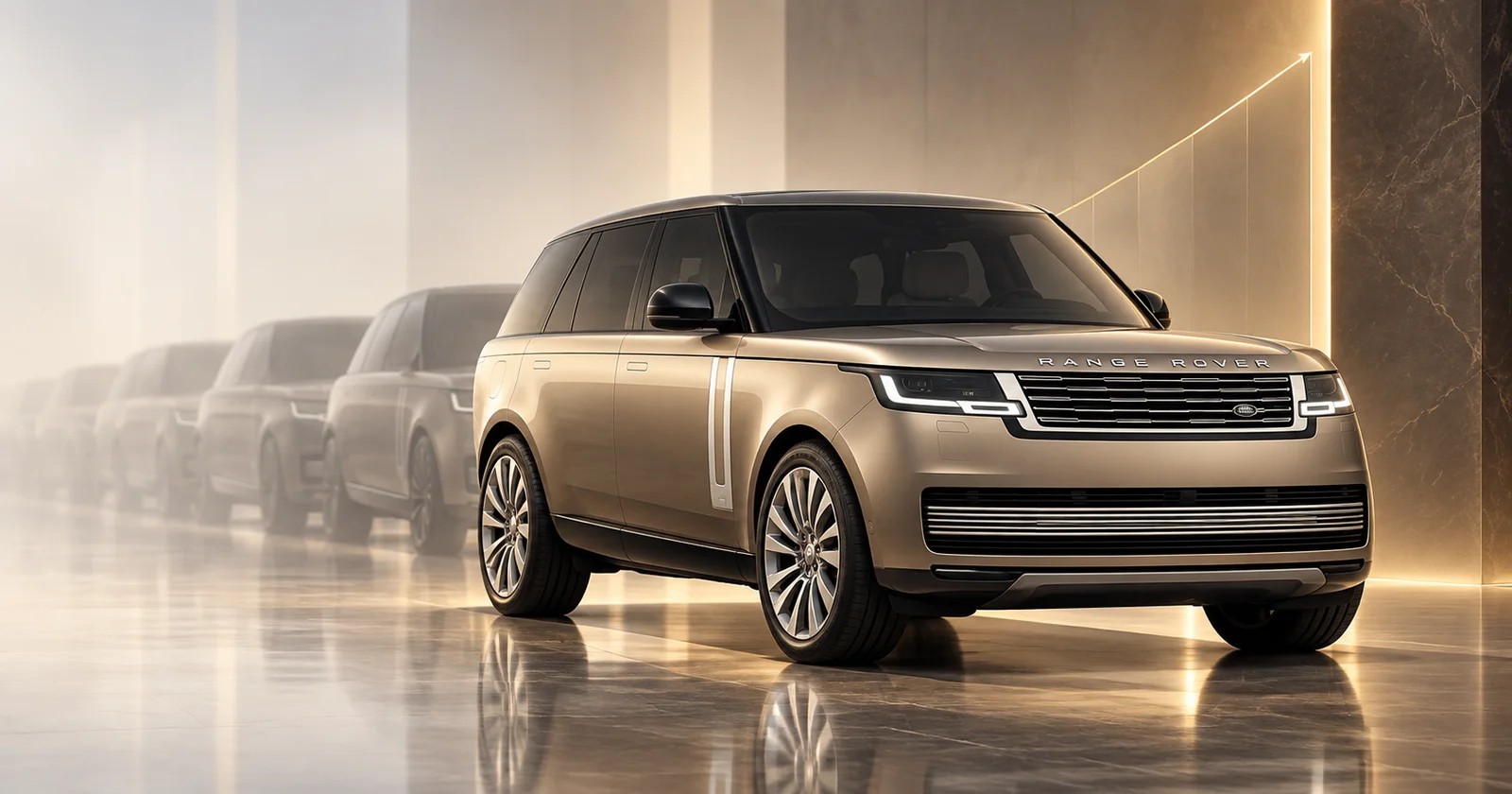
Range Rover has been unusually direct about what it's trying to do, and it isn't growth. "Our job really is not to sell lots and lots of cars," said Ryan Miller, the brand's global product and services marketing director. "Our job is to grow the brand and develop the value within the brand."
What they mean by modern luxury
Global managing director Martin Limpert frames it as leaving the car business for a different one. "That's our aspiration. To be in the modern luxury business," Limpert said, describing Range Rover as "the brand for life's leaders," though not, he was careful to add, "in an elitist way, we mean leaders in a mindset way."
In practice that means pushing further into one-to-one bespoke commissions for very wealthy buyers, the model Rolls-Royce and Bentley have run for years, where the factory will build more or less whatever a customer asks for and charge accordingly. Limpert also points at Range Rover Electric as something that "goes far beyond the vehicle."
The Evoque stays as the entry point, so this isn't Land Rover abandoning the affordable end. It's the top end going to an even higher clientele.
Why the strategy follows from the copying problem
Limpert called the copies a badge of honor, which was a generous way of describing a real problem. When a $30,000 crossover can borrow your proportions convincingly, the shape stops doing the work it used to do. A Range Rover was expensive-looking because only expensive cars looked like that, and that's no longer true.
So the answer is to move the value somewhere a copy can't follow. Anyone can imitate a silhouette. Nobody can imitate a commissioning process, a materials library, or a factory that will match paint to a customer's own sample. That's a defensible position in a way a design language isn't anymore.
It also explains the relaxed tone about the copies. If your plan depends on volume, cheap imitations are a threat. If your plan depends on 200 people spending half a million each, they're irrelevant.
There's a cost, and it's the thing this site cares about. Brands that chase bespoke money tend to get more conservative in shape, because a buyer spending that much wants a safe canvas for their own choices. The last two decades of Range Rover design were confident, clean, and genuinely influential. It'd be a shame if the reward for that turns out to be a quieter car with a longer options list.
Sources:
Miller on value over volume and the Evoque entry point: The Supercar Blog
Limpert on the modern luxury business: CarBuzz
Frequently Asked Questions

Jeffrey Wiley has spent more time than he'd like to admit thinking about what makes a car look right. He writes about automotive design, car culture, and the opinions people have strong feelings about. He lives in north Georgia.