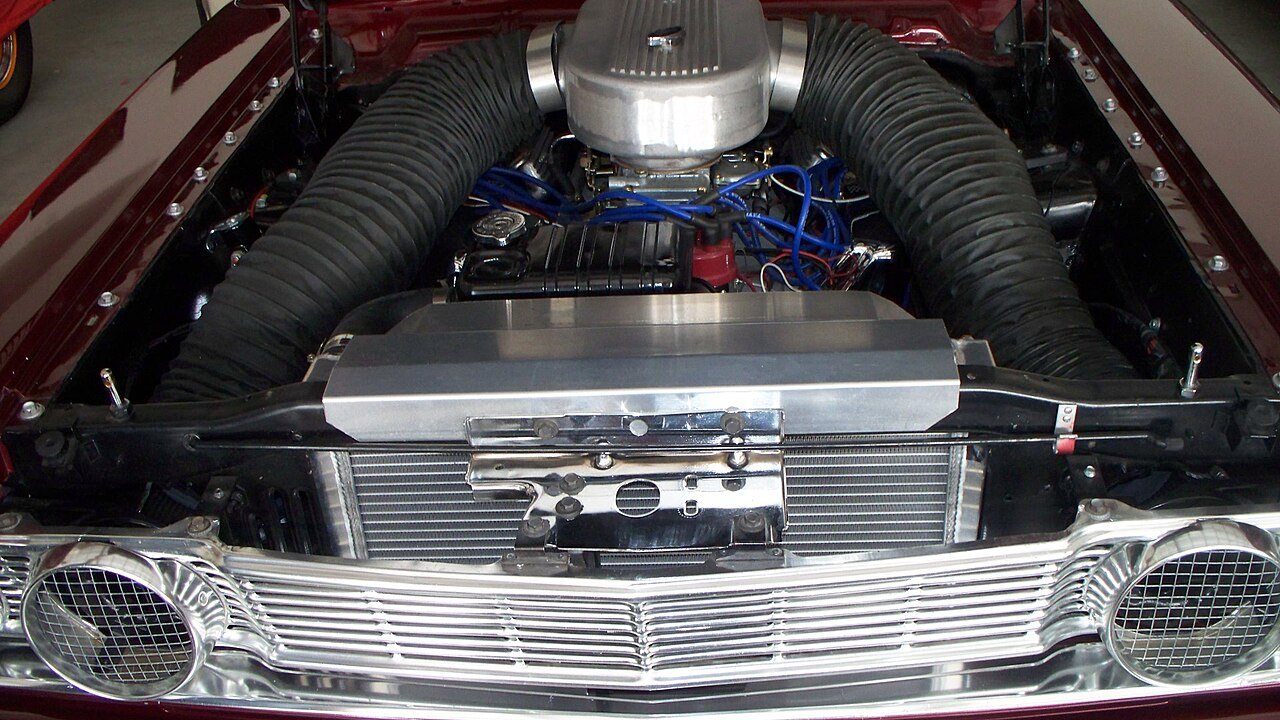
What is Ram Air?
Ram air is a hood scoop or intake system that channels outside air directly into the engine at speed, using forward motion to slightly pressurize the intake charge.
Ram air describes an intake system, usually fed by a functional hood scoop, that captures outside air moving toward the front of the car and directs it into the engine's air intake. As the vehicle accelerates, the air entering the scoop is moving faster than the air already inside the engine bay, and channeling it directly to the intake provides a denser, cooler charge than air drawn from inside a hot engine compartment. At highway speeds this can create a very small amount of positive pressure, though the effect on most street cars is modest compared to forced induction from a turbocharger or supercharger.
The term is most closely associated with Pontiac's Ram Air package, offered on the GTO, Firebird, and Trans Am from the late 1960s through the early 1970s, which used functional hood scoops feeding cooler outside air to the carburetor instead of hot underhood air. The Ram Air designation became a marketing and performance badge in its own right, with Ram Air II, III, and IV variants denoting increasingly aggressive camshafts, cylinder heads, and compression ratios paired with the functional scoop. The Trans Am's shaker hood scoop, which protruded through a cutout in the hood and vibrated visibly with the engine, became one of the most recognizable design elements of the muscle car era.
Ram air systems are distinct from purely cosmetic hood scoops, which are common on many performance-styled cars but are sealed and do not actually feed the engine. A true ram air system has an open path from the scoop to the air filter housing or throttle body, and its effectiveness depends heavily on scoop placement, duct sealing, and vehicle speed, since the pressure gain at low speed is negligible.