
What is Chassis Code?
A manufacturer's short model code, such as AE86 or E30, that identifies a specific generation and version of a car.
A chassis code, also called a model code, is a short designation a manufacturer gives a vehicle. It identifies the type of car and, to an extent, its engine, transmission, and body style. Some makers print it on the identification plate next to the VIN, and parts catalogs use it to match the right parts to the right car. A VIN identifies one individual car. A chassis code identifies a whole model version.
In Toyota's AE86, the "A" stands for the Toyota A-series engine, here the 1.6-liter 4A. "E8" marks the E80-generation Corolla, and the "6" picks out the variant within that generation. An AE85 is the same rear-wheel-drive car with the smaller 1.5-liter 3A-U engine, and an AE82 is the front-wheel-drive version with the 1.6. The AE86 is so well known by its code that Japanese fans simply call it hachi-roku, "eight-six."
Enthusiasts use chassis codes as shorthand because they are more precise than model names. Saying "E30" instead of "3 Series" points to the second generation, built from 1982 to 1994. Miata owners talk about the NA, NB, NC, and ND generations, Skyline fans about the R32, R33, and R34, and Subaru people about the GDB, the 2000s WRX STI sedan.
Related terms
Frequently asked questions
Chassis Code on the blog

The Mazda MX-5 Miata has four generations, known by chassis code: NA, NB, NC, and ND. The NA has pop-up headlights and is the lightest, the NB dropped the pop-ups, the NC grew heavy, and the ND went light again. Here's what separates each one.
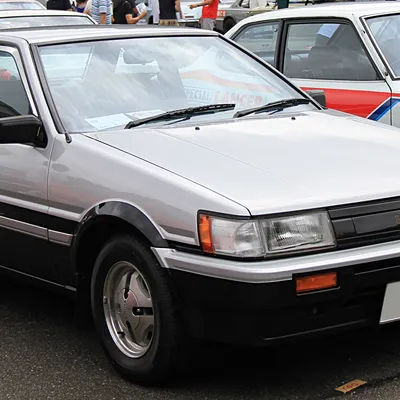
Hachi-roku is just Japanese for eight-six, the AE86 in the car's chassis code. The name stuck because the AE86 Corolla became one of the most beloved rear-drive cars ever built, and a manga turned it into a global icon.