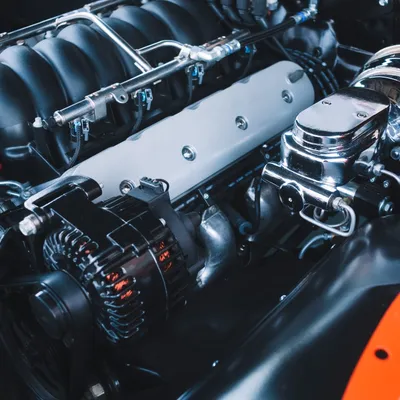
Spend any time around JDM builds and you'll hear one phrase constantly: K-swap the world. A K-swap means pulling a car's original engine and dropping in a Honda K-series four-cylinder, and it has become the single most popular engine swap on the planet. People K-swap Hondas, obviously, but also Miatas, classic minis, and basically anything they can make it fit.
So what's a K-series, and why did it eat the swap world? Here's the short version.
What the K-Series Is
Honda introduced the K-series in 2001, replacing the older B-series engines that ruled the 1990s tuner scene. It's a four-cylinder that started at 2.0 liters in the K20 and grew to 2.4 in the K24, and it runs Honda's i-VTEC system, which switches cam profiles for a mild bottom end and a screaming top end.
The K20 is the high-revving one that loves to be wrung out. The K24 is the torquier one that pulls harder down low. Plenty of builders combine them, a K24 block with a K20 head, to get the best of both, which tells you how flexible the family is.
Power comes easy. A K20 can push past 250 horsepower on bolt-ons and a tune with the stock internals still in place, and the engines take boost well when people want more. Honda originally fitted the K-series to cars like the Civic Type R, the RSX, the Accord, the CR-V, and the Acura TSX, so used units are plentiful and cheap.
Why It Beat Everything Else
Availability and documentation are the real reasons. The K-series was fitted to millions of ordinary cars, so a good used engine is easy to find and affordable, and the aftermarket built swap kits, mounts, and wiring solutions for almost every popular chassis. Better still, the swap is famously well documented, so a first-timer can follow a proven path instead of inventing one.
Then there's the engine itself. It's reliable to the point of being boring, it sounds fantastic at high rpm, and it's forgiving of mistakes in a way a lot of performance engines are not. Cheap, plentiful, strong, well documented, and it revs like a race engine. That combination is why K-swap the world stopped being a joke and became a plan.
What a K-Swap Signals
A tasteful K-swap earns instant credit in a faceoff, because it tells anyone who knows engines that the owner chose reliability and real power over the easy path. A K-swapped Miata or classic Honda reads as a proper build, not a bolt-on job.
Upload yours to WhipJury and let the crowd judge whether the rest of the car lives up to what's under the hood.
Sources:
K-series history, K20 vs K24, and why it's the go-to swap: Autoblog
K-series specs, power potential, and donor cars: CarBuzz
Frequently Asked Questions

Cam Walsh has been obsessing over cars since before he could drive one. Based out of Atlanta, Cam covers automotive design, car culture, and the eternal debate over which whips actually look the part.