What is VTEC?
Honda's Variable Valve Timing and Lift Electronic Control system, which switches between two cam profiles at a set RPM to optimize low-end torque and high-RPM power.
VTEC (Variable Valve Timing and Lift Electronic Control) is Honda's proprietary variable valve lift system, introduced in 1989 on the DOHC B16A engine in the Honda Integra XSi in Japan. The system uses two different cam lobe profiles on the intake (and sometimes exhaust) camshaft per cylinder, with a hydraulic mechanism to switch between them at a programmed RPM threshold. Below the threshold, a milder cam profile prioritizes fuel efficiency and low-RPM torque. Above it, a more aggressive high-lift profile takes over, allowing the engine to breathe more freely and produce significantly more power per liter.
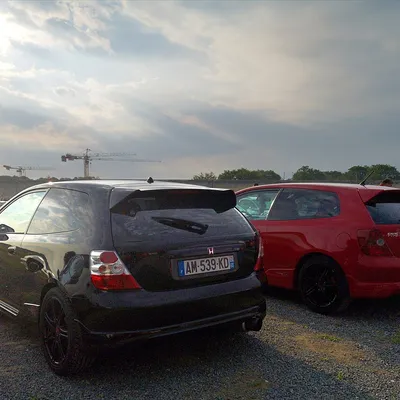
The switch-over is accompanied by a distinctive sound and a surge in power delivery, which became iconic in Honda performance culture. The phrase "VTEC just kicked in" became a defining expression in enthusiast circles. Engines like the B16B (Civic Type R, 185 horsepower from 1.6L), B18C (Integra Type R, 197 horsepower from 1.8L), and K20A (RSX Type S, Civic Type R EP3) made VTEC synonymous with high-revving, naturally aspirated performance.
Modern Honda i-VTEC adds variable timing (phasing the cam in addition to switching lift profiles). Other manufacturers adopted similar systems under different names: Toyota VVTL-i, BMW Valvetronic, Porsche VarioCam. None generated the cultural cachet of the original VTEC in the JDM and sport compact community.