Mercedes-Benz has built LED screens into the windows of an S-Class test car, including one in a rear door window that can show the car's charge level to someone walking up. The company showed the research on November 3 and said none of it is ready for production. Mercedes calls the system Intelligent Display in Glass. LED elements are laminated into the window glass and stay almost invisible when nothing is shown, "blending harmoniously into the vehicle design," the company said in its release.
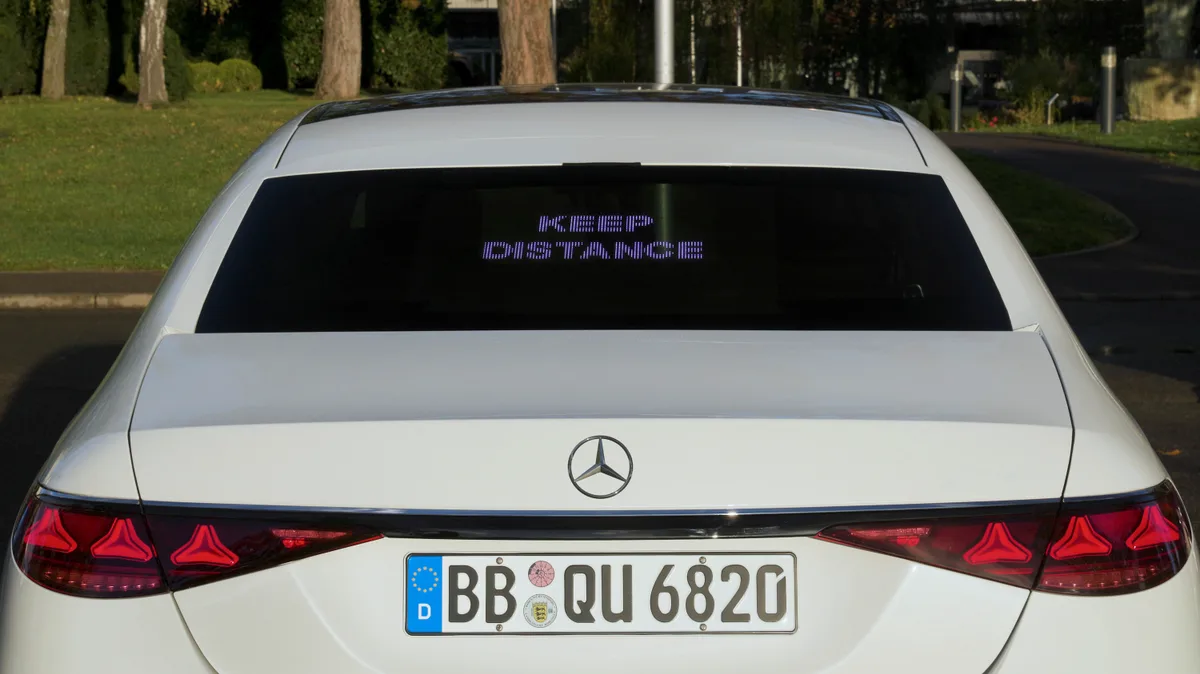
Mini LEDs suit big areas such as the rear window, where they can show brake lights, warning symbols, or traffic information to drivers behind. Micro LEDs have a higher resolution, so they suit smaller areas and animations, Mercedes said.
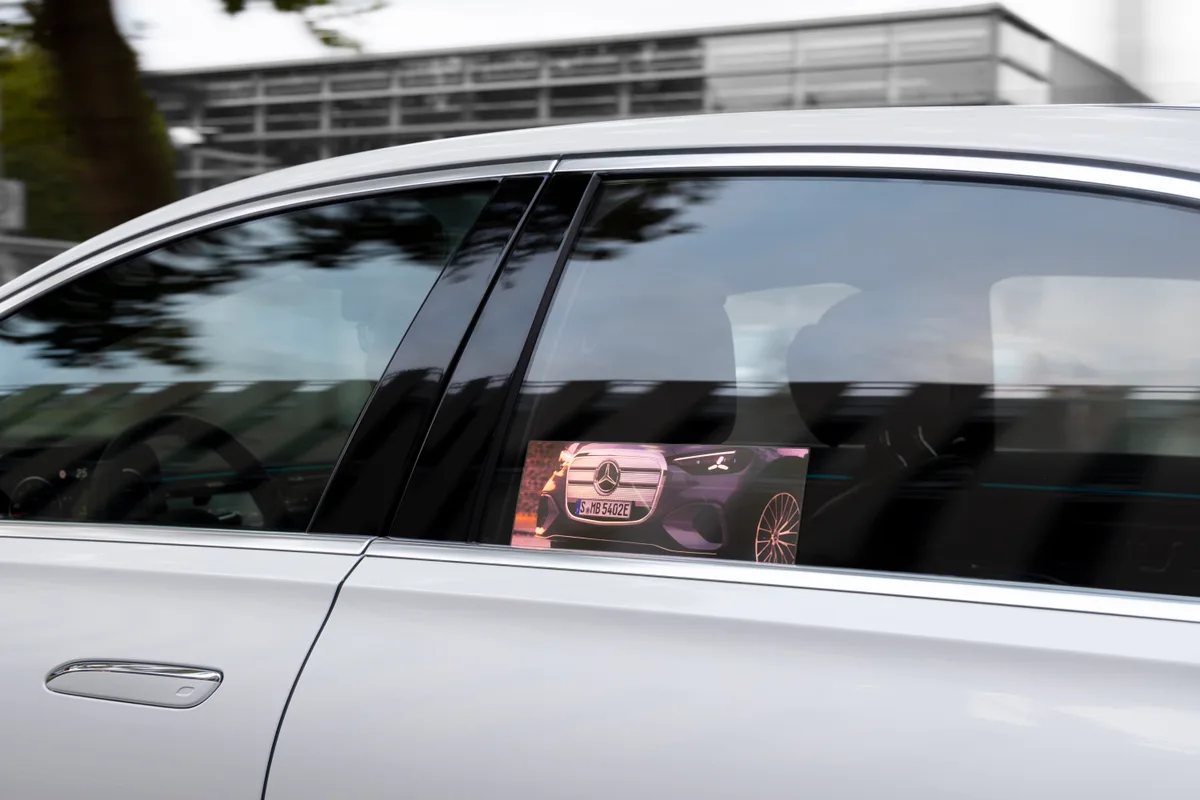
The side window display is the micro LED version. Edmunds writer Gabriel Vega Cortés saw it at the Mercedes-Benz Technology Center in Sindelfingen, Germany, built into the second-row side window of an S-Class. It cycled through images, and an engineer showed how an electric car could display its state of charge, so the owner wouldn't have to open the door or check an app.
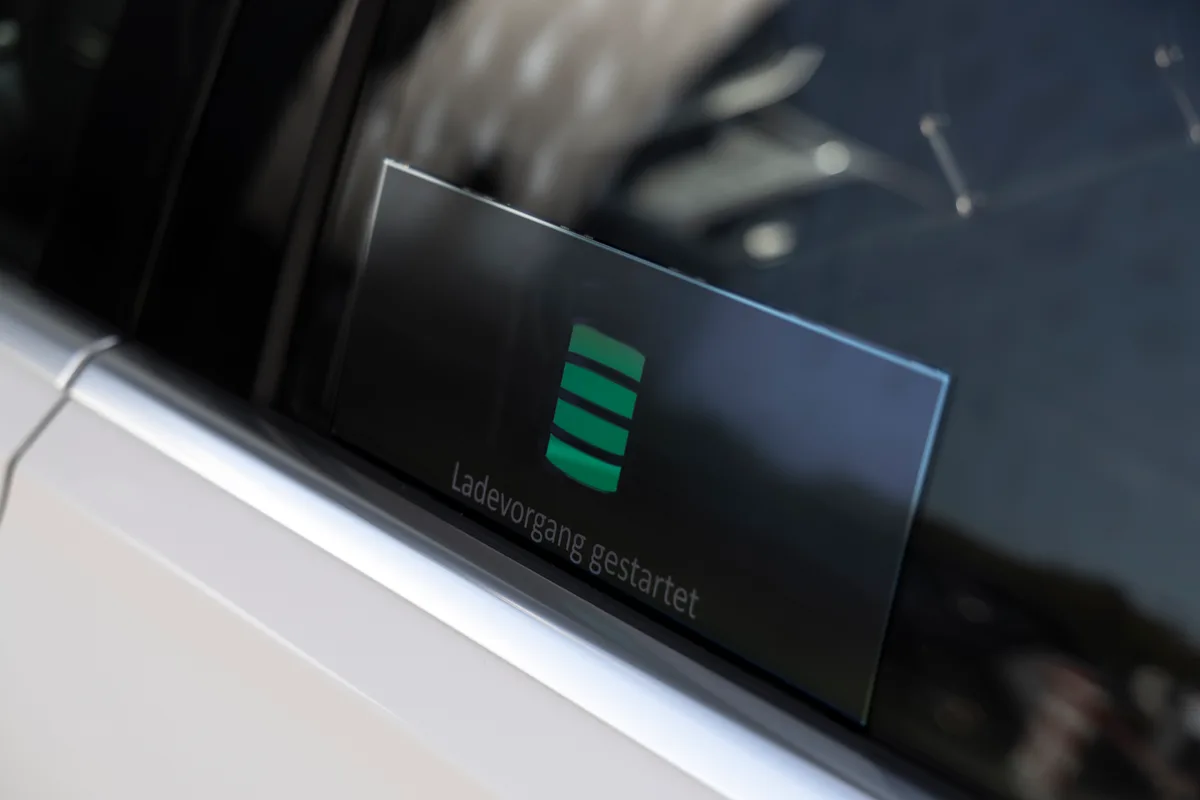
Mercedes' own photo caption lists weather, charging status, messages, and a digital parking disc as examples. A parking disc is the cardboard clock European drivers set on the dash to show when they parked.
The glass doesn't hide the screen yet. Vega Cortés reported that the rough outline of the display area stayed visible with the display switched off, and engineers said they're working to make it disappear completely. In Mercedes' press photos, the screen sits low in the rear door glass of a white sedan as a bright rectangle.
The rear window is the bigger piece of glass. Edmunds said its mini LEDs give lower-resolution but brighter images, and safety is the main use, such as warning of stopped traffic ahead. A Mercedes caption adds warnings during hard braking, near accident scenes, and while parking. Engineers also floated personalized messages, which Vega Cortés called a bad idea because of road rage.
All this comes from a brand that keeps adding glass to its dashboards. The MBUX Hyperscreen is a 56-inch curved glass panel that runs door to door and merges three screens, Mercedes-Benz USA says. The electric GLC offers a 39.1-inch full-width display with 1,000 LEDs in its backlight, InsideEVs reported. Motor1 recalled that former design chief Gorden Wagener once poked fun at BMW and Audi for not going big enough with their screens. Edmunds said Mercedes is now hearing from customers who don't want pillar-to-pillar displays. Screens already draw a lot of owner complaints, as our look at infotainment and vehicle quality found. Mercedes pitches its glass displays as surfaces that show content only when needed, without permanently changing how the car looks.
Motor1 noted that a conventional side window is already expensive to replace, and LEDs inside the glass add complexity. Audi is going another way, with the new Q7 and Q9 projecting animated turn-signal arrows onto the road.
Mercedes also showed a Holo Display that projects images onto a film in the windshield, so the driver and passenger see different things. Ida Wolf, vice president of development innovations, operations, and digitalization, said Mercedes is building "innovations that offer clear benefits in our customers' everyday lives." No model or date was given.
Would a glowing rear door make the S-Class look better or busier? Rate it on WhipJury.
Sources:
The November 3 announcement, the Intelligent Display in Glass name, laminated LEDs, near-invisibility and design wording, mini and micro LED uses, the Holo Display, and the Ida Wolf quote: Mercedes-Benz Group
Side display contents (weather, charging status, messages, digital parking disc), rear window warnings, and the not-ready-for-series-production notice, from the official image captions: Mercedes-Benz Media Netherlands
The Sindelfingen preview, the S-Class test cars, the second-row side window, micro LEDs, the state-of-charge demo, the visible outline, rear window brightness and safety use, personalized messages, and customer feedback on big screens: Edmunds
Repair costs, Wagener's comments on screen size, and Audi's projected turn signals: Motor1
Rear window brake lights and warnings for following drivers: Auto Express
The 56-inch, three-screen MBUX Hyperscreen: Mercedes-Benz USA
The electric GLC's 39.1-inch display and its 1,000-LED backlight: InsideEVs
Photos: Mercedes-Benz press images from the Mercedes-Benz Media release
Frequently Asked Questions

Jeffrey Wiley has spent more time than he'd like to admit thinking about what makes a car look right. He writes about automotive design, car culture, and the opinions people have strong feelings about. He lives in north Georgia.