Citroen 2CV
Citroen
Citroen 2CV: The People's Car of France
The 2CV proved that a car stripped down to its bare essentials could still become one of the most beloved vehicles in automotive history.
Conceived before World War II and finally launched in 1948, the 2CV was designed to get French farmers off horse-drawn carts and onto four wheels as cheaply as possible. The brief was famously simple, a car that could carry a basket of eggs across a plowed field without breaking a single one, which drove Citroen toward soft, long-travel suspension and an ultra-lightweight body.
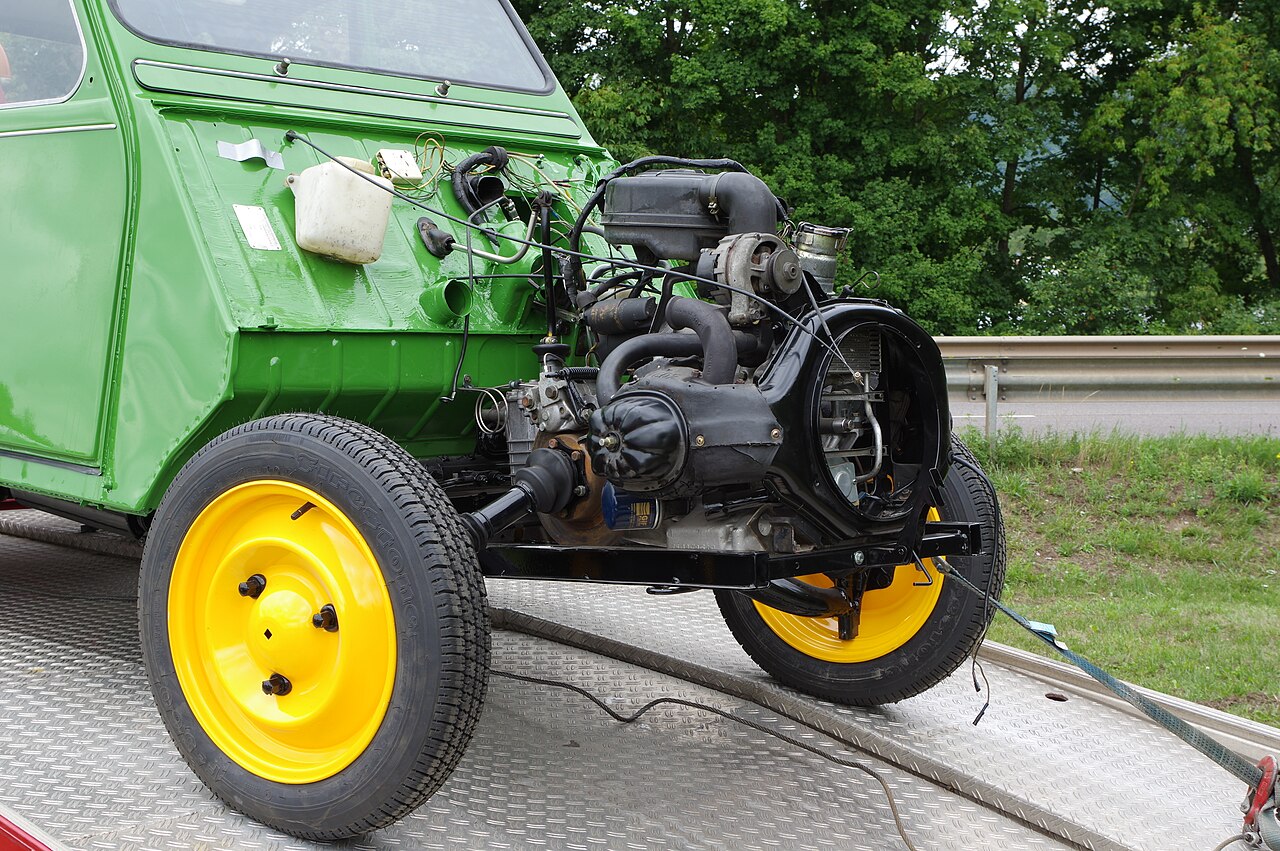
Its air-cooled two-cylinder engine produced barely any power, but that was never the point. The 2CV was about accessibility, low running costs, and a corrugated-steel simplicity that made it easy to repair with basic tools, which is part of why it stayed in production essentially unchanged in spirit for over four decades.
By the time production ended in 1990, nearly nine million had been built, and the 2CV had become a cultural symbol of postwar France, embraced by students, farmers, and eventually collectors and enthusiasts around the world who prize its charm and simplicity above raw performance.