DuelsLeaderboardGarageBlogCarsGlossaryBrowse

Audi R8

Audi

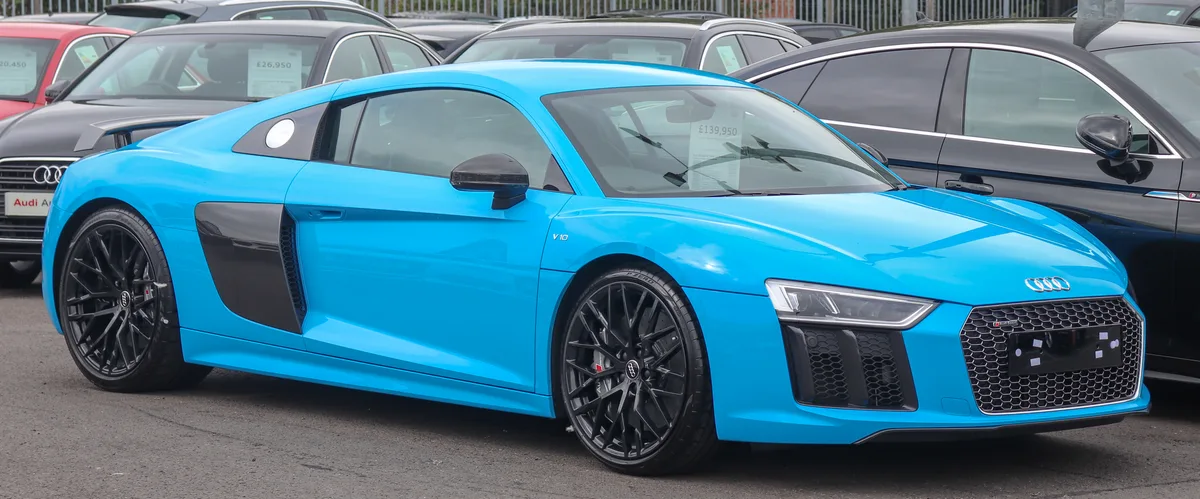
Audi R8: Audi's mid-engine supercar (2006-2024). V10 character, daily-livable refinement. Sister car to Lamborghini Gal
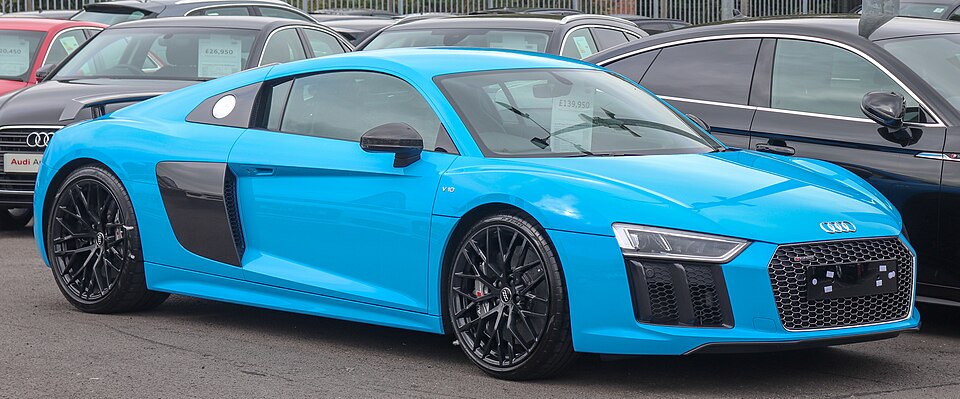
Photo: Vauxford / Wikimedia Commons · CC BY-SA 4.0

Audi's mid-engine supercar (2006-2024). V10 character, daily-livable refinement. Sister car to Lamborghini Gallardo and Huracan.

The Audi R8 is a mid-engine supercar produced from 2006 to 2024 across two generations. The R8 was Audi response to the question: can a supercar be daily livable? The answer was yes; the R8 became the supercar that owners could actually drive every day, with reliability, comfort, and refinement that competitor supercars couldn't match. The first-generation R8 (Type 42, 2006-2015) shared platform with the Lamborghini Gallardo. Initially launched with the 4.2 FSI V8 making 414-444 horsepower; later with the 5.2 FSI V10 making 525-562 horsepower. Manual or R-tronic automated manual transmissions. The manual transmission availability became a defining R8 trait. The second-generation R8 (Type 4S, 2015-2024) shared platform with the Lamborghini Huracan. V10-only (no V8 option), dual-clutch transmission only, AWD or RWD optional. The R8 V10 Performance Spyder and the R8 V10 RWD Limited variants were focused trim levels. The R8 ended production in 2024 with the V10 GT RWD as the swan song. Audi has indicated future R8-equivalent products will be electric. The Lamborghini Huracan (sister car) is also being replaced by hybrid Temerario starting 2025. On WhipJury, R8 submissions are uncommon but always memorable. Both first and second generation cars appear regularly. Modified R8 examples (with engine work, aerodynamic kits, suspension upgrades) are popular among the smaller but devoted enthusiast community.

R8 generations

First (Type 42, 2006-2015). Lamborghini Gallardo platform. V8 (4.2 FSI) and V10 (5.2 FSI) options. Manual transmission available.

Second (Type 4S, 2015-2024). Lamborghini Huracan platform. V10 only, dual-clutch only. AWD or RWD optional.

R8 on WhipJury

R8 submissions are uncommon but always memorable. Manual transmission first-generation V10 cars and modified second-generation V10 examples reliably do well. The community recognizes the R8 as the daily-livable supercar.
Frequently asked questions about Audi R8

Why is the R8 ending?
The R8 ended production in 2024 as Audi pivots toward electric supercars. The naturally aspirated V10 was difficult to certify under future emissions regulations, and the Lamborghini Huracan (which shares the platform) is also being replaced by a hybrid successor. A future electric R8-equivalent has been hinted at but not confirmed.
Is the R8 a real Audi?
Mechanically yes; the platform is shared with Lamborghini but Audi tunes it differently. The chassis is co-developed within Audi-Lamborghini engineering structure. The R8 represents Audi engineering ambition; the Audi-tuned chassis is more refined than the Lamborghini equivalent. The naturally aspirated V10 is shared with Lamborghini.
How much does an R8 cost?
Used pricing: first-generation R8 V8 $50,000-$90,000+. First-generation R8 V10: $80,000-$150,000+. Second-generation R8 V10: $100,000-$200,000+. RWD variants typically slightly less expensive than AWD. Limited final-year RWD GT variants are at the higher end.
Is the R8 reliable?
Yes, exceptionally for a supercar. The naturally aspirated V10 is durable when maintained. Common issues are typical of high-performance cars but less than competitor supercars. With proper maintenance, R8s have been driven 100,000+ miles by various owners. The R8 reliability reputation is part of its accessibility.
How does the R8 compare to the Huracan?
Same platform, different tuning. The Huracan emphasizes more aggressive sport character and theatrical Lamborghini styling. The R8 emphasizes refined daily livability with similar performance numbers. The Huracan is faster on track in some configurations; the R8 is the daily-driver supercar option. Choice depends on intended use.

More on the Audi R8

Metallic, pearl, matte, and satin: what car paint finishes actually do

Metallic paint uses aluminum flake, pearl uses ceramic crystals that refract light into different colors, and matte scatters light so you see form instead of reflections. Each one changes how a car's shape reads, and matte costs 40 to 50 percent more to repair because the clear coat cannot be polished.

Audi's boss says the pricier the car, the more buyers want an engine

Audi CEO Gernot Döllner says enthusiasm for combustion engines rises with price: the higher the segment, the more buyers want an engine, while EVs are accepted fastest at the cheap end. Audi's $700,000, 987-hp Nuvolari, with a V8 that revs to 10,000 rpm, is the proof.

Why Is the Toyota AE86 Called the Hachi-Roku?

Hachi-roku is just Japanese for eight-six, the AE86 in the car's chassis code. The name stuck because the AE86 Corolla became one of the most beloved rear-drive cars ever built, and a manga turned it into a global icon.

White Is the Hardest Color to Pull Off. Most Cars Fail.

White is the best-selling car color in the world. Has been for over a decade. Buyers choose it because it's safe, resells well, hides dust reasonably, and looks clean on a configurator screen. None of those are design reasons. And design is exactly what white tests, mercilessly, every time a car wears it...

Other Audi models

A3A4A5A6A7A8e-trone-tron GTQ3Q5Q7Q8
More Audi models