What is Zenki and Kouki?
Japanese terms for the early (zenki) and facelifted (kouki) versions of one car generation, with chuki for the middle version.
Zenki (前期) means "prior period" and kouki (後期) means "later period." JDM fans use the words to tell apart the early and late versions of one car generation, usually split by a facelift. When a generation gets two updates, the version in between is the chuki (中期), which means "middle period."
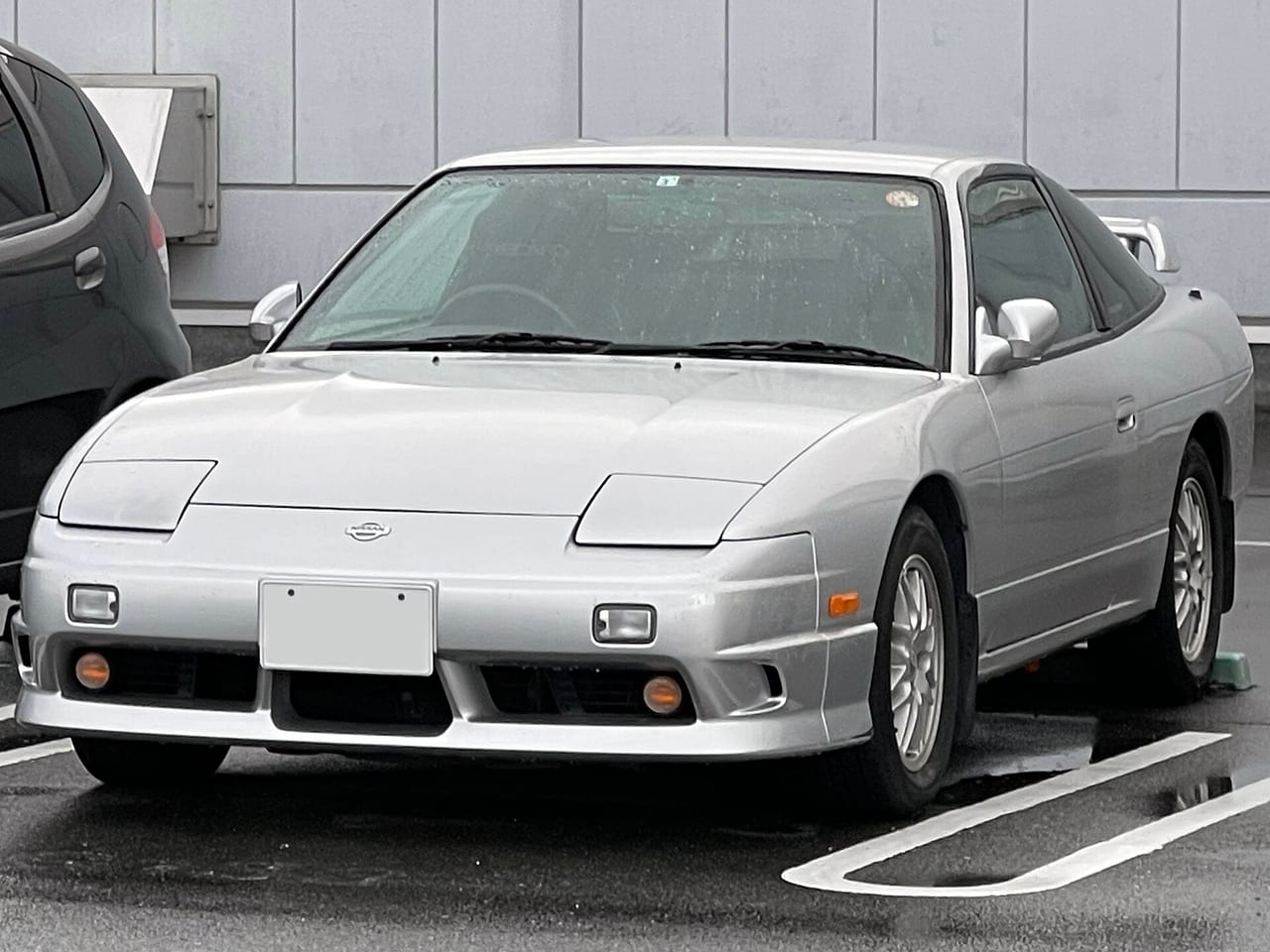
The Nissan Silvia S14 is the standard example. It debuted in October 1993, and a mild 1996 update added aggressive projector headlights and tinted taillights. The early car is the zenki S14, and the updated one is the kouki S14, which enthusiasts also call the S14A. The 180SX, sold alongside the Silvia, had three versions: the March 1989 original is the zenki, the January 1991 update is the chuki, and the August 1996 facelift is the kouki.
The kouki 180SX got a revised front bumper, new taillights, 15-inch wheels, and a driver-side airbag. It came as the Type X, Type S, and Type R, and the Type S was the first 180SX sold without a turbo. The Type X name is older, though. It first appeared in 1994, when the chuki car's trims were renamed, so a Type X badge alone doesn't make a 180SX a kouki. Production of the 180SX ended in December 1998.