What is Transfer Case?
A gearbox that splits power from the transmission between the front and rear axles in four-wheel-drive and all-wheel-drive vehicles, often with low-range gears for off-roading.
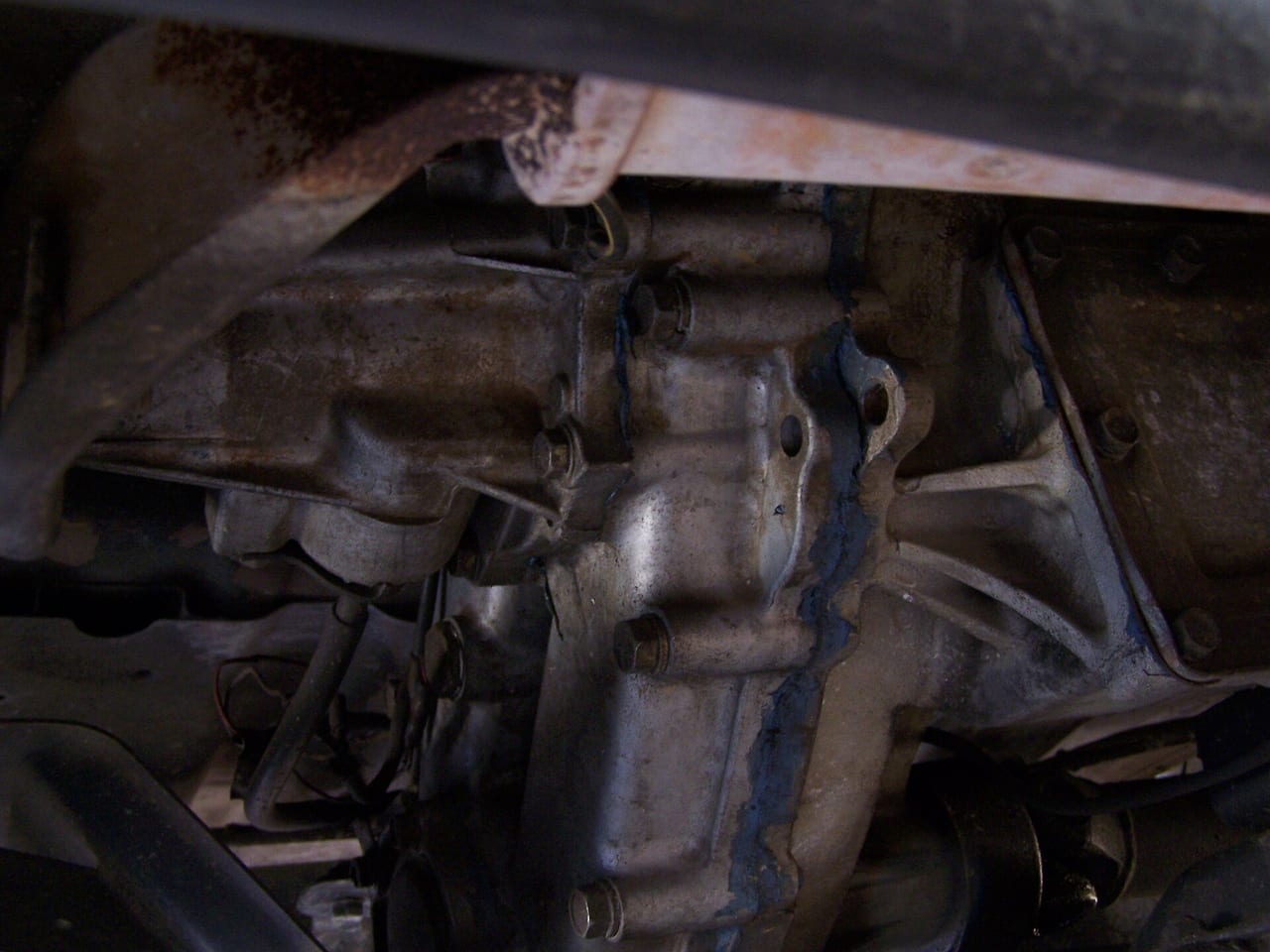
A transfer case is a secondary gearbox in the drivetrain that takes power from the transmission and sends it to the front and rear axles, or to just one of them, usually the rear. It can do that with gears, chains, or hydraulics, and it uses driveshafts to carry the power to each axle. Transfer cases are found in four-wheel-drive and all-wheel-drive vehicles and other machines with more than one driven axle.
A part-time transfer case lets the driver switch between two- and four-wheel drive but has no center differential, so it locks the front and rear driveshafts together. That works off-road, but on dry pavement it causes driveline windup, because the front and rear tires never turn at exactly the same speed. Full-time systems, common on all-wheel-drive cars, can't be switched off and include a way to let the axles turn at different speeds, and some hybrids offer two-wheel drive plus both kinds of four-wheel drive. Engaging four-wheel drive might require stopping, slowing to a set speed, or nothing at all, which is called shift-on-the-fly.
Many transfer cases also have a low range, a set of reduction gears that lets the vehicle crawl slowly while the engine stays in its useful rpm range, which multiplies torque at the wheels. It's used for steep or rough terrain, rock crawling, and towing heavy loads slowly, and it's often missing on all-wheel-drive cars. Transfer cases were traditionally shifted with a floor lever, but more and more use a dashboard or console switch, and on many performance cars it works with no driver input at all.