What is Torque Vectoring?
Torque vectoring is a technology that varies how much power is sent to each individual wheel to improve cornering grip and stability.
Torque vectoring refers to systems that distribute engine or motor power unevenly between a vehicle's wheels, rather than sending equal torque to each side, in order to improve handling. The general goal is to send more power to the wheel or wheels with the most available grip and less to those that might otherwise spin or lose traction, particularly during cornering.
Passive or mechanical torque vectoring systems typically use specially designed limited-slip or clutch-based differentials that automatically bias torque toward the wheel with more traction as speed and load change. Active torque vectoring systems go further, using electronic controls, sensors, and in some cases individual brake application or multiple motors, to actively manage torque distribution in real time based on steering angle, yaw rate, and other inputs.
Electric vehicles have made more advanced forms of torque vectoring increasingly common, since a car with separate motors at the front and rear, or even individual motors at each wheel, can distribute torque far more precisely and quickly than a system relying on a single engine and mechanical differentials. This has allowed some performance EVs to achieve cornering behavior, such as reduced understeer or enhanced rotation, that would be difficult to replicate with a conventional single-motor drivetrain.
Related terms
Frequently asked questions
Torque Vectoring on the blog
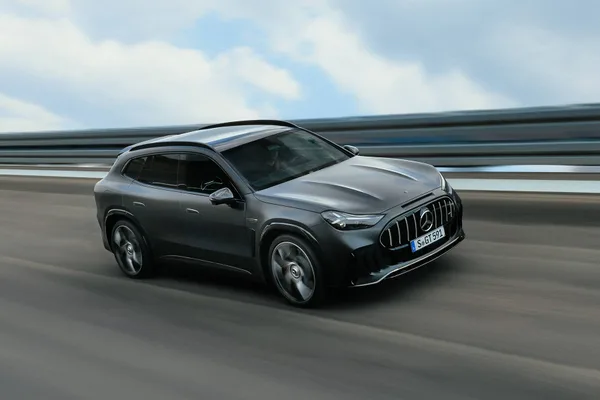
Mercedes-AMG revealed the electric GT SUV on October 17, 2026. The GT 63 makes 1,153 hp from three axial flux motors, charges at up to 710 kW, and wears six round taillights. One critic calls it handsome, another says its proportions look bloated.
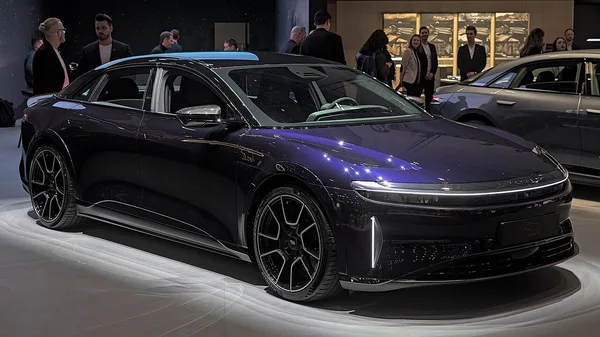
The Lucid Air Sapphire makes 1,234 hp from three motors and 1,430 lb-ft of torque. Lucid quotes 1.89 seconds to 60 mph and 205 mph, for $249,000. Here is how it compares with the Model S Plaid and Taycan Turbo GT, on paper and in testing.
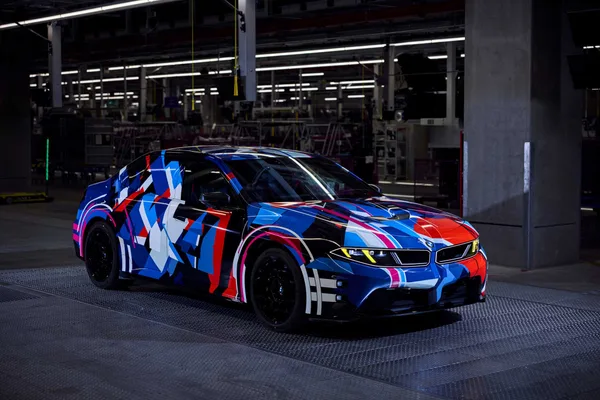
BMW M built its one-millionth car, a Fire Orange M3, in Munich, and used the moment to show the electric M3 in its lightest camouflage yet. The four-motor sedan will be built in Munich and is expected to debut in 2027.