DuelsLeaderboardGarageBlogCarsGlossaryBrowse

Torque Steer

Car culture term

What is Torque Steer?

Torque steer is the tendency of a powerful front-wheel-drive car to pull or tug the steering wheel to one side under hard acceleration, caused by uneven power delivery through the front driveshafts.

Torque steer happens when a front-wheel-drive car applies enough engine torque through the front wheels that the steering wheel visibly tugs to one side under hard acceleration, even though the driver is holding it straight. It is most noticeable in powerful front-drive cars, especially older hot hatches and sedans with well over 200 horsepower routed through the front axle, and it can catch drivers off guard when accelerating hard out of a corner or from a stop.

The root cause is usually unequal-length driveshafts. In many transverse front-drive layouts, the engine and transmission sit off to one side, so one front driveshaft is noticeably longer than the other. Longer shafts twist and flex slightly more under load than shorter ones, and differences in the angle each shaft operates at also change how efficiently torque transfers to each wheel. That asymmetry means the two front wheels can receive power slightly unevenly during hard acceleration, which pulls the car, and the steering wheel, toward the side receiving more effective torque.

Automakers reduce torque steer through several countermeasures, including equal-length driveshafts, intermediate shafts that balance the geometry between both sides, limited-slip differentials that manage power delivery, and reinforced suspension bushings and control arm geometry that resist the pulling forces. All-wheel-drive and rear-wheel-drive layouts largely sidestep the problem since they do not route high torque through steered front wheels in the same way, which is part of why many high-power front-drive-based performance cars now offer all-wheel drive.
Related terms

FWDTorqueHorsepowerUndersteerWeight transfer

Frequently asked questions

What causes torque steer?
Torque steer is mainly caused by unequal-length front driveshafts in transverse-engine, front-wheel-drive cars. The shorter shaft flexes less than the longer one under hard acceleration, so power reaches each front wheel slightly unevenly, pulling the steering to one side.
Which cars are most prone to torque steer?
High-horsepower front-wheel-drive cars are most affected, particularly hot hatches and sport sedans that route well over 200 horsepower through the front wheels alone, since there is more torque available to expose the driveshaft-length asymmetry.
Can torque steer be fixed or reduced?
Yes. Manufacturers use equal-length driveshafts or an intermediate shaft to balance geometry, limited-slip differentials to manage power delivery between wheels, and stiffer suspension bushings to resist the pulling forces, all of which noticeably reduce, though rarely fully eliminate, torque steer.
Is torque steer dangerous?
It is usually more of a nuisance than a serious hazard on dry pavement, but a sudden, strong tug under hard acceleration can be startling for an unprepared driver, and it becomes more of a real handling issue on wet or low-grip surfaces where the car has less margin to correct.
Do all-wheel-drive cars experience torque steer?
They can, but it is far less pronounced, since torque is split between front and rear axles rather than routed entirely through the front wheels. Some performance all-wheel-drive systems still show a mild trace of it under extreme power if the front axle carries significant torque.

Torque Steer on the blog

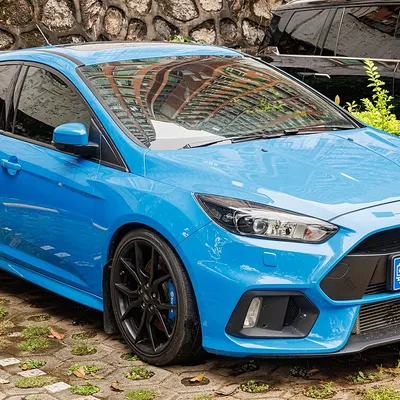
What Made the Ford Focus RS So Special?

Ford built the Mk3 Focus RS for just three model years, and people still argue about it. It had 350 horsepower, a trick all-wheel-drive system that could shuffle torque across the rear axle, and a Drift Mode that actually worked. It also had a head gasket problem worth knowing about.

Why the Kia Sorento Is a Great Value

The Kia Sorento occupies a specific and underrated spot in the three-row SUV market: it's smaller and cheaper than the full-size three-row crowd while still offering genuine three-row functionality. Starting at $33,885 for 2026...

Back to Glossary