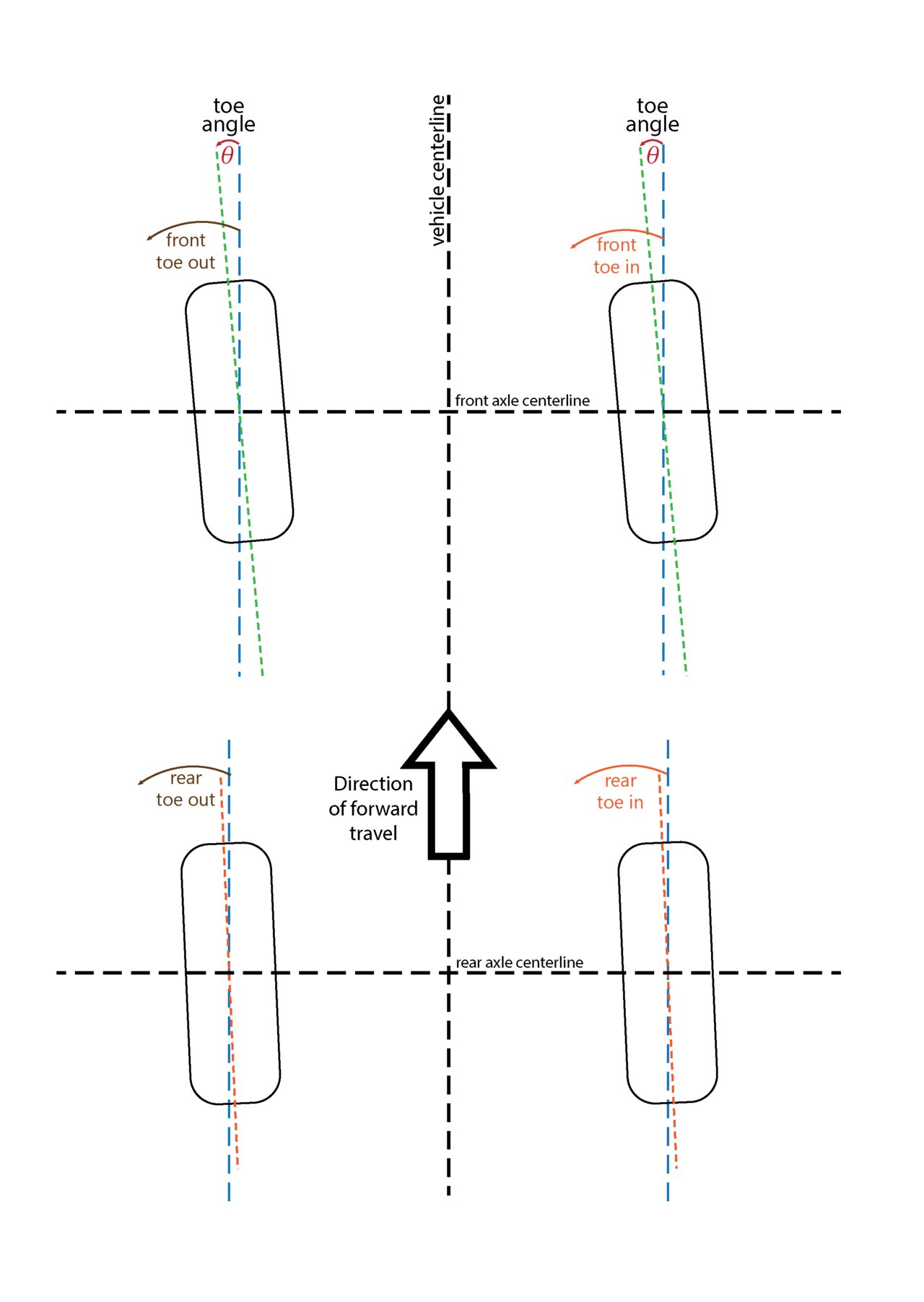
What is Toe Alignment?
The degree to which the front or rear wheels point inward (toe-in) or outward (toe-out) when viewed from above, directly affecting tire wear, stability, and turn-in response.
Toe is the alignment angle describing whether the leading edges of the tires point inward toward each other (toe-in) or outward away from each other (toe-out) when viewed from above the vehicle. A small amount of front toe-in is common for street cars because it promotes straight-line stability. Rear toe-in is also common on many platforms, helping the rear track straight under load. Even small deviations from spec cause rapid and uneven tire wear.
Performance and track cars often adjust toe from the factory baseline. Front toe-out increases steering aggressiveness and sharpens turn-in response at the expense of some straight-line stability. Rear toe-out tends to make the car rotate more freely (increasing oversteer tendency) and is generally avoided on street cars. Time attack and autocross setups carefully balance front and rear toe to achieve the desired handling balance for the specific track.
Toe is the alignment setting that changes most easily after suspension or ride height modifications. Even small changes to ride height shift the geometry enough to alter toe. Bump steer (toe change as the suspension cycles through its range) is a related concern on modified cars, where aftermarket suspension components may introduce unintended toe variation as the wheel moves up and down.