DuelsLeaderboardGarageBlogCarsGlossaryBrowse

Liberty Walk

Car culture term

Liberty Walk
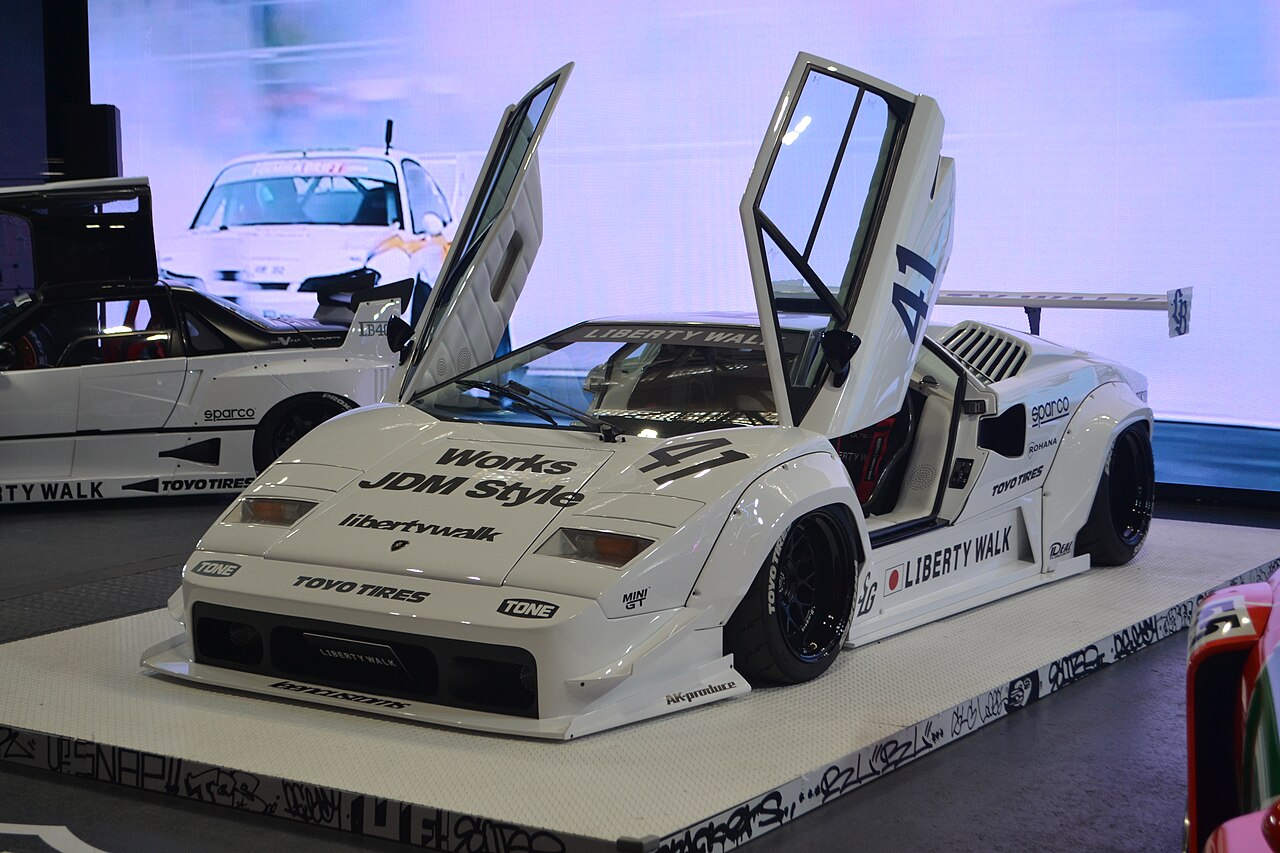
Photo: 先従隗始 / Wikimedia Commons · CC0

What is Liberty Walk?

Japanese tuner house founded by Wataru Kato. Famous for aggressive bolt-on widebody kits with riveted flares for supercars and performance cars.

Liberty Walk (LB Performance) is a Japanese tuner house founded by Wataru Kato in 2009. The brand specializes in aggressive widebody kits using bolt-on (and famously bolt-screwed-on) flares for supercars, sports cars, and luxury cars. The aesthetic is unmistakable: oversized fender flares attached with visible hardware, often paired with bold paint schemes, deep-dish wheels, and aggressive lip kits.

Liberty Walk launched into international fame with their widebody kit for the Lamborghini Aventador in the early 2010s. The kit's aggressive flares and visible mounting hardware were polarizing among Lamborghini purists but immensely popular within the modified supercar community. Subsequent kits for the Ferrari 458, McLaren 650S, BMW M3 (E46, F80), and various other platforms expanded the brand presence.

The brand has been controversial. Critics argue that the kits damage expensive original bodywork (which is often true; the kits typically require cutting fenders for installation). Supporters argue that the modifications create distinctive cars that stand out in a crowded supercar landscape. Liberty Walk-equipped cars routinely appear at major events worldwide, and the brand continues to expand its product range.

Related terms

Rocket BunnyWidebodyRWB

Frequently asked questions

Who founded Liberty Walk?
Wataru Kato founded Liberty Walk (also stylized as LB Performance) in 2009. Kato had previously worked in the Japanese tuning industry and founded Liberty Walk specifically to create aggressive widebody kits for high-end supercars and performance cars. He remains involved in the brand creative direction.
Are Liberty Walk kits permanent?
Mostly yes. Most Liberty Walk widebody kits require cutting the original fenders to fit the new flares. Once cut, the original bodywork cannot be easily restored. The kit installation is typically considered a permanent modification. This is one source of ongoing controversy with the brand.
How much does a Liberty Walk kit cost?
Significant. Kit prices typically run $15,000 to $50,000+ depending on the car and kit complexity. Installation (typically requiring fender cutting, painting, and proper mounting) adds $5,000 to $15,000+. Total cost for a complete Liberty Walk conversion can be $30,000-$60,000 not including the donor car.
Is Liberty Walk the same as Rocket Bunny?
No. Liberty Walk and Rocket Bunny / Pandem are different brands (different founders and aesthetics) but often grouped together as "Japanese widebody kit makers." Liberty Walk tends toward more aggressive, often visible-hardware aesthetics. Rocket Bunny / Pandem (founded by Kei Miura) is generally cleaner and more cohesive.
Do Liberty Walk cars sell well used?
Mixed. Within the widebody enthusiast community, well-executed Liberty Walk builds can hold value or even appreciate. Among general supercar buyers, the modifications typically reduce resale value compared to a stock equivalent. The market is segmented; the right buyer values the build.

Liberty Walk on the blog

What Is a Widebody Kit and Does It Make a Car Look Better?

A widebody kit is a set of body modifications, usually flared or replaced fenders and quarter panels, that makes a car physically wider so it can cover wider wheels and a wider track. Done with intent, it gives a car the planted stance of a race car. Done as a costume, everyone can tell.

The Car Vocabulary That Changes How You See Every Faceoff

Car culture has its own language and it moves fast. A conversation about a Skyline build can cover RB26 specs, ATTESA AWD, coilovers, hellaflush stance, and RWB widebody kits before you've finished your first coffee. If you don't know the vocabulary, you're not lost exactly, but you're definitely translating while everyone else is talking.

Back to Glossary