
DuelsLeaderboardGarageBlogCarsGlossaryBrowse

Rocket Bunny

Car culture term

Rocket Bunny
Photo: Shadman Samee from Dhaka, Bangladesh / Wikimedia Commons · CC BY-SA 2.0

What is Rocket Bunny?

Japanese tuner house founded by Kei Miura. Famous for cleaner, cohesive widebody kits with bolt-on flares for sport cars and tuner cars.

Rocket Bunny (sometimes called RB by the brand and TRA Kyoto by its parent company name) is a Japanese tuner house founded by Kei Miura, also known for the Pandem brand (which is Miura's higher-end sub-brand). Founded in the early 2010s, the brand has produced widebody kits for many popular sport cars and tuner platforms including the Toyota 86 / Subaru BRZ, Mazda Miata, Ford Mustang, Nissan 350Z and 370Z, and various other chassis.

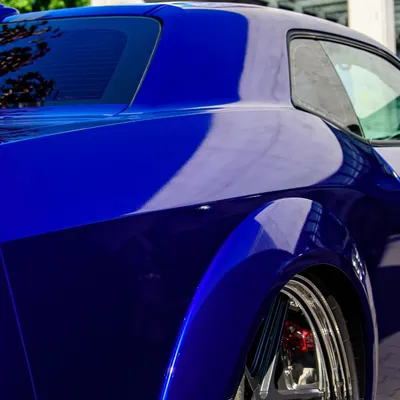
The Rocket Bunny aesthetic is generally cleaner and more cohesive than competitor Liberty Walk. Kits typically include integrated front bumpers, sideskirts, rear over-fenders, and rear bumper extensions designed to flow visually with each other. The bolt-on flares typically have less visible hardware and integrate more smoothly with the original bodywork than Liberty Walk equivalents.

Pandem (the higher-end sub-brand under Kei Miura) produces more refined kits, often with better mounting systems and smoother integration. Pandem kits for the Toyota 86, Honda S2000, and Nissan 350Z are particularly respected. The Rocket Bunny / Pandem aesthetic has become one of the defining looks of modern tuner culture, with many builds globally adopting the design language.

Related terms

Liberty WalkWidebodyRWB

Frequently asked questions

Who is Kei Miura?
Japanese designer and founder of Rocket Bunny / Pandem (operating through TRA Kyoto). Miura has worked in the Japanese tuning industry since the 1990s and founded Rocket Bunny to produce cleaner, more cohesive widebody kits than competing brands. He remains the primary designer of the brand kits.
Is Rocket Bunny the same as Pandem?
Same designer and parent company; different branding tiers. Rocket Bunny is the more accessible brand. Pandem is the higher-end sub-brand with more refined construction, typically more precise mounting, and higher pricing. Both share Kei Miura design language but Pandem represents the premium tier.
How much do Rocket Bunny kits cost?
Less than Liberty Walk on average. A complete Rocket Bunny widebody kit typically runs $5,000-$15,000 depending on the car. Pandem kits are higher: $10,000-$25,000+. Installation typically adds $3,000-$8,000 (similar to Liberty Walk). Total budget for a complete conversion: $10,000-$40,000.
Are Rocket Bunny kits made of fiberglass or carbon?
Both options exist. Most basic Rocket Bunny kits use fiberglass or polyurethane-reinforced fiberglass. Carbon fiber options are available for some kits at higher cost. Pandem kits often have more carbon options. Quality and finish vary by manufacturer batch and license; some legitimate Pandem kits have superior surface finish to early Rocket Bunny.
What car is most associated with Rocket Bunny?
The Toyota 86 / Scion FR-S / Subaru BRZ is probably the most iconic Rocket Bunny platform. Kei Miura kits for these cars (especially the original V1 and V2 kits) defined the aesthetic that has since influenced countless other builds. The Mazda Miata and Honda S2000 Pandem kits are also widely recognized.

Rocket Bunny on the blog

What Is a Widebody Kit and Does It Make a Car Look Better?

A widebody kit is a set of body modifications, usually flared or replaced fenders and quarter panels, that makes a car physically wider so it can cover wider wheels and a wider track. Done with intent, it gives a car the planted stance of a race car. Done as a costume, everyone can tell.

The Car Vocabulary That Changes How You See Every Faceoff

Car culture has its own language and it moves fast. A conversation about a Skyline build can cover RB26 specs, ATTESA AWD, coilovers, hellaflush stance, and RWB widebody kits before you've finished your first coffee. If you don't know the vocabulary, you're not lost exactly, but you're definitely translating while everyone else is talking.

Back to Glossary