DuelsLeaderboardGarageBlogCarsGlossaryBrowse

2JZ swap

Car culture term

2JZ swap
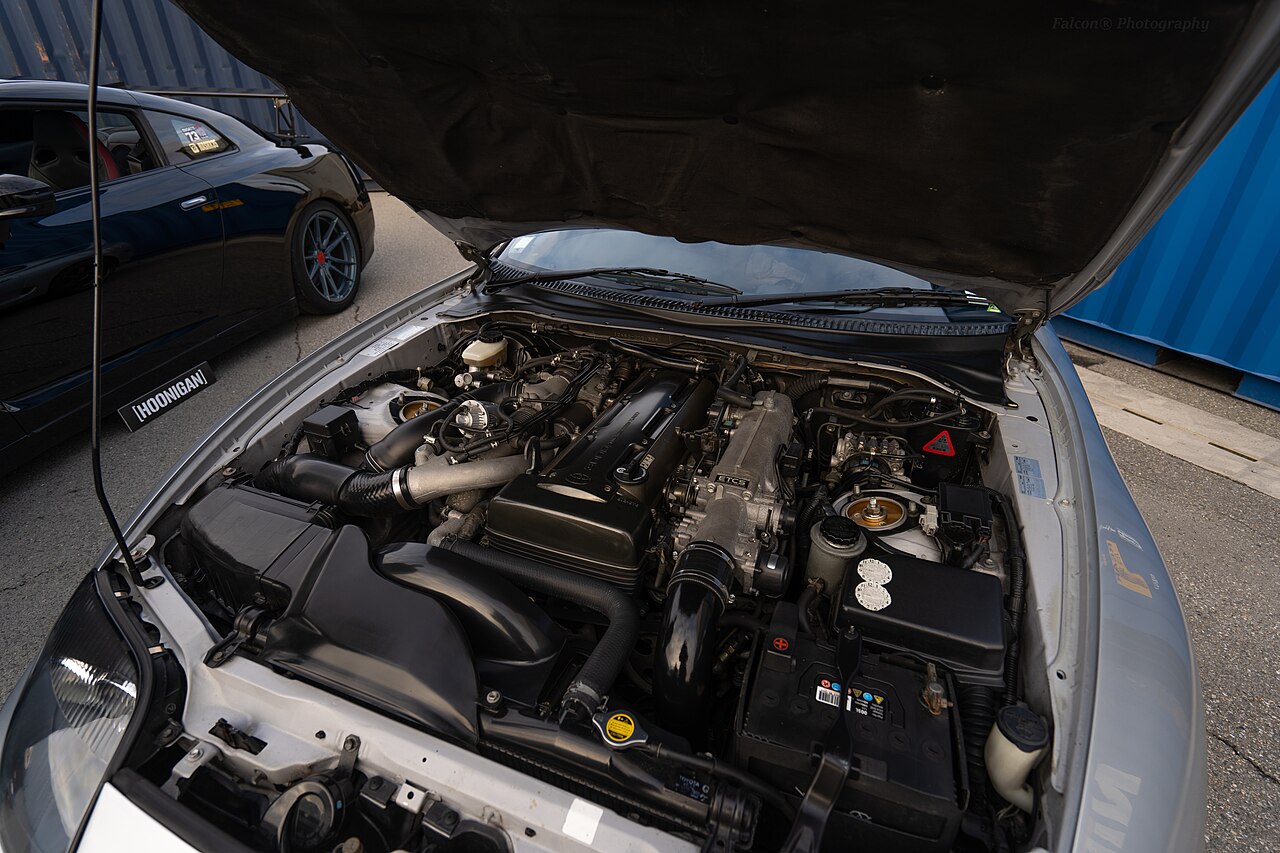
Photo: Falcon® Photography / Wikimedia Commons · CC BY-SA 2.0

What is 2JZ swap?

Swapping a Toyota 2JZ-GTE inline-six into a chassis that did not originally have one. The legendary Japanese V8 alternative.

2JZ swap is fitting a Toyota 2JZ inline-six (most commonly the twin-turbo 2JZ-GTE from the A80 Supra Turbo) into a chassis that did not originally have one. The 2JZ-GTE is one of the most respected Japanese tuner engines because the iron block, closed-deck head, and over-engineered rotating assembly support extreme power on factory internals.

Common 2JZ swap chassis include Lexus IS300 (which originally had the naturally aspirated 2JZ-GE, so it is a relatively easy swap), Nissan 240SX, BMW E36, Volkswagen Mk3 Golf, and even pickup trucks. The aftermarket includes complete swap kits for many platforms with engine mounts, axles, transmission adapters, and wiring harnesses.

A typical street 2JZ-GTE swap on stock internals with a larger turbo makes 600 to 800 wheel horsepower. Built motors with race fuel can exceed 1,500 horsepower. The 2JZ-GTE is heavier than an LS V8 (around 600 pounds versus 450) and more expensive (used 2JZ-GTE prices have climbed dramatically over the past decade), but the engine character and tuner culture significance make it a popular choice over an LS for some builds.
Related terms

LS swapK-swapJDM

Frequently asked questions

Why is the 2JZ-GTE so famous?
The factory 2JZ-GTE in the A80 Supra Turbo made 320 horsepower, but the actual mechanical capability is much higher. The iron block, closed-deck head, and oversized factory turbochargers handle 700+ horsepower on stock internals. With supporting modifications, 1,000 to 1,500 horsepower on factory internals is common.
Is a 2JZ swap better than an LS swap?
Different priorities. LS is cheaper, lighter, and more power-dense. 2JZ has tuner culture significance, sounds different (turbocharged inline-six versus naturally aspirated V8), and is preferred for JDM-themed builds. Both are excellent choices for their target audiences.
How much does a 2JZ swap cost?
Used 2JZ-GTE engine and transmission: $4,000-$10,000 (prices have climbed significantly). Swap kit and supporting parts: $3,000-$6,000. Labor: $4,000-$10,000. Total typically $11,000-$25,000 for a basic swap. Built motor builds can exceed $50,000.
Can the naturally aspirated 2JZ-GE be swapped instead?
Yes, and it is a more affordable option. The 2JZ-GE makes around 220 horsepower naturally aspirated and can be turbocharged to make similar power as a factory 2JZ-GTE. The block is the same as the GTE; turbocharging requires different pistons (lower compression) for reliable boost levels.
What chassis are best for 2JZ swaps?
Lexus IS300 (which originally has 2JZ-GE, so the swap is straightforward) is the easiest. Nissan 240SX is common but requires more chassis modification. BMW E36 has a strong following. Lexus SC300 is another natural fit. Bosozoku-style RHD chassis are popular for JDM-themed builds.

2JZ swap on the blog

1JZ vs 2JZ: What's the Difference and Which One Should You Swap?

The 1JZ and 2JZ are both Toyota inline-six engines from the same family, and people use the names like they are interchangeable. They are not. The 1JZ is a 2.5-liter that loves to rev. The 2JZ is a 3.0-liter that became famous for surviving four-figure horsepower on stock parts. Which one you want depends entirely on what you are building.

Back to Glossary