DuelsLeaderboardGarageBlogCarsGlossaryBrowse

LS swap

Car culture term

LS swap
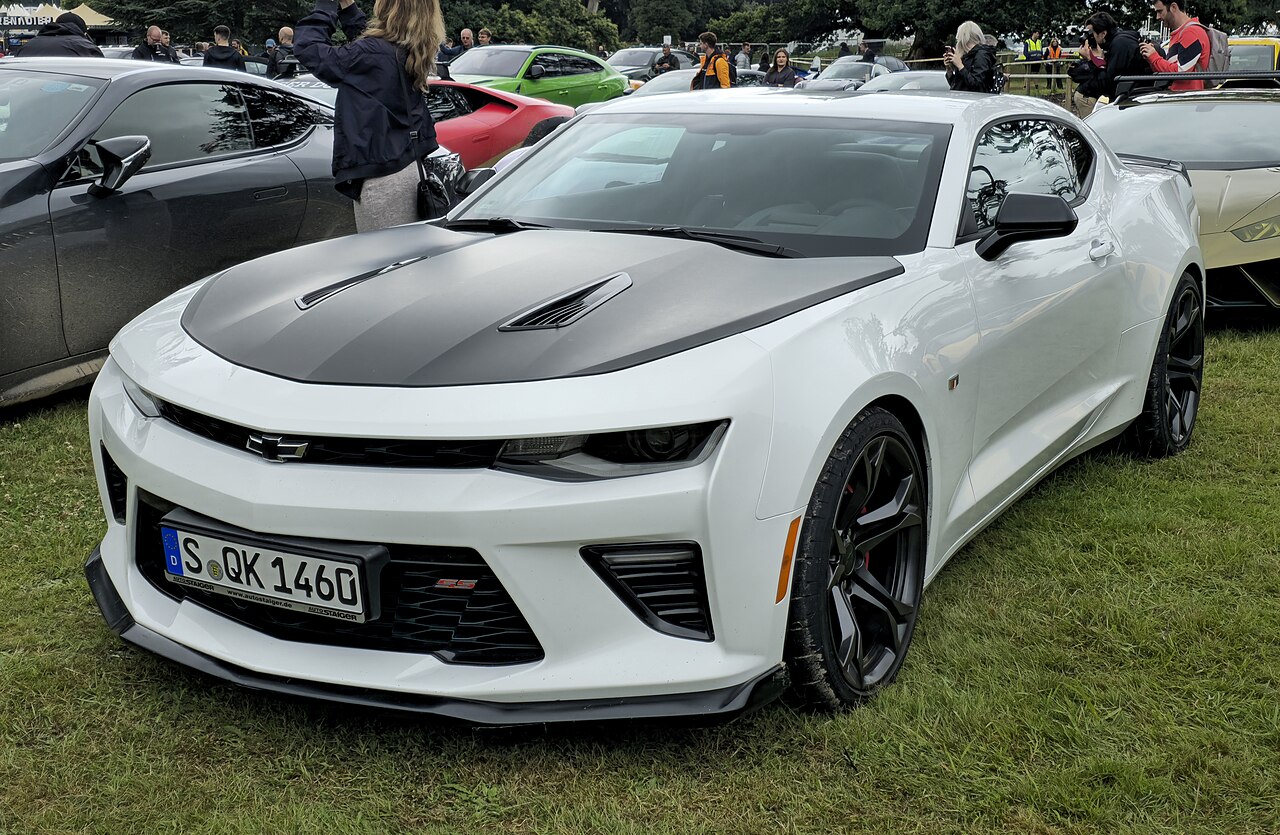
Photo: Calreyn88 / Wikimedia Commons · CC BY-SA 4.0

What is LS swap?

Swapping a GM LS-series V8 into a chassis that did not originally have one. The universal V8 swap because the engines are cheap, light, and powerful.

LS swap is fitting a General Motors LS-series V8 (LS1, LS2, LS3, LS6, LS7, LSx) into a chassis that did not originally have one. The LS family launched in 1997 in the C5 Corvette and quickly became the universal V8 swap engine because of three factors: high availability and low cost from junked Camaros, Trans Ams, GTOs, trucks, and SUVs; relatively light weight (around 450 to 500 pounds); and strong aftermarket support.

LS swaps appear in everything: BMW E30s and E46s, Datsun 240Zs, Toyota Tacomas, Land Rover Defenders, Mazda Miatas, Jeep Wranglers, vintage trucks of every make, even Ferraris (rare but documented). The phrase "LS everything" became a meme in the 2010s and remains accurate.

A basic LS swap (LS1 or LS3 with stock cam and bolt-ons) typically makes 400 to 500 horsepower naturally aspirated. With forced induction or built-up internal modifications, LS-based engines have made well over 2,000 horsepower in extreme drag racing applications. The platform is essentially a blank canvas for power-building.

Related terms

K-swap2JZ swapOEM-plus

Frequently asked questions

Which LS engine is best for a swap?
Depends on budget and goal. LS1 and LS6 are common, cheap, and adequate for most builds (300-400 hp). LS3 is the modern junkyard standard with more power potential. LS7 (Z06 Corvette) is the high-displacement naturally aspirated option. LSx blocks support extreme power but are expensive.
How much horsepower does an LS swap typically make?
Stock LS1: 305 horsepower factory. Mild bolt-ons (intake, exhaust, tune): 350-400. Cam + heads + intake: 450-550. Forced induction with stock internals: 500-700. Built engines with forced induction can exceed 1,000.
How much does an LS swap cost?
Junkyard LS1 with transmission: $1,500-$3,000. Swap parts (mounts, oil pan, headers, harness): $2,000-$5,000. Labor: $3,000-$8,000. Total typically $7,000-$15,000 for a basic swap. High-end builds with built engine and forced induction can exceed $30,000.
Is an LS swap legal?
In most US states, yes, with caveats. California has strict emissions requirements that complicate older chassis swaps. Most states allow swaps that maintain or improve emissions output. Pre-1976 vehicles in California are exempt from emissions and are popular LS swap candidates.
Why is LS swap so popular?
Cost (used LS1 with transmission for under $2,000), weight (around 450-500 lb assembled), simplicity (pushrod V8 with established aftermarket), and power potential (huge). Compared to swapping a similar-power Japanese or European engine, the LS is dramatically cheaper to source and support.

LS swap on the blog

Metallic, pearl, matte, and satin: what car paint finishes actually do

Metallic paint uses aluminum flake, pearl uses ceramic crystals that refract light into different colors, and matte scatters light so you see form instead of reflections. Each one changes how a car's shape reads, and matte costs 40 to 50 percent more to repair because the clear coat cannot be polished.

Why Chinese EVs look the way they do

Chinese EVs look European because Europeans designed them. Wolfgang Egger from Audi and Lamborghini runs BYD design, Kris Tomasson from BMW runs Nio's, and Stefan Sielaff, who drew the Audi A7 and Bentley Bentayga, runs Geely's. Here's why the cars share smooth surfaces, light bars, and living-room interiors, and what they still lack.

What is tandem drifting, and how is it judged?

Tandem drifting is two cars sliding together, inches apart, for a whole run. It's the format that made drifting a real sport, and the winner isn't the car in front. Here's how lead and chase work, and how judges score line, angle and style.

What Is a K-Swap, and Why Is It Everywhere?

A K-swap means dropping a Honda K-series four-cylinder into a car that didn't come with one, and it's the most popular engine swap in the world. Introduced in 2001, the K20 and K24 make easy power, run i-VTEC, and are cheap and everywhere. Here's why K-swap the world became a plan.

Back to Glossary