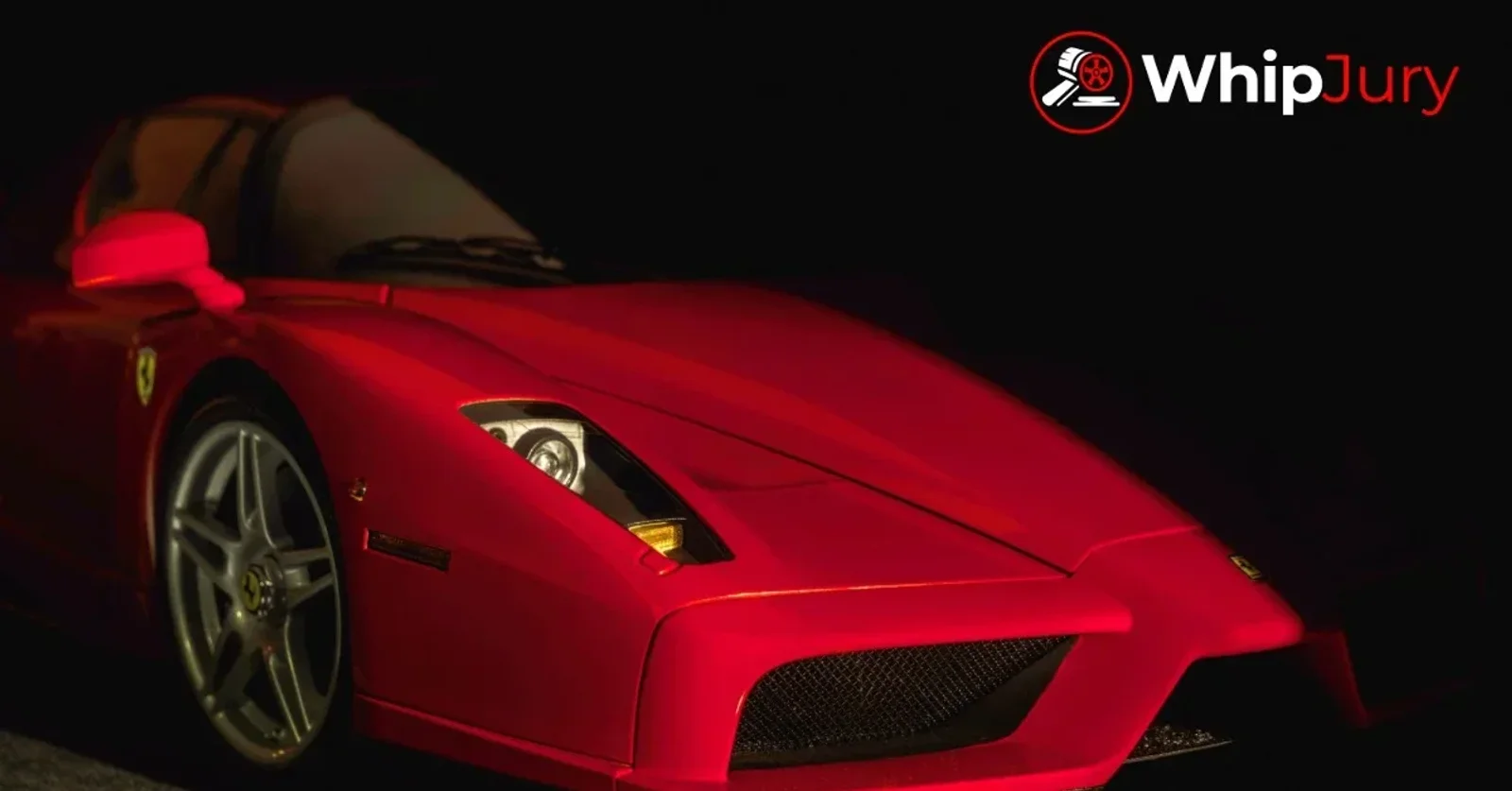
There are expensive cars everywhere. Most of them will be forgotten. The Porsche 911 will not be forgotten. Neither will the Ferrari Testarossa, the original Land Rover Defender, the Volkswagen Golf GTI, or the first-generation Mazda Miata. None of those last two cost anywhere near what most people think of as an iconic car's price. Expense has almost nothing to do with it.
So what does?
Iconic Cars Have One Clear Idea
The 911 has been the same car since 1963. Rear-engined, two doors, a silhouette that has evolved without ever breaking from the original. That consistency is not laziness. It is the expression of a single idea held for sixty years without apology or compromise. The car knows exactly what it is and has never tried to be something else to capture a different market segment or follow a trend.
The Miata has the same quality. Lightweight, rear-wheel drive, open top, no unnecessary power. Every decision on that car exists to serve one idea: driving enjoyment distilled to its minimum viable form. When Mazda briefly entertained making it heavier and more powerful in the mid-2000s the car lost something and the enthusiast community noticed immediately. The idea was being diluted and the dilution was visible before it was even measurable.
Expensive cars fail to become iconic when they are trying to be impressive across too many dimensions simultaneously. The Bentley Bentayga is extraordinarily expensive and objectively capable and will be remembered as a vehicle that existed rather than as a car that meant something.
The Design Has to Be Immediately Readable
Iconic cars are identifiable at a glance from an unexpected angle in bad light from the wrong direction. You know a 911 from the rear quarter at night. You know a Defender from a silhouette. You know a first-gen Mustang from fifty yards in a crowded lot. This immediate recognizability is not achieved through complexity. It is achieved through simplicity applied with total commitment.
The Lamborghini Countach became iconic partly because no car before it had used those proportions and that angle language. It was so visually distinct that once you had seen it the silhouette was permanently lodged. Most expensive modern cars do not achieve this because they are trying to look refined and restrained, which are virtues that produce forgettable shapes. The cars that become icons tend toward extremes, either extreme simplicity or extreme distinctiveness, never the middle.
Price Actively Works Against Iconicity at the Extremes
A car that costs three million dollars and is built in fifty units will never be iconic in the way the Golf GTI is iconic. Iconicity requires exposure. It requires enough people to have seen the car, driven it, wanted it, or had their life interrupted by it on a street somewhere. The GTI became iconic because it was everywhere in the 1980s and it redefined what a practical car could feel like for an entire generation of drivers who could actually afford one.
The Bugatti Veyron is famous. It will appear in encyclopedias. It is not iconic in the way things are iconic when they change how people think or what they want. It was too expensive, too rare, and too disconnected from the experience of actual driving to lodge itself in culture the way a car has to in order to become genuinely iconic. Famous is not the same thing as iconic and price can buy famous while simultaneously preventing iconic.
The Unexpected Icons
The original Honda Civic. The Volkswagen Beetle. The Mini Cooper before BMW turned it into a premium product. The Toyota Corolla in certain markets. These are cars that became iconic not through design ambition or exclusivity but through ubiquity combined with a clear enough identity that the ubiquity reinforced rather than diluted the image. When every taxi in a city is a certain car, that car becomes part of the city's visual identity in a way that no amount of expensive engineering can manufacture.
The Corolla is not a beautiful car. Nobody puts a poster of one on their wall. But ask someone in Southeast Asia or East Africa what a reliable car looks like and the Corolla's silhouette is the answer. That is iconicity of a different kind and it is earned through the same mechanism as the 911: a consistent clear idea, held without compromise, over a long enough period that the car and the idea become inseparable.
What This Tells You in a Faceoff
Iconic cars have an advantage in faceoffs that is almost unfair. The 911's silhouette triggers an association before the voter has consciously assessed the design. The Defender's shape carries decades of cultural weight into every comparison. The GTI's red stripe and clean hatchback proportions are immediately legible to anyone who grew up around cars in the 1980s or 1990s.
An expensive modern car with no established identity has to win on design alone in a faceoff because it has no accumulated signal to draw on. Sometimes it wins anyway because the design is genuinely strong. More often it loses to something cheaper and older that has been building its visual case for thirty years longer.
Put an icon against a modern expensive car on WhipJury and see which one the crowd still reaches for.
Frequently Asked Questions

Jeffrey Wiley has spent more time than he'd like to admit thinking about what makes a car look right. He writes about automotive design, car culture, and the opinions people have strong feelings about. He lives in north Georgia.