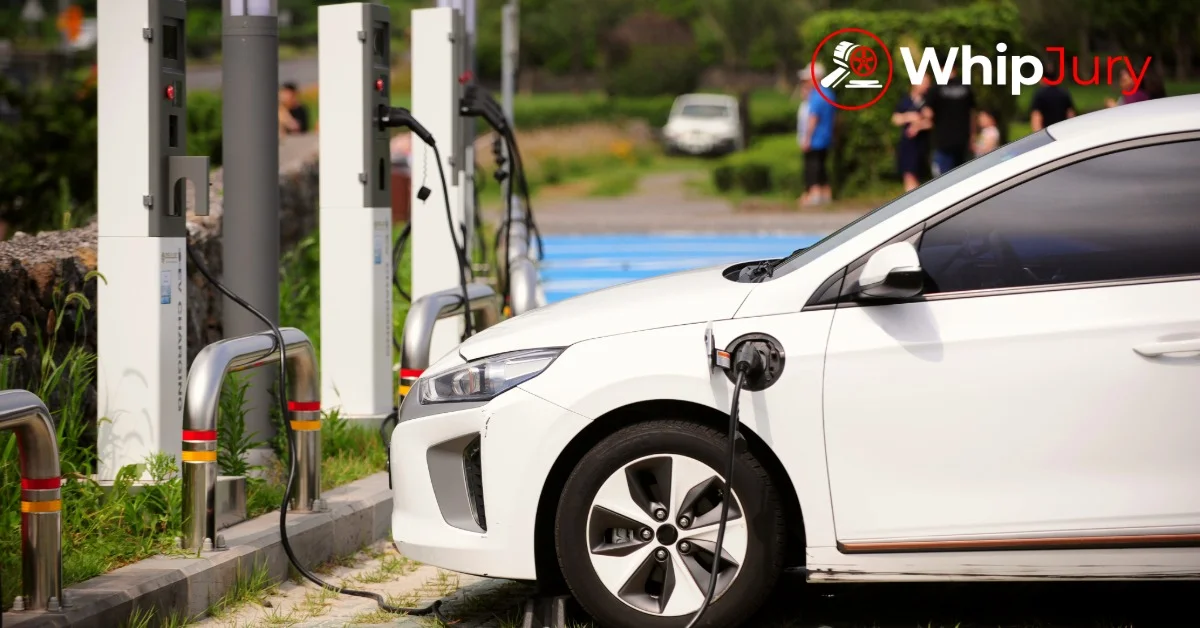
Electric vehicles solved the engineering problem. The range improved. The charging infrastructure is building out. The performance numbers are extraordinary. What nobody solved is the design problem, and the design problem is not about styling. It is structural. It is baked into the format at a level that cannot be fixed with better headlights or a more aggressive front end. The best EV designers in the world are working against physics and losing in specific ways that are visible in every faceoff where an EV goes up against a comparable combustion car.
The problem has three parts and they compound each other.
The Battery Floor Changes Everything
The structural foundation of almost every purpose-built electric vehicle is a flat battery pack integrated into the floor between the axles. This pack is the densest, heaviest, and most expensive component in the car, and it cannot be moved or reduced in thickness without sacrificing range. Current battery technology requires a pack that adds significant height to the floor structure, and that height has to go somewhere in the vehicle's overall proportions.
Where it goes is up into the passenger compartment, which forces the seating position higher, which forces the roofline higher to maintain usable headroom, which produces the tall, upright greenhouse that defines most EVs and works directly against the low, planted visual stance that makes cars look fast, expensive, and intentional. The Hyundai Ioniq 5 handles this better than most by using a retro-boxy design language that works with the tall greenhouse rather than against it. But the Ioniq 5 is the exception that proves the rule. Most EVs try to look like a sports sedan or a sleek crossover and the battery floor undermines both attempts from the ground up.
The Porsche Taycan is the clearest example of what it takes to fight the battery floor successfully. Porsche engineers spent enormous resources developing a two-layer battery configuration that is thinner than the single-layer packs in most EVs, and paired it with a design brief that prioritized a low roofline above almost every other consideration. The result looks like a sports car and drives like one. It also starts at $90,000, which is the cost of not compromising on the battery floor problem. At mainstream price points the floor wins and the roofline goes up with it.
Aerodynamics and the Drag Coefficient Obsession
Range anxiety is the central marketing challenge for every EV manufacturer and the most direct way to address it, besides adding battery capacity, is to reduce aerodynamic drag. Every point of drag coefficient reduction extends range meaningfully, and the pressure to maximize range on a given battery size has pushed EV designers toward shapes that prioritize airflow above almost every other visual consideration.
The result is a generation of EVs that look like they were designed in a wind tunnel because they largely were. Sealed lower grilles to reduce front turbulence. Smooth underbodies with no exposed components. Fastback rooflines that taper to a specific angle optimized for airflow separation. Flush door handles that disappear into the body surface. Active air flaps that open and close to manage airflow. All of these are genuinely clever aerodynamic solutions and most of them produce cars that look similar to each other because efficient aerodynamics converges toward a small number of shapes.
The Mercedes EQS is the most extreme and the most instructive example. Its 0.20 drag coefficient is one of the lowest ever recorded for a production car. It is also one of the most visually anonymous luxury sedans ever built by a brand with a 130-year history of making distinctive cars. The aerodynamic optimization was so thorough that it eliminated every visual element that might have made the car interesting to look at. The EQE and EQS were good examples of aerodynamic engineering, but they were perceived to have lost their premium identity, especially at the upper price bracket, where the visual appearance did not justify the six-figure price. Mercedes has since walked back from the EQS design philosophy toward something with more visual character, acknowledging implicitly that the drag coefficient had become a design liability even if it was an engineering achievement.
The physics tension here is real. A car with a bold, upright front end, sharp character lines, and an aggressive stance is generating more drag than one with a sloped nose, smooth surfaces, and a fastback tail. Those aggressive design elements cost range. Every design decision that makes an EV look exciting is in some measurable way making it less efficient, and in a category where range is a purchasing decision, efficiency wins the internal argument most of the time.
The Frunk Problem Nobody Wants to Admit
The front trunk, universally called a frunk and universally celebrated as a practical advantage of EV design, is quietly one of the biggest visual liabilities in the category. The absence of an engine under the hood should, in theory, allow designers to create a dramatically low hood line with no structural requirements beneath it. What actually happens is that the frunk requires usable volume, which requires a certain hood height, which produces a front end that is often taller than the equivalent combustion car's front end, because the combustion car's engine sits lower than the cargo volume an EV owner actually wants to use.
An increase in front volume can negatively change airflow and drag, which designers had to balance deleteriously against front box volume versus efficiency. The frunk is being asked to do two jobs simultaneously, provide useful storage and maintain good aerodynamics, and neither job is fully served. The frunks in most EVs are shallow, awkwardly shaped, and require a hood height that eliminates the low front end proportion that no-engine packaging theoretically makes possible. The Model S frunk holds a carry-on bag. The hood height required to accommodate it produces a front end that looks essentially the same as a conventional sedan's.
The manufacturers who have embraced a genuinely low hood on an EV, accepting that there is no useful frunk space as a consequence, produced cars that look dramatically better than the ones that compromised for storage. The Porsche Taycan's front end is essentially vestigial storage because Porsche prioritized the hood height. That decision is visible and correct in every photo of the car.
What EVs Have That Combustion Cars Cannot Match
The design problems above are real and structural, but they are not the whole picture. EVs have genuine design advantages that the best manufacturers are beginning to exploit effectively.
The flat floor enabled by the skateboard battery platform allows for interior proportions that are genuinely different from anything possible in a combustion car. No transmission tunnel bisecting the cabin. No driveshaft hump. No intrusion from mechanical components that combustion cars have to route through the passenger compartment. The Rivian R1T uses this to create a truck interior that feels architecturally different from any previous truck. The Hyundai Ioniq 5 uses it to create a lounge-like interior that is visible in external photos through the large glass area and changes how the car reads from the outside.
The absence of an exhaust system also eliminates the rear diffuser packaging constraints that force combustion cars to carry visual weight at the tail. An EV's rear end can be cleaner and lighter than any combustion equivalent, and the best EV designers are using this freedom to produce tails that read more elegantly than the equivalent rear ends of combustion cars that have to accommodate exhaust outlets, heat management, and the visual requirements of the tailpipe as a design element.
EVs also freed designers from the requirement that the front of the car communicate ventilation. A combustion car's grille exists primarily to move air to the engine. An EV's front end has no such requirement and can be sealed completely, which creates a canvas that several designers have used to make genuinely distinctive statements. The Kia EV6 front end works specifically because it was designed as a sealed surface rather than an air intake, and the graphic clarity that results is different from anything possible on a combustion car front.
The Brands Getting It Right
Kia and Hyundai have handled the structural constraints of EV design better than any other mainstream manufacturer and it is not particularly close. The EV6 and Ioniq 5 are both genuinely good-looking cars by any standard, not just by the standard of EVs, and they achieved this by accepting their design formats honestly rather than trying to look like combustion cars with the engine removed.
The Ioniq 5 acknowledged the tall greenhouse and built a retro-angular design language that worked with it. The EV6 used the sealed front to create a horizontal graphic that is impossible on a combustion car and then built the rest of the design around that unique advantage. Both cars look like what they are, which is a design principle that works consistently across every era and format. The EVs that fail visually are almost always the ones trying to look like something they are not.
Porsche solved the problem with money and engineering commitment. The Taycan required development investment that most manufacturers will not make at mainstream price points. At $90,000 it demonstrates that the structural constraints of EV design can be overcome. It does not demonstrate that the problem is tractable at $40,000, which is where the vast majority of the market will be won or lost.
The next design frontier for EVs is what happens when the battery technology improves enough that the floor thickness decreases meaningfully. Solid-state batteries, if they arrive at the costs and energy densities currently being projected, would change the battery floor constraint significantly. That change would give designers proportional freedom they have not had since the category began, and the cars that result will look different from anything currently on the road. Until that technology arrives, EV designers are working around a structural problem that the best of them handle gracefully and the rest handle poorly.
What the Faceoffs Actually Show
In WhipJury faceoffs, EVs perform inconsistently in ways that map almost exactly onto the problems described above. The Taycan wins faceoffs against combustion competitors at its price point because it solved the battery floor problem. The EV6 and Ioniq 5 win against combustion competitors in their segment because they accepted their constraints and designed with them rather than against them. The Mercedes EQS loses faceoffs it should win on price positioning because the aerodynamic optimization removed the visual character that would have justified the score.
The pattern is consistent: EVs that fight their structural constraints look confused. EVs that accept and work with them look resolved. The design problem is not that EVs are electric. The design problem is that most manufacturers are trying to make them look like something they are not, and faceoff voters can see the tension in every photo even if they cannot name it.
Put your favorite EV against its combustion equivalent on WhipJury and see which one the crowd actually reaches for when the drivetrain is not part of the question.
Frequently Asked Questions

Jeffrey Wiley has spent more time than he'd like to admit thinking about what makes a car look right. He writes about automotive design, car culture, and the opinions people have strong feelings about. He lives in north Georgia.