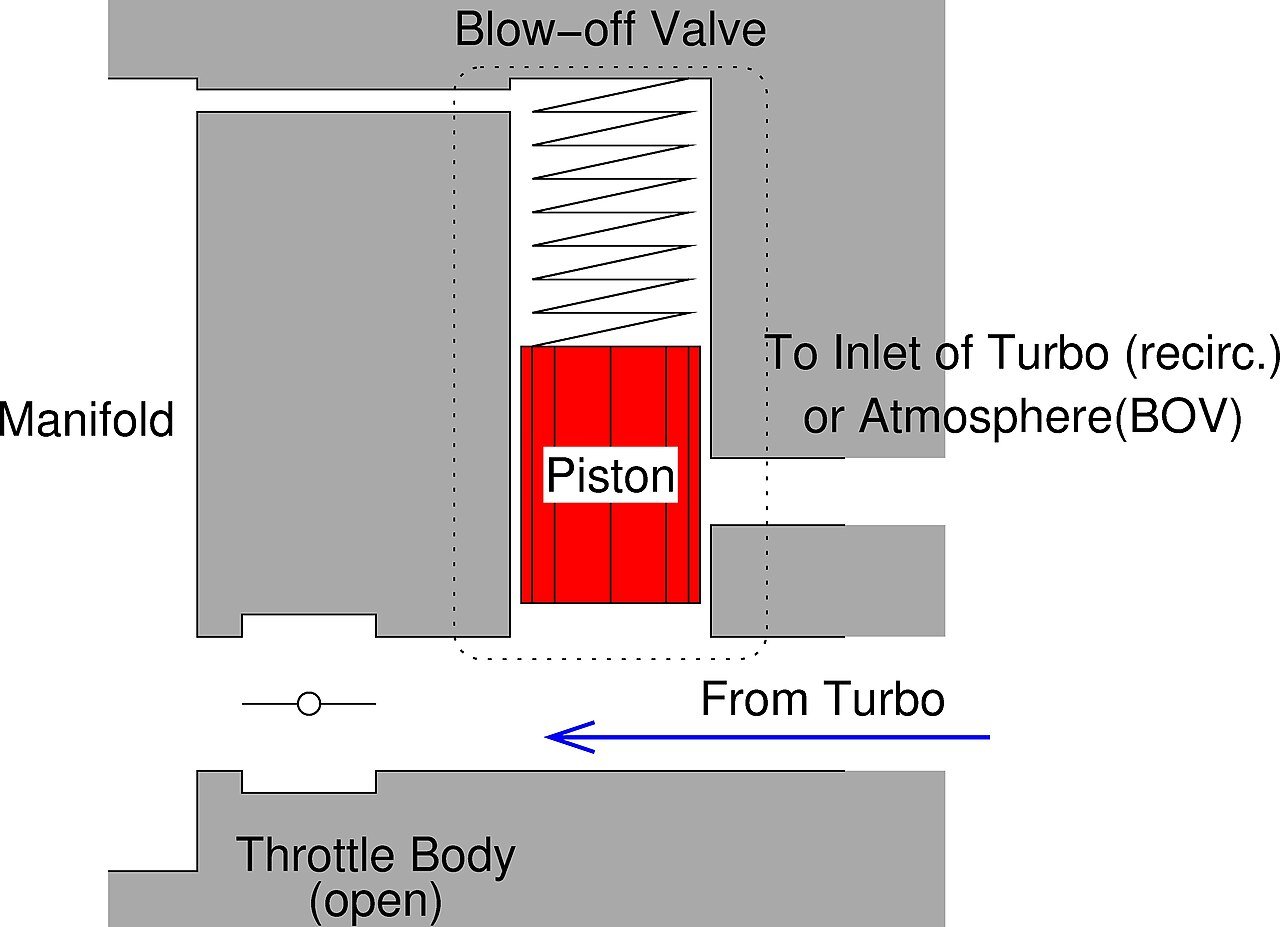
What is Blow-Off Valve (BOV)?
A valve that vents pressurized intake air when the throttle closes on a turbocharged engine, producing the familiar whoosh.
On a turbocharged engine, closing the throttle suddenly traps pressurized air between the turbo compressor and the throttle body. That trapped pressure has nowhere to go and pushes back against the spinning compressor, a condition called compressor surge that is hard on the turbo and slows it down.
A blow-off valve solves this by opening when the throttle shuts, releasing the pressurized air. A blow-off valve vents that air to the atmosphere, producing the distinctive whoosh or flutter associated with turbocharged cars. A diverter or bypass valve does the same job but routes the air back into the intake, which is what most factory turbo cars use.
The sound is why blow-off valves are so often fitted as a modification, but the underlying function is genuine: protecting the turbocharger and keeping it spinning between shifts.