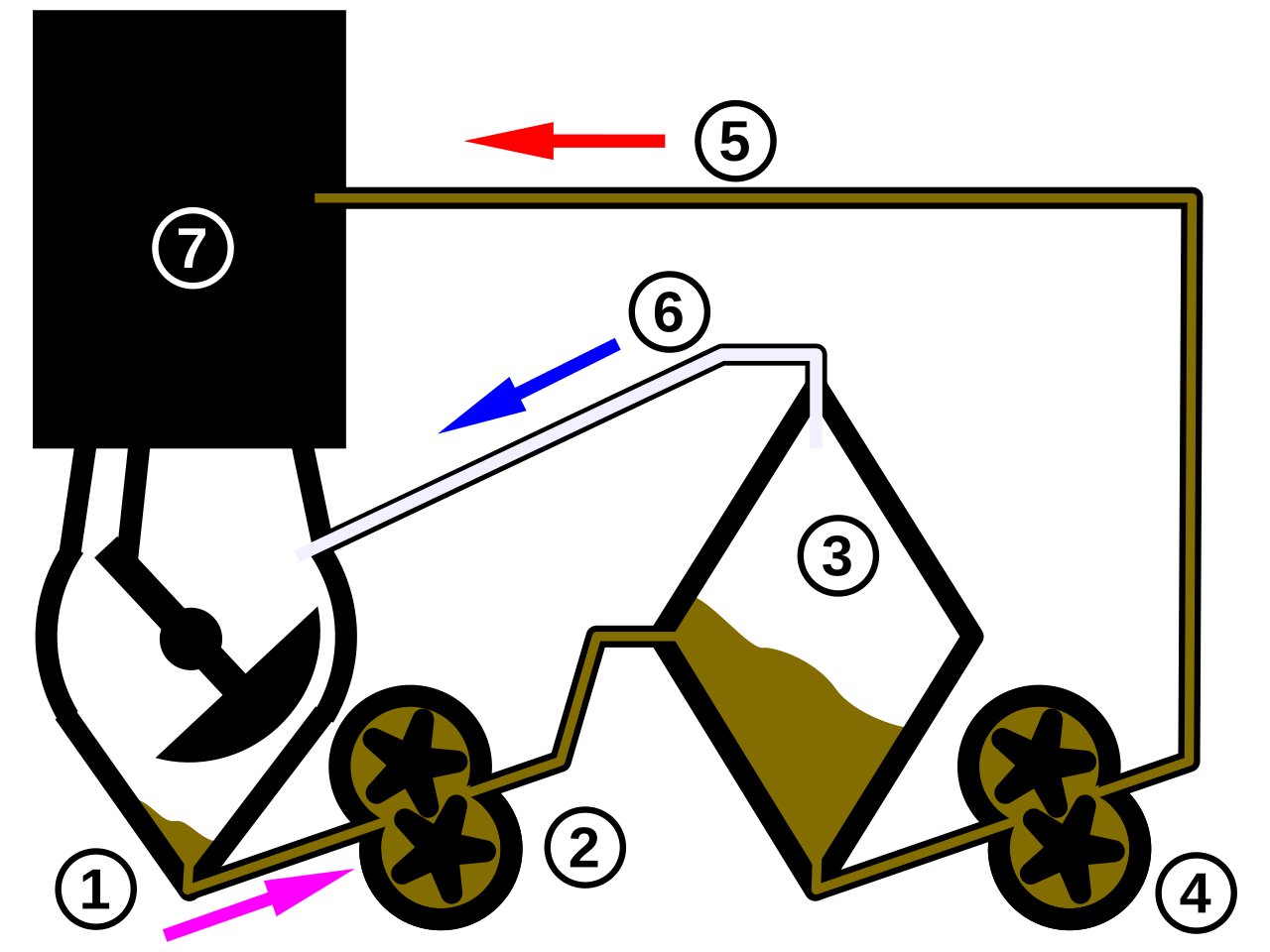
What is Dry Sump?
An engine lubrication system that stores oil in a separate external tank rather than in a pan below the engine, allowing lower engine mounting, better oil control under cornering, and improved reliability under sustained hard driving.
A dry sump lubrication system removes oil from the engine rapidly using scavenge pumps and stores it in a separate external reservoir rather than in a pan beneath the crankshaft. The opposite, a wet sump, uses a conventional oil pan attached directly below the engine where oil pools by gravity between uses of the pressure pump. Dry sumps require additional pumps (multiple scavenge stages plus a pressure pump), lines, and a remote reservoir, making them more complex and expensive.
The advantages of dry sump are significant for performance use. First, oil starvation under hard cornering or braking is eliminated; in a wet sump, sustained lateral g-forces can splash oil away from the pump pickup, starving the engine momentarily. Second, the engine can be mounted lower (no deep pan below the crank), lowering the center of gravity. Third, crankcase windage (the power-robbing turbulence of the crank and rods spinning through oil mist in the pan) is reduced because the crank runs in a near-dry environment.
Dry sumps are standard in endurance racing, Formula 1, high-performance Porsches (the 911 GT3 and GT3 RS use dry sump as factory equipment), and some extreme sports cars. The Chevrolet LS7 in the C6 Z06 Corvette uses a factory dry sump. For track day or time attack builds where sustained high-g driving is expected, dry sump conversions are a worthwhile reliability upgrade.