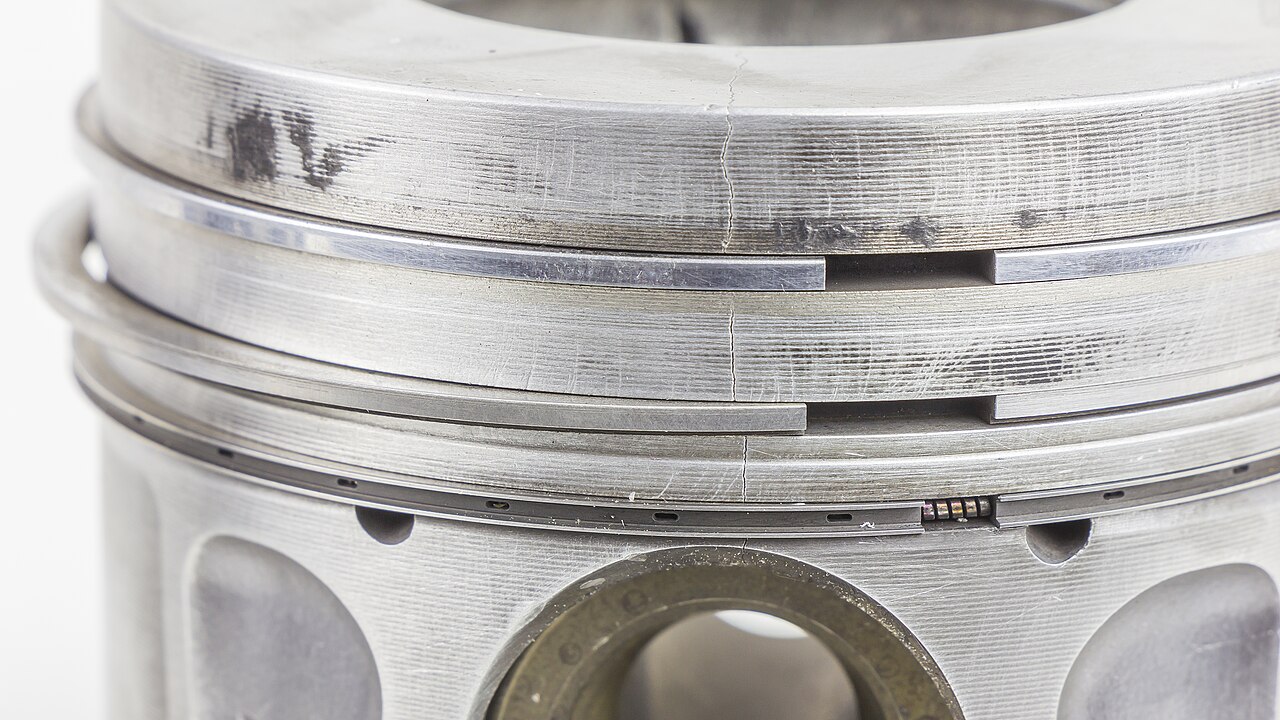
What is Forged pistons?
Engine pistons made by forging billet aluminum rather than casting molten aluminum into a mold. Stronger than cast pistons, used in high-performance builds.
Forged pistons are engine pistons manufactured by hammering or pressing solid aluminum billet into shape, rather than the more common method of casting molten aluminum into a mold. The forging process produces a denser grain structure and stronger material that resists detonation, high RPM stress, and the heat of forced induction. Forged pistons are standard equipment in built engines for high-boost or naturally aspirated high-RPM applications.
Forged pistons cost significantly more than cast pistons (typically $400-$1,200 per set versus $100-$400 for cast equivalents) and require careful break-in. They typically have looser piston-to-wall clearances than cast pistons (allowing for thermal expansion under sustained high-load operation), which can cause some piston slap noise when cold. Major manufacturers include Wiseco, JE Pistons, CP Carrillo, Mahle, and Diamond Racing.
Most stock production engines use cast pistons because they are cheaper, quieter, and adequate for the factory power output. Forged pistons become necessary when boost levels exceed factory levels, when the engine is built for sustained high-RPM use, or when reliability under racing conditions is required. The Toyota 2JZ-GTE, Mitsubishi 4G63T, and Subaru EJ257 are factory-forged piston engines and known for their tuning capability.
What is a forged engine?
A forged engine is built with forged internal components, the pistons, connecting rods, and often the crankshaft, instead of cast parts. Forging compresses the metal grain so the parts resist the heat and cylinder pressure of high boost or high rpm. Engines that target big power on a tune usually get forged internals first.
Forged versus cast pistons, what is the difference?
Cast pistons are poured into a mold and are fine at stock power levels. Forged pistons are pressed from solid billet under extreme force, which makes them denser and far harder to crack under detonation. The trade off is a little more piston noise when the engine is cold.