Studebaker Champion
Classic · Studebaker
Studebaker Champion: The Car Behind the Bullet Nose
The Studebaker Champion was the company's small, thrifty car from the 1939 model year to 1958. It doubled Studebaker's sales when it arrived, and its 1950 and 1951 "bullet nose" design is one of the most recognizable American cars of the era.
Studebaker needed a hit after weak sales in 1938, and the Champion was a clean-sheet design built around the idea that "weight is the enemy." It went on sale for the 1939 model year with a 164 cubic inch six-cylinder making 78 hp and a price of $660 for the two-door business coupe, and it doubled the company's sales that year. It also won economy runs, which made it a sought-after car during wartime gas rationing, and its engine went on to power the Army's M29 Weasel snow vehicle.
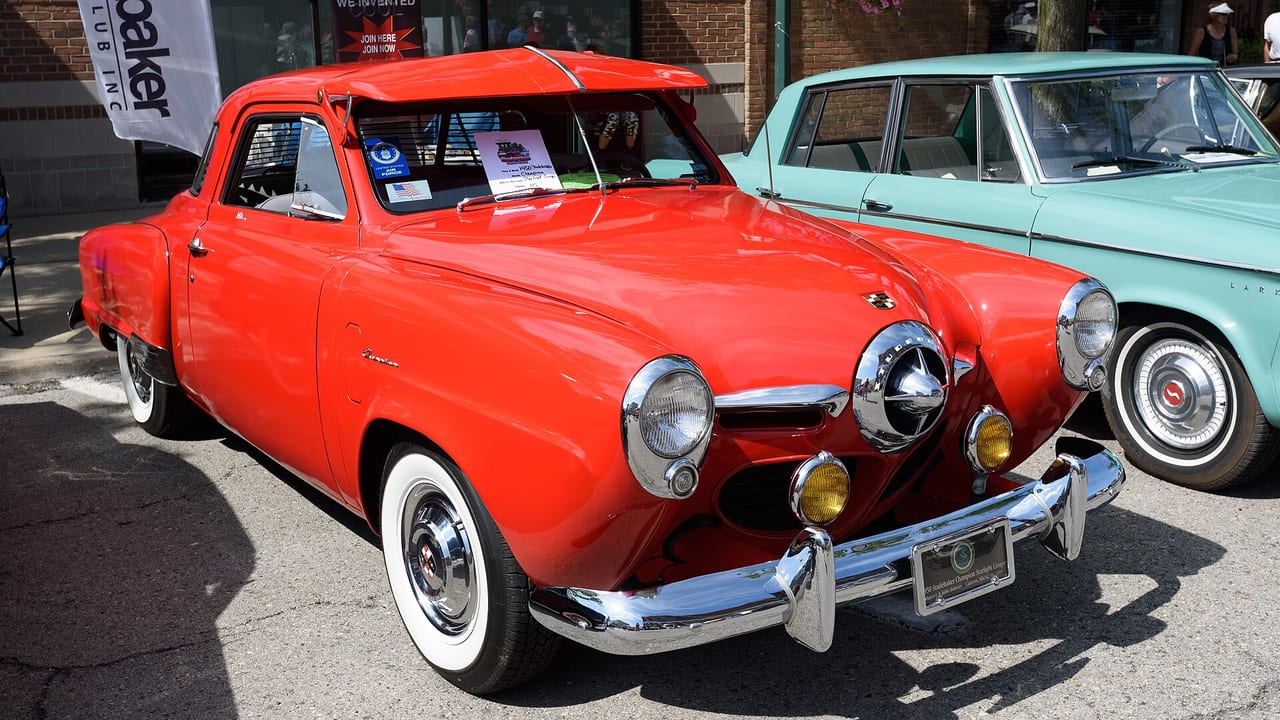
For 1947, Studebaker redesigned the Champion and the Commander and beat the big automakers to market with the first new cars after the war. The two-door Starlight coupe had a wraparound rear window made of four panes of glass, and its long trunk led to the joke that you couldn't tell whether the car was coming or going. For 1950 and 1951 every Studebaker got the "bullet nose," or "spinner," front end that seemed to borrow from the Lockheed P-38 fighter plane. Credit for it is disputed between Virgil Exner, Bob Bourke, and Loewy's studio. The 1950 Champion also got 85 hp and an available automatic transmission, and Studebaker had a record year.
A more conventional nose replaced the bullet for 1952, and Bourke's low 1953 Starliner and Starlight coupes became the basis for the later Hawk. The Champion name lasted until 1958, when the compact Lark took its place, but its six-cylinder stayed in production through 1964. The best-known Champion today may be Fozzie Bear's 1951 Studebaker in The Muppet Movie, which the Studebaker National Museum has raised money to restore.