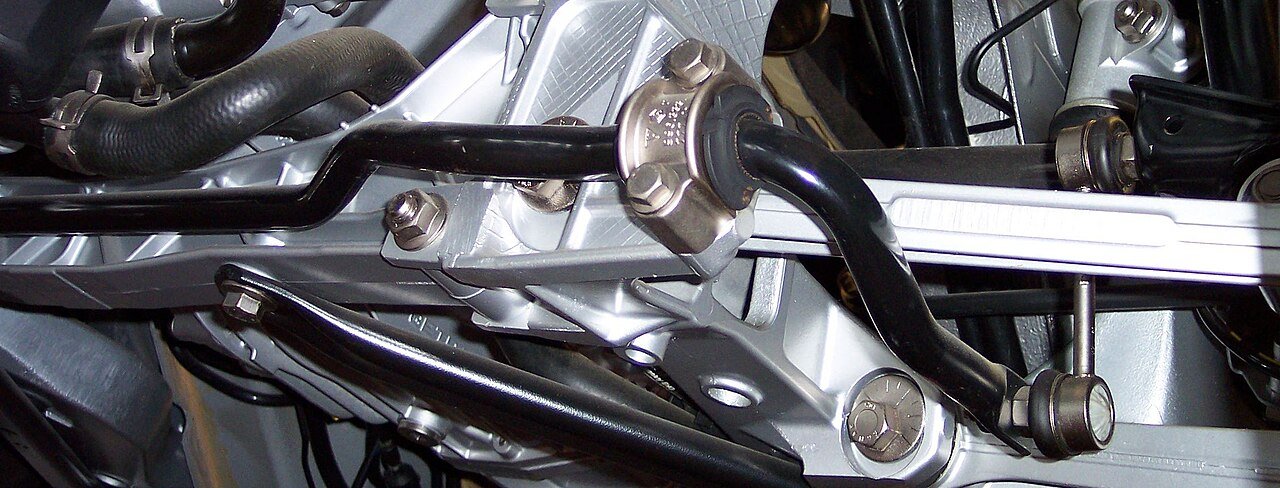
What is Sway bar?
Anti-roll bar. A torsion bar connecting left and right suspension to reduce body roll during cornering.
Sway bar (also called anti-roll bar or stabilizer bar) is a torsion bar connecting the left and right suspension components of a vehicle axle. When the body rolls during cornering, one side of the suspension compresses more than the other, twisting the sway bar. The bar resists the twist, reducing the difference in suspension travel between the two sides. The result is reduced body roll and more responsive handling.
Sway bar stiffness affects handling balance. A stiffer front sway bar reduces front body roll, improving turn-in but reducing front grip in corners (more understeer). A stiffer rear sway bar reduces rear body roll, increasing rear grip but reducing rear stability (more oversteer). Tuning sway bar stiffness front and rear is one of the primary handling adjustments in racing and track-focused builds.
Aftermarket sway bars typically offer multiple stiffness positions (adjustable through different hole positions on the bar end). This allows fine-tuning the handling balance for different conditions. Solid sway bars are stiffer than tubular bars of the same diameter; the choice depends on weight and stiffness requirements. Quality sway bar manufacturers include Hotchkis, Eibach, Whiteline, and various OE suppliers.