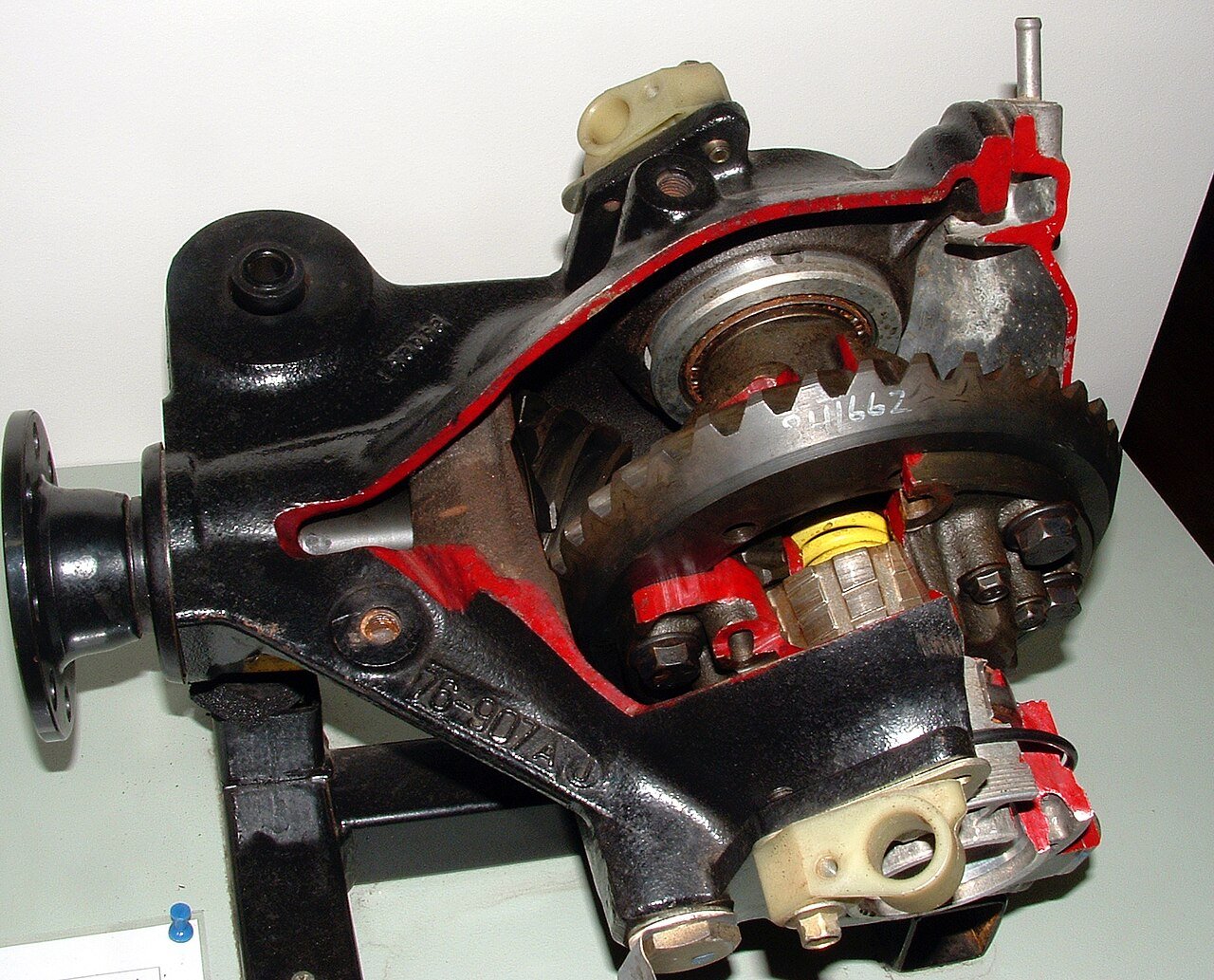
What is Limited-Slip Differential (LSD)?
A differential that limits how much the driven wheels can spin at different speeds, sending power to the wheel with grip.
A standard open differential lets the driven wheels turn at different speeds, which is necessary for cornering but has a serious weakness: if one wheel loses traction, the differential sends the power to that spinning wheel and the car goes nowhere. A limited-slip differential, or LSD, restricts that speed difference so torque keeps reaching the wheel that still has grip.
The practical effect is better traction out of corners and far more predictable behavior when the car is being driven hard. For drifting an LSD is effectively mandatory, because holding a sustained slide requires both rear wheels to keep driving rather than one spinning uselessly.
LSDs come in several designs, including clutch-type, helical or torque-biasing, and viscous units, and many performance cars fit one from the factory. Adding an LSD is one of the most meaningful handling upgrades available for a rear-drive car.