What is Flywheel?
The disc connecting the engine crankshaft to the clutch (in manual transmissions) or torque converter (in automatic). Lighter flywheels improve throttle response.
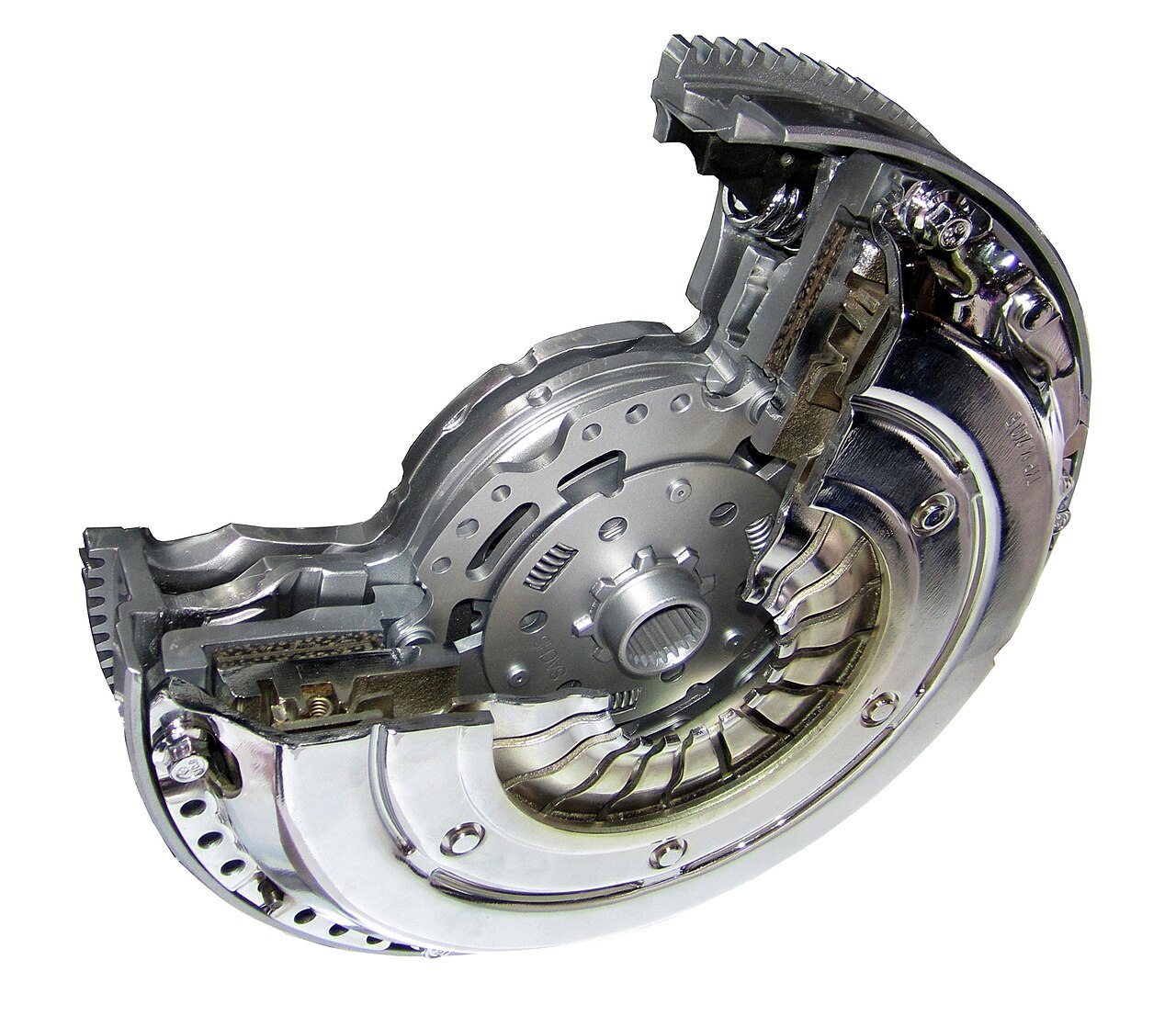
Flywheel is the disc connecting the engine crankshaft to the clutch (in manual transmissions) or torque converter (in automatic transmissions). The flywheel serves multiple functions: it stores rotational energy (smoothing engine power pulses), provides the connection point for the clutch, and acts as a damper between the engine and drivetrain.
Stock flywheels are typically heavy (15-25 pounds) for smooth idle and reduced drivetrain shock. Lightweight flywheels (often 8-15 pounds in racing applications) reduce rotational mass and improve throttle response, allowing the engine to rev faster. The trade-off is somewhat rougher idle, more noise, and increased drivetrain shock during clutch engagement. Lightweight flywheels are common in track-focused builds and racing cars.
Manual transmission flywheels can be single-mass (a single disc, traditional design) or dual-mass (two discs separated by a damper, used in many modern cars to reduce vibration). Dual-mass flywheels provide smoother operation but can fail at higher mileage; replacement with a single-mass flywheel and matching clutch is a common upgrade. Major flywheel manufacturers include Fidanza, Clutch Masters, ACT, and various OE suppliers.