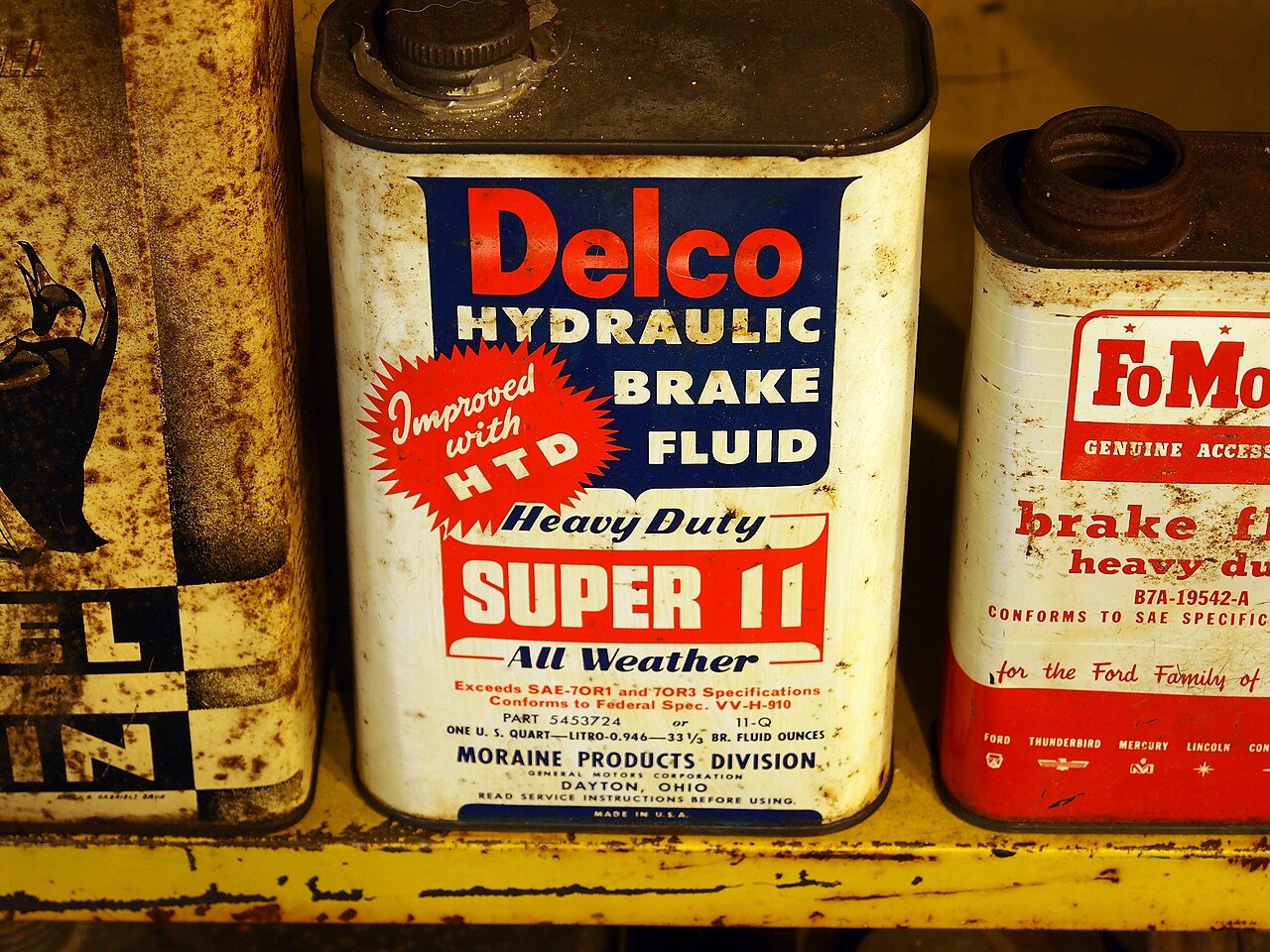
What is Brake fluid?
Hydraulic fluid that transfers force from the brake pedal to the brake calipers. Must be replaced periodically due to moisture absorption.
Brake fluid is hydraulic fluid that transfers force from the brake pedal to the brake calipers. The fluid is glycol-ether based (DOT 3, DOT 4, DOT 5.1) or silicone-based (DOT 5). The fluid must compress under braking pressure to transfer force; air bubbles or moisture-saturated fluid cannot compress effectively, causing soft brake pedal and reduced braking performance.
Brake fluid is hygroscopic (absorbs moisture from the atmosphere). Over time, the fluid absorbs water from air entering through brake reservoir vents and from brake hoses (which slowly seep moisture). The water reduces the boiling point and creates corrosion. Modern brake fluid specifications (DOT 4, DOT 5.1) tolerate more moisture than older DOT 3, but all glycol-ether fluids absorb moisture and require periodic replacement.
The recommended replacement interval is typically 2-3 years (sometimes 24,000 miles whichever comes first). The replacement involves bleeding the fluid from each brake caliper while keeping the master cylinder full. The work can take 1-2 hours and is one of the more important fluid changes for brake system reliability. Track-driven cars often replace fluid more frequently (every 6 months to 1 year) due to the heat cycles experienced during track use. The cost is typically $80-$200 in parts and labor.