DuelsLeaderboardGarageBlogCarsGlossaryBrowse

Barn find

Car culture term

Barn find
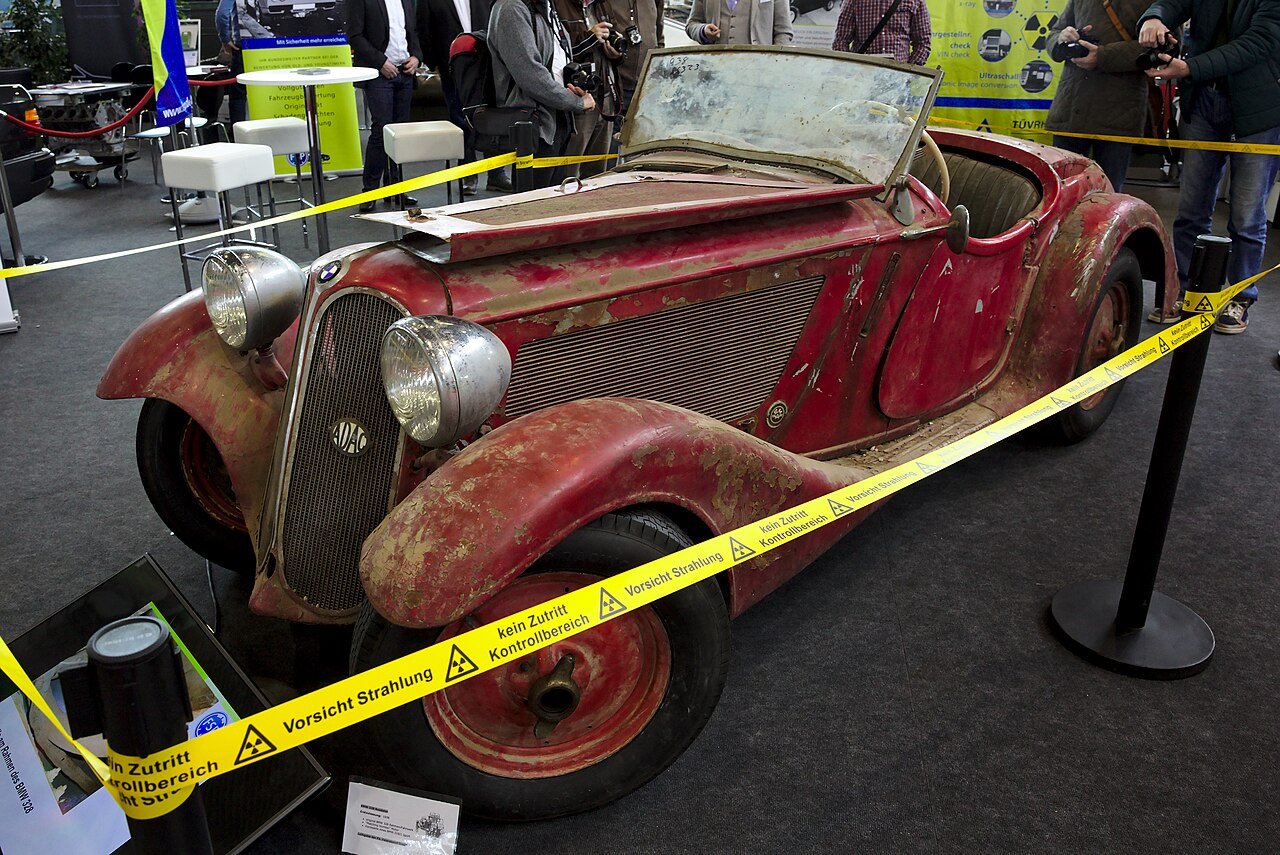
Photo: Alexander Migl / Wikimedia Commons · CC BY-SA 4.0

What is Barn find?

An old, neglected vehicle discovered in storage (often a barn, garage, or shed) after years or decades of inactivity. Often valuable for restoration.

Barn find describes a vehicle discovered in storage after years or decades of inactivity, typically in a barn, garage, shed, or similar building. The car is usually in deteriorated condition (rust, surface damage, mechanical decay) but contains intact original parts that have been preserved by the storage environment. Genuine barn finds are increasingly rare as the supply of unrestored classic cars decreases.

The appeal of barn finds includes the discovery aspect (finding a forgotten classic), the preservation potential (restoring the original car versus building a replica), and the historical significance (tracing the car ownership and use through time). Some barn finds are extraordinarily valuable: Bugatti Type 57s, vintage Ferraris, prewar Mercedes, and early American muscle cars in barn-find condition can command extreme prices at auction.

Modern barn-find culture is heavily mediated through media. TV shows (American Pickers, Barn Find Hunter), magazines (Hagerty publications), and social media accounts focus on barn-find discoveries. The Hagerty Barn Find Hunter YouTube series specifically documents the process. The phenomenon has driven up prices for genuine barn-find condition vehicles, with patina (original paint with surface deterioration) sometimes valued more than full restorations.

Related terms

RestomodOEMHot rod

Frequently asked questions

Are barn finds always valuable?
No. Most barn finds are simply old cars that have been stored for years; only a minority have significant collector value. The most valuable barn finds are rare or significant cars (Ferraris, prewar racers, low-volume sports cars) discovered with documented history. Common cars in barn-find condition typically aren't valuable enough to justify professional restoration.
Should I restore a barn find?
Depends on the car. Significant collector cars (early Ferraris, certain Mustangs, classic Mercedes) generally benefit from professional restoration that preserves originality. Common cars often work better as drivers without full restoration; the cost of full restoration often exceeds the post-restoration value. Patina (original paint with character) is increasingly valued over fresh paint.
Where do you find barn finds?
Often through inheritance (family members of deceased original owners), estate sales, classified ads, or specialized hunters who scout rural properties. Some barn finds emerge through online research (database searches for known cars). Most genuine barn finds today come through personal connections rather than random discovery.
Are TV barn-find shows realistic?
Mixed. The cars are typically genuine but the discovery process is often staged or accelerated for television. Some shows (Barn Find Hunter) document genuine ongoing exploration. Others use staged discoveries for entertainment value. The cars are real; the dramatic moments are sometimes engineered.
What is patina vs restoration?
Patina is the original paint and surface character that develops over time (oxidation, light wear, sun fading). Restoration returns the car to original factory appearance. Recently, patina has gained appreciation as evidence of original character. Fully restored cars are still preferred for some applications; for others, patina is preserved.

Barn find on the blog

Lewis Hamilton sold every car he owned, then bought a barn-find Ferrari F40

Lewis Hamilton sold his entire car collection in 2025 and said he would only buy another if it was a Ferrari F40. He has now found one that sat in a garage for over 30 years and had Ferrari restore it at Maranello. Here is why the F40 is the car a seven-time champion picked over everything.

Back to Glossary