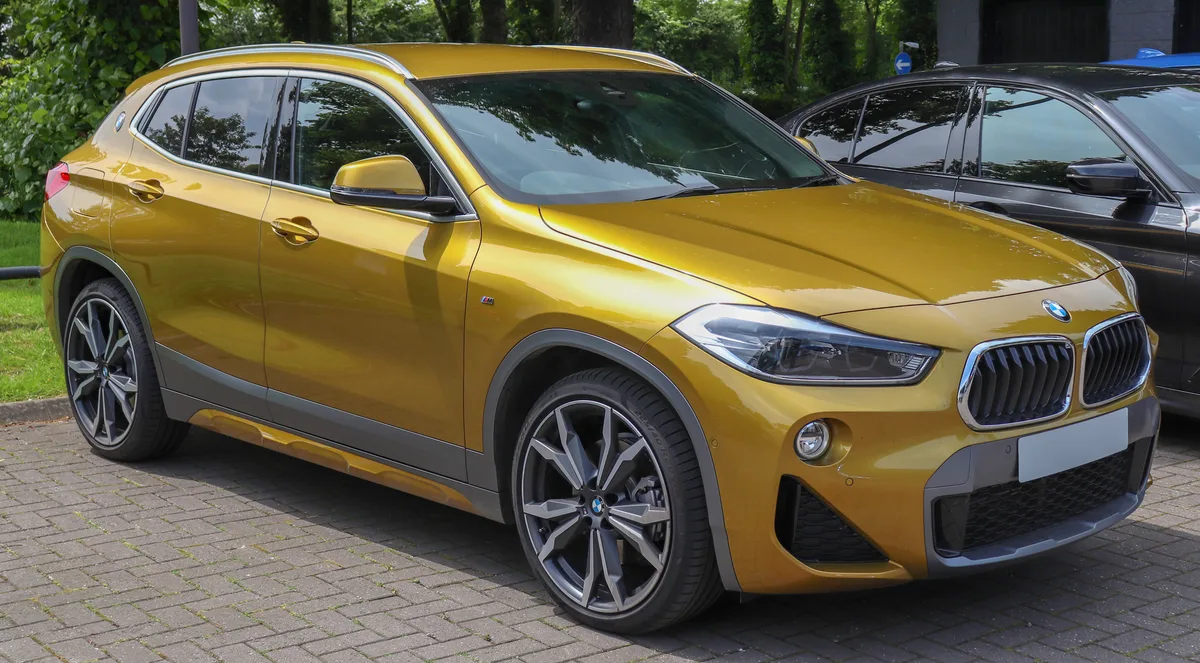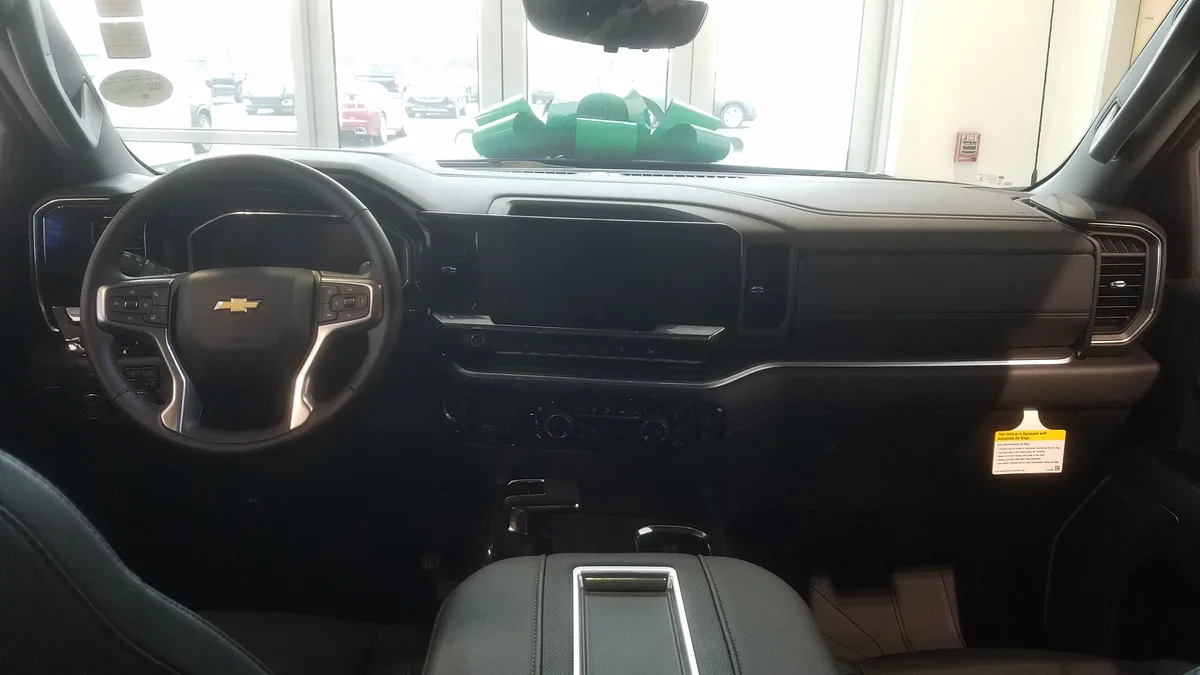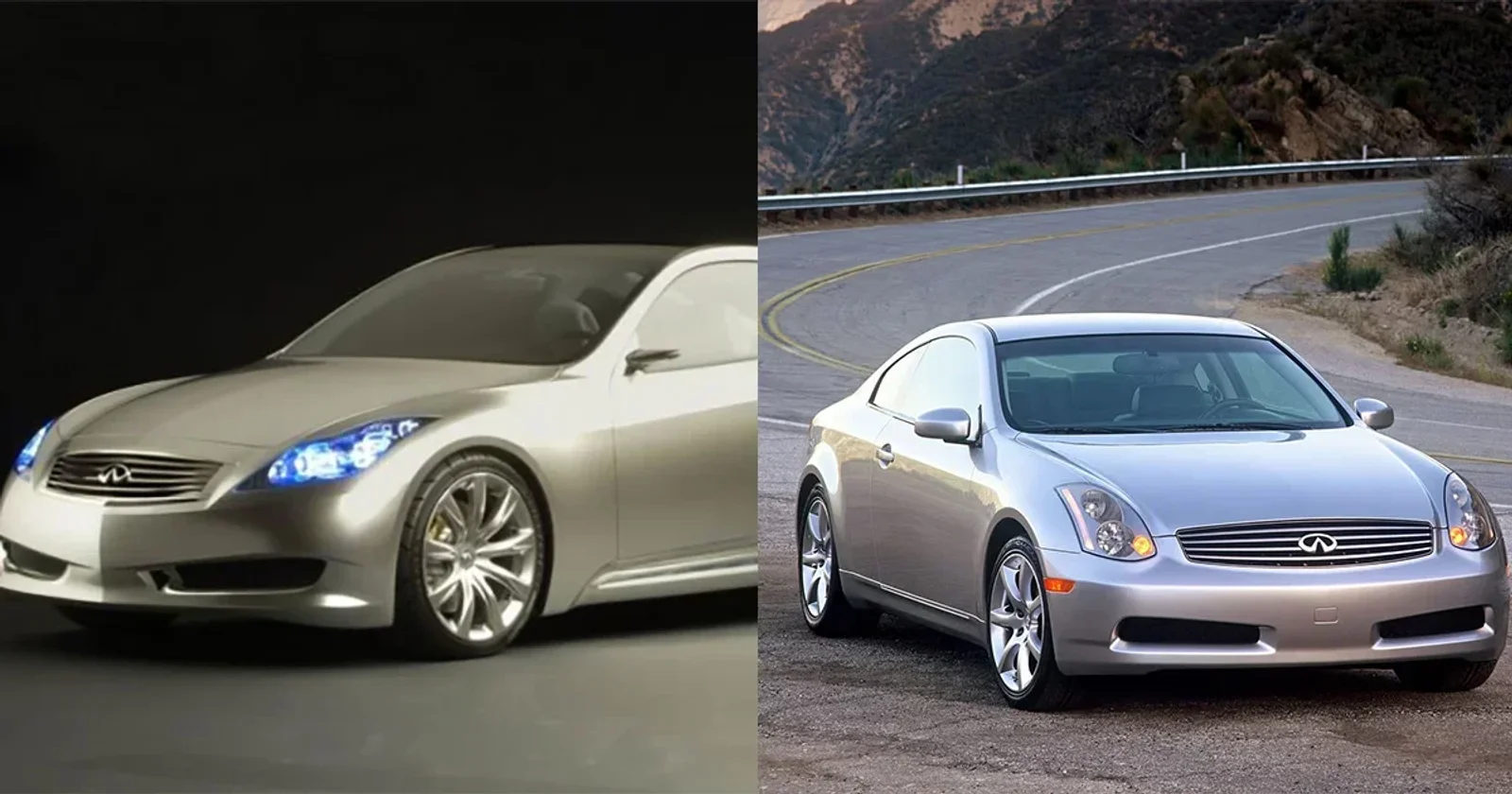
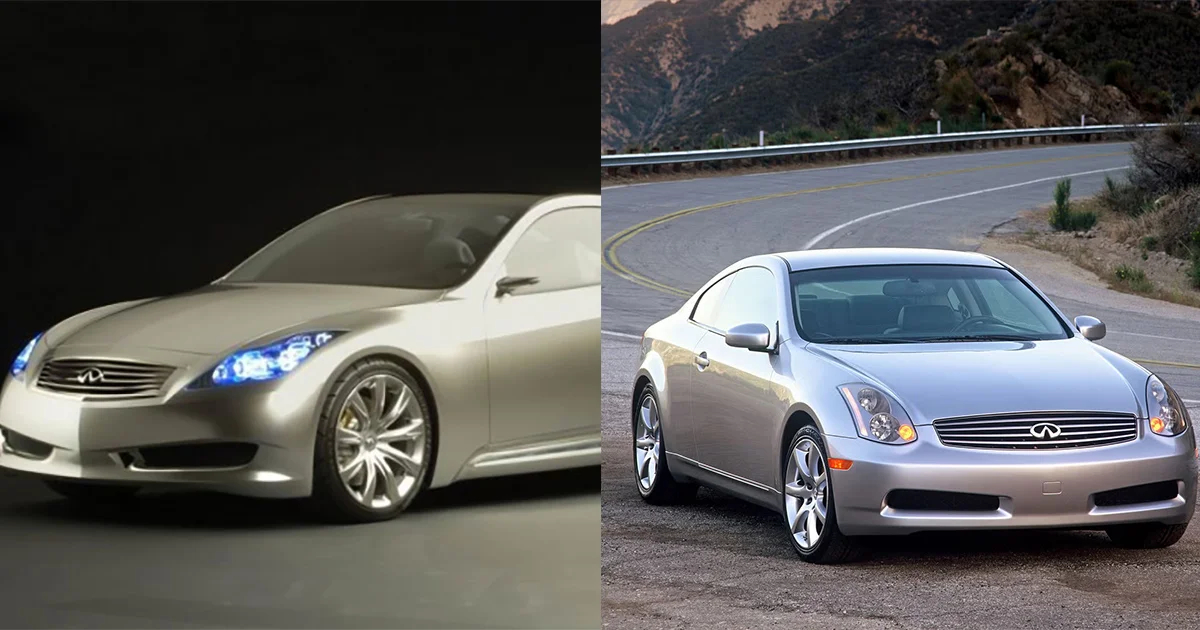
Every few years a car company rolls something onto an auto show stage that makes the crowd go quiet for a second before the applause starts. The proportions are perfect. The surfaces are sculpture. The details are unlike anything currently on the road. Then two years later the production version arrives and something has happened to it. The roofline is higher. The wheel arches are smaller. The front end has been softened. The car that made people stop talking is now a car people drive past without looking at. This happens so consistently it might as well be a law of automotive physics.
Understanding why requires understanding the gap between the two jobs a car has to do, and why those jobs are fundamentally incompatible at the level where design decisions get made.
A Concept Car Has One Job
A concept car exists to communicate a design direction, generate press coverage, test public reaction, and keep people excited about the brand between product cycles. That is it. It does not need to accommodate a family of four on a long road trip. It does not need to pass pedestrian impact regulations in seventeen markets. It does not need windshield wipers that work in Norwegian rain or headroom clearance for the 95th percentile male head. It does not need to be assembled by workers on a production line in three minutes per station.
A concept car is a piece of communication shaped like a vehicle. The designers are not solving the same problem the production team will solve. They are making an argument about what the brand believes in, what direction the design should head, what the car could be if nothing constrained it. That freedom is visible in every surface of a great concept and it is the first thing that gets negotiated away when the production engineers arrive.
Regulation Kills Proportions First
The single most damaging regulatory constraint on production car design is pedestrian impact standards, and most people buying cars have never heard of them. When a pedestrian is struck by a vehicle, the front end needs to absorb the impact in a specific way to minimize head injury. This requires a minimum amount of deformable space between the top of the hood and the hard components underneath, typically the engine block or chassis structure.
Concept cars routinely have hoods that sit millimeters above the mechanical components underneath. They look perfect because the hood is exactly as low as the proportion demands. Production cars need that hood raised, sometimes by several inches, to create the required impact absorption zone. The result is a front end that looks taller and heavier than the concept, which changes the entire proportion of the vehicle in a way that no amount of styling can fully recover from. The car stops looking like it belongs to the road and starts looking like it sits above it.
This is why the Jaguar F-Type went from concept to production with almost all of its visual drama intact while so many other concepts lost theirs. Jaguar's designers understood where the regulatory constraints would land and designed around them from the beginning rather than designing the ideal and then compromising it. Most concepts are not designed with that discipline because their job is to show the ideal, not to anticipate the compromise.
The Wheel and Tire Problem
Concept cars almost always ride on wheels that are significantly larger than anything that will go on the production version. A concept showing 24-inch wheels will go into production with 18s or 19s because the larger wheels are prohibitively expensive, produce an unacceptable ride quality on real roads, and have no tire options that would survive a pothole in Chicago in February. Concept wheels are also often custom-fabricated pieces that would cost more than the average car to produce in volume.
The wheel size change does more damage to a car's appearance than almost any other single dimension. Large wheels filling the arches tightly is one of the primary visual cues for an expensive, planted, performance-oriented design. When production wheels arrive, the arches suddenly look too large for what is inside them, the car looks like it is floating above its footprint instead of gripping it, and the whole visual argument about stance and purpose is undermined before a single customer takes delivery.
The Cadillac Escalade IQ concept had wheels so large and tires so thin that the combination would be genuinely dangerous on anything other than a perfectly smooth surface. The production version scaled back to something real. The concept looked like it could park itself on the moon. The production version looked like an Escalade. Both outcomes were inevitable from the moment the concept was designed.
Crash Structure Does to the Rear What Pedestrian Regs Do to the Front
Rear crash standards require a minimum overhang behind the rear wheels and a certain amount of structure in the tail to absorb rear impact energy. Concept cars frequently have almost no rear overhang, with the tail cut off sharply just behind the rear axle in a way that produces the kind of short, aggressive rear end that makes sports car proportions work. Production versions need material added back to the tail for structural and regulatory reasons, and that material adds visual weight to exactly the place where the design was cleanest.
The trunk lid also needs to be at a height and angle that allows a normal human to access the trunk without requiring a step stool. Concept cars routinely show trunks that are aesthetically perfect and functionally inaccessible, with lids so low and raked that anyone over five-foot-six would scrape their forearm loading groceries. Production teams raise the trunk line. The roofline follows. The glasshouse gets taller. The fastback proportion that looked so promising in the reveal renders disappears into a shape that looks like an ordinary sedan with aspirations.
Interior Volume Is Non-Negotiable
Every inch of roofline height removed in the name of design is an inch of headroom removed from the passenger compartment. Concept cars solve this problem by making the interior purely theoretical. The seats are often props. The dimensions shown in the render are not checked against actual human occupant requirements. The car looks like it fits people because the people shown in the press materials are rendered at a scale that makes the cabin appear roomier than it actually is.
When the production team actually sits humans in the car and discovers that the roofline as designed gives rear passengers four inches of headroom, the roofline goes up. When the wheelbase as designed does not provide adequate knee room for anyone over six feet, the wheelbase gets stretched, which changes the proportion. When the A-pillar angle as designed creates a blind spot that would fail visibility standards, the angle changes, which changes the greenhouse, which changes the whole side profile.
Each of these changes is individually small and individually justified. Collectively they transform a car that looked extraordinary into a car that looks ordinary, and the design team has to rebuild something visually compelling from the compromised platform that remains. The best ones succeed. Most do not fully recover.
Manufacturing Cost Eliminates Details
Concept cars are hand-built by small teams of craftspeople who spend weeks on individual body panels. The surfaces are shaped, adjusted, and finished to a standard that would require thousands of additional dollars per car to replicate in production. The perfectly flush panel gaps. The complex surfacing that catches light exactly as the designer intended. The door handles that are machined from billet aluminum and inset flush with the body. All of it is achievable at concept scale and financially impossible at production scale.
Production tooling introduces its own distortions. A sharp character line that looks knife-edge on a hand-built concept becomes slightly rounded in stamped sheet metal because tooling that produces perfectly sharp lines is expensive to maintain and wears quickly. The rounding is measured in fractions of a millimeter but it changes the way light reads across the surface in ways that accumulate across the whole body. The concept looks like a design. The production car looks like a design that has been filtered through industrial reality.
Lighting elements are particularly vulnerable to this process. A concept might show LED headlights that are a single wafer-thin slice of light across the front end, which looks spectacular and costs a thousand dollars per unit to produce at any reasonable volume. The production version gets a slightly thicker, slightly simpler headlight assembly that is within budget, and the graphic that defined the front end of the concept is gone before a single car leaves the factory.
The Concepts That Made It Through
A short list exists of concepts that arrived in production with their design intent essentially intact, and studying what they have in common is instructive. The Porsche Boxster concept from 1993 became the production Boxster that launched in 1996 with almost nothing changed. The Audi TT concept and the production TT were essentially the same car. The Mazda MX-5 that went into production in 1989 looked like the concept that preceded it.
What these cars share is that their designers understood the production constraints before the concept was drawn. The Boxster was designed to be manufacturable. The TT was designed by Peter Schreyer with the production reality in mind from the first sketch. The MX-5 was engineered and designed simultaneously rather than sequentially. When design and engineering work in parallel from the beginning, the concept is already a production car in disguise and the translation loses almost nothing.
More recently, the 2023 Toyota Prius is one of the clearest examples of a production car that arrived looking nearly as dramatic as the concept that preceded it. Toyota's design team, working under a mandate from leadership that had been in place for almost a decade, designed the production Prius with the regulatory and manufacturing constraints already absorbed into the design brief. The fastback result felt shocking precisely because it was not a concept being diluted. It was a production car designed from the start to look the way it looked.
What This Means When You See a New Concept
When a brand shows a concept that genuinely excites you, the useful questions to ask are not about the design itself but about the conditions around it. Is the company showing this concept from a position of strength or desperation? Strong brands show concepts that lead production; struggling brands show concepts that distract from it. Has this manufacturer successfully translated concepts to production before? Mazda's track record on this is exceptional. Other brands show beautiful concepts and deliver ordinary cars so consistently it has become predictable.
The Mazda Vision X-Coupe shown at the Japan Mobility Show 2025 is a concept worth watching precisely because Mazda has proven it knows how to carry a design direction from show floor to showroom. The Genesis X series concepts have been translating into production vehicles with unusually high fidelity. Honda's 0 Saloon is a beautiful concept from a brand that has a more complicated track record on this specific question.
The concept is always the dream version of the car. The production version is the version you can actually buy, drive, and submit to WhipJury. Rate the production version and find out whether the dream survived the translation.

Cam Walsh has been obsessing over cars since before he could drive one. Based out of Atlanta, Cam covers automotive design, car culture, and the eternal debate over which whips actually look the part.