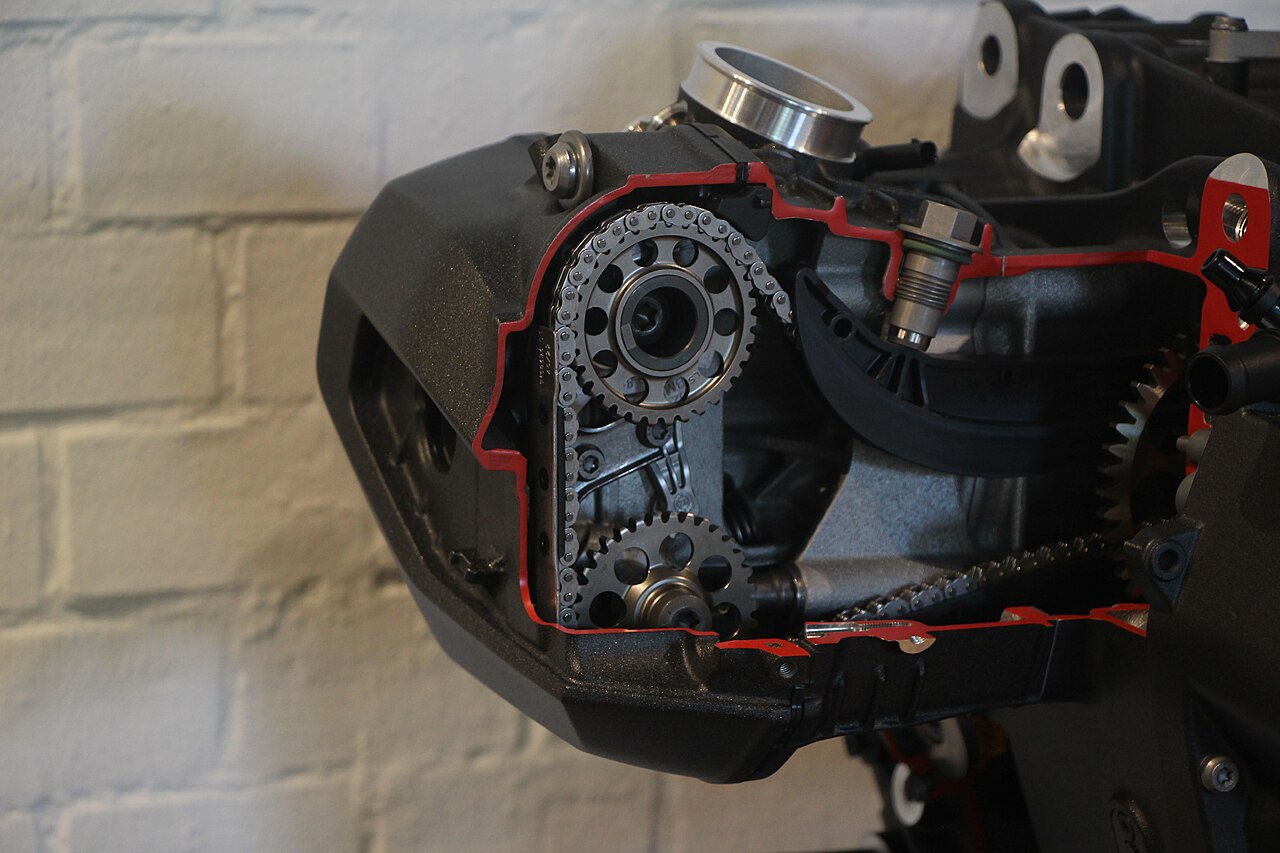
What is Timing chain?
A metal chain that synchronizes the camshaft with the crankshaft. More durable than belts, typically lasting the engine life with periodic inspection.
Timing chain is a metal chain (typically a roller chain or sprocket-driven chain) that synchronizes the camshaft with the crankshaft. The chain replaces the rubber timing belt used in older engines. Metal chains are significantly more durable than belts and are typically rated for the engine entire service life (or at least 200,000+ miles before any service is required).
Timing chains do require some maintenance over very long service intervals. Common issues include chain tensioner failures (some early V6 and V8 designs had problematic tensioners that required replacement at higher mileage), chain stretch (the chain can elongate slightly over years of operation), and guide rail wear. Modern timing chain systems are typically reliable for 200,000-300,000+ miles with normal driving.
Timing chain failures are rare but serious. Signs include unusual engine noise (especially a rattling or grinding sound), check engine lights for cam-crank synchronization issues, and decreased performance. Replacement is similar in scope to timing belt service: extensive disassembly to access the chain, with the chain itself, tensioners, and guides typically replaced together. Cost is similar to belt service ($800-$2,500 typically) due to the labor-intensive nature.
