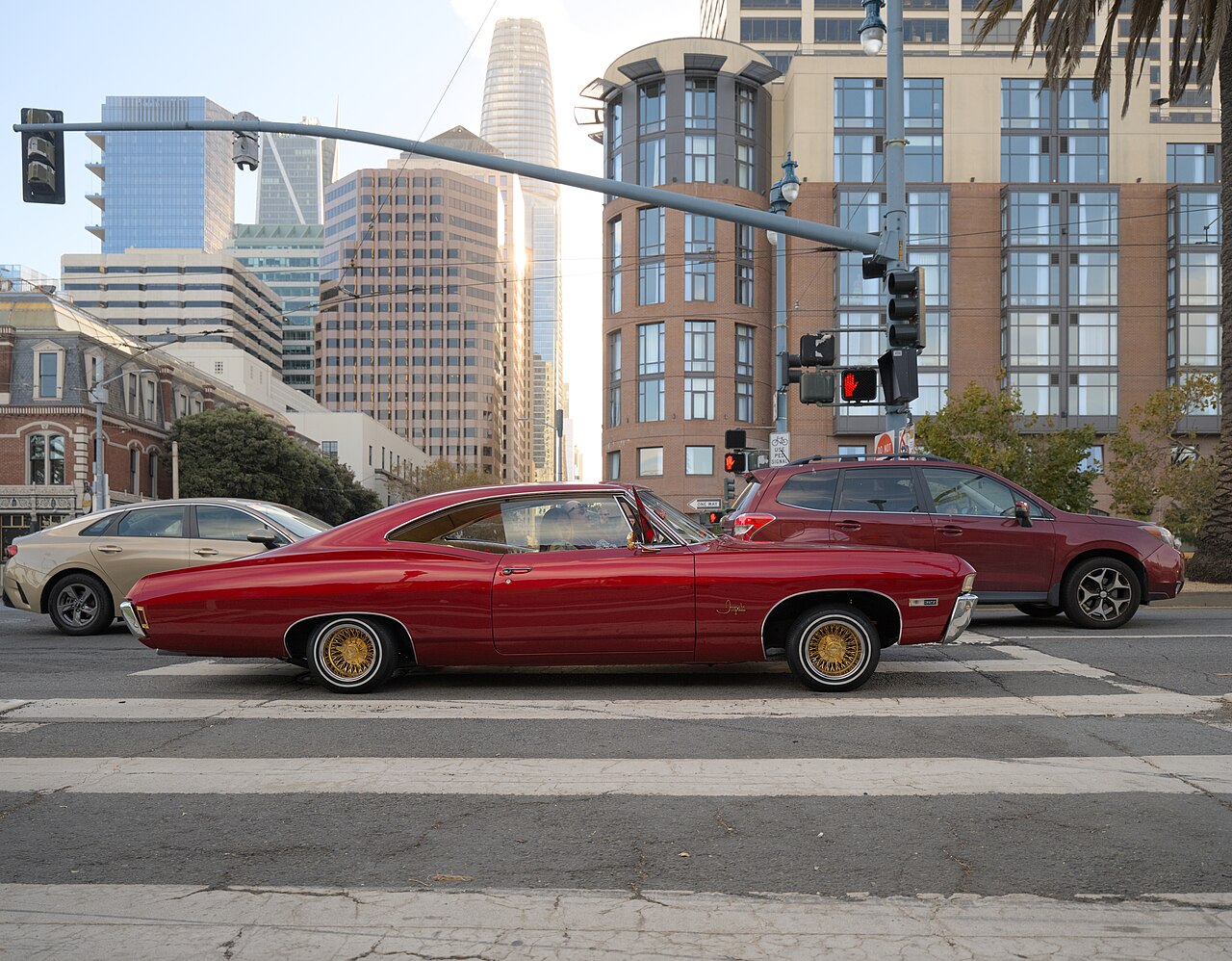
What is Lowrider?
A car modified with hydraulic or air suspension allowing dramatic ride height changes, often with elaborate paint and interior. Mexican-American cultural origin.
Lowrider describes cars modified with hydraulic or air suspension systems that allow dramatic ride height changes, often combined with elaborate paint schemes, custom upholstery, and extensive chrome detailing. The culture emerged in Mexican-American communities in California in the 1940s and 1950s and has remained a distinct car subculture with dedicated events, publications, and clubs.
The defining feature is the hydraulic suspension system, which allows the driver to raise and lower individual corners of the car at will. Cars can hop dramatically (the famous lowrider hop competitions), drive at extremely low ride heights with the body resting near the ground, or any height in between. The hydraulics are typically driven by car batteries (often multiple banks of additional batteries fitted in the trunk).
Common lowrider base cars include 1960s and 1970s Chevrolet Impalas, Caprices, and El Caminos; Buick Rivieras; Cadillac DeVilles; and Lincoln Continentals. The Chevy Impala, particularly the 1964 model year, is widely considered the iconic lowrider chassis. The aesthetic emphasizes ground-hugging stance, intricate paint (often with patterns referencing Latino cultural themes), and showcase-quality interior work.