DuelsLeaderboardGarageBlogCarsGlossaryBrowse

Hashiriya

Car culture term

What is Hashiriya?

Japanese term for street racer. Drivers who race on public roads at night, often associated with touge mountain pass driving.

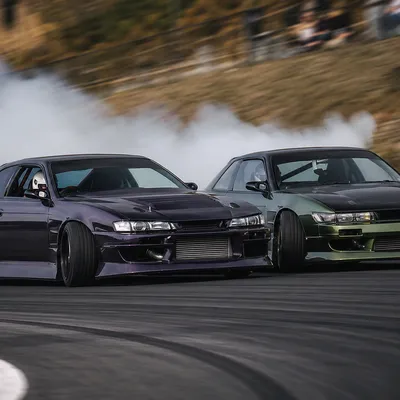
Hashiriya (走り屋, "running man" or "speed person") is a Japanese term for street racers, particularly those who race on public mountain passes (touge) and highways at night. The term is the root of street racing culture in Japanese tuner communities and is used both as identification within the community and (less flatteringly) by police and media to describe the activity.

Hashiriya culture overlaps significantly with bosozoku, kanjozoku, and Mid Night Club. The term is broader than any one of these specific groups: any street racer in Japan can be called a hashiriya, while bosozoku, kanjozoku, and Mid Night Club refer to specific subcultures. The term is most commonly applied to touge drivers (mountain pass racers) and the broader Japanese street racing community.

The activity is illegal and dangerous. Police periodically crack down, and the practice has resulted in fatalities. The cultural appreciation of hashiriya extends well beyond Japan through manga (Initial D, Wangan Midnight), anime adaptations, and games. Modern hashiriya activity continues in Japan despite ongoing enforcement; the cultural identity remains strong.
Related terms

KanjozokuTougeBosozoku

Frequently asked questions

Is hashiriya the same as bosozoku?
Different but related. Hashiriya is the broader term for any Japanese street racer. Bosozoku is a specific subculture associated with motorcycle gangs (and later, decorated cars) of the 1970s and 1980s. Kanjozoku is a specific Osaka-based subculture racing on the Kanjo Line. Mid Night Club was a specific elite group on the Wangan. Hashiriya encompasses all of these and more.
Are hashiriya considered criminals?
The activity is illegal (street racing on public roads). Within the broader hashiriya community, drivers vary widely in their criminal involvement. Some are organized crime-adjacent (yakuza-influenced bosozoku); others are simple enthusiasts who participate occasionally. The community is diverse rather than uniformly criminal.
Where do hashiriya race?
Multiple locations. Touge (mountain passes) like Hakone, Akagi, and various other Japanese mountain roads. Highways like the Wangan Bayshore Expressway in Tokyo and the Kanjo Line in Osaka. Industrial zones and bridge overpasses in some cases. Specific locations vary by group and time period.
Has the hashiriya culture declined?
Activity has decreased compared to the 1980s and 1990s peak, but it has not disappeared. Police technology (license plate recognition, traffic enforcement) makes evasion harder. Modern car features (electronic stability control, GPS tracking) reduce the appeal. Cultural appreciation through media continues, even as actual practice has reduced.
Can I be a hashiriya outside Japan?
The cultural identity is uniquely Japanese. Street racers in other countries have their own cultural identities (Kanjozoku-influenced builds in the US, drift competition in the UK, etc.). The hashiriya term refers specifically to the Japanese street racing tradition.

Hashiriya on the blog

What is tandem drifting, and how is it judged?

Tandem drifting is two cars sliding together, inches apart, for a whole run. It's the format that made drifting a real sport, and the winner isn't the car in front. Here's how lead and chase work, and how judges score line, angle and style.

Back to Glossary