What is Gullwing Doors?
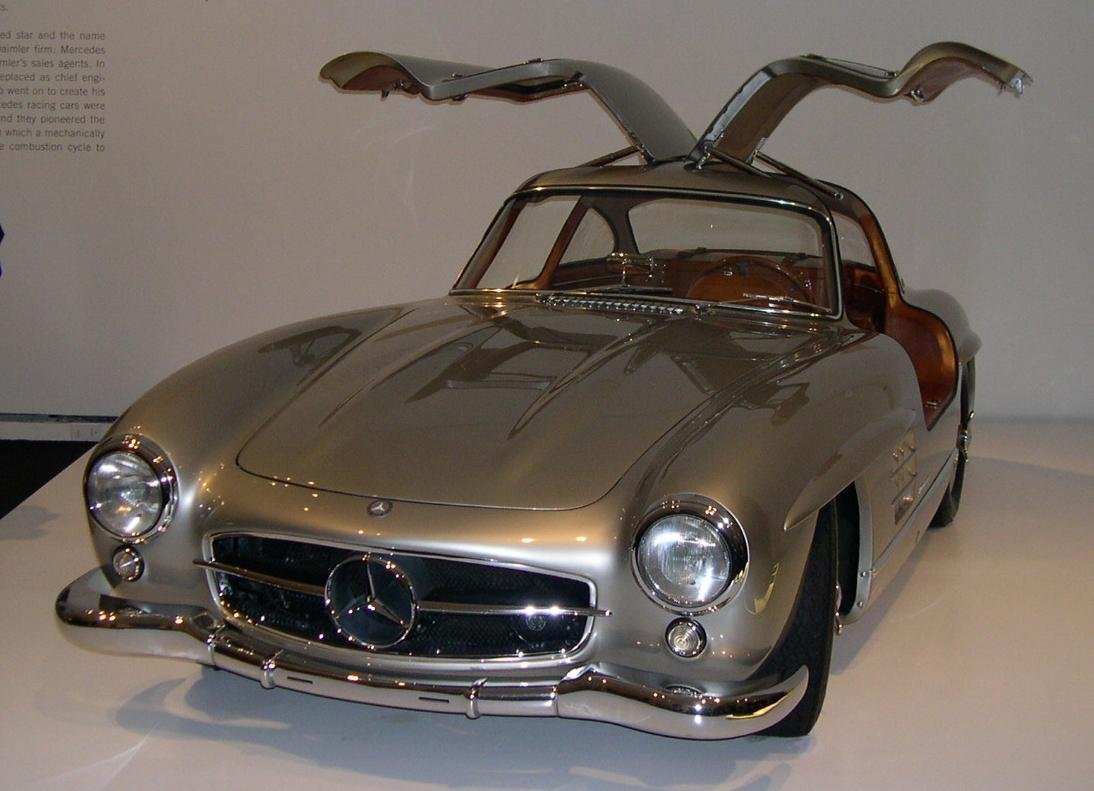
Gullwing doors hinge along the roofline and swing upward instead of outward, opening like a bird's wings, most famously on the Mercedes-Benz 300SL and DeLorean DMC-12.
Gullwing doors are hinged at the roof rather than at the front or rear of the door frame, so they open by rotating upward rather than swinging outward like a conventional door. The design takes its name from its resemblance to a gull's wings spread in flight. Because the doors pivot up rather than out, gullwing cars can open fully in tighter parking situations than a conventional door would allow, though the doors typically require significant vertical clearance above the vehicle to open completely.
The Mercedes-Benz 300SL, introduced in 1954, is the design's most famous origin point; the doors were adopted partly out of necessity, since the 300SL's tubular racing-derived chassis had high door sills that made conventional doors impractical, and gullwing doors solved the packaging problem while creating a dramatic visual signature. The DeLorean DMC-12, built in the early 1980s and later immortalized in the Back to the Future film series, is the design's other iconic application, and the layout has since appeared on limited-production and concept vehicles from manufacturers including Mercedes-Benz itself in later models like the SLS AMG.
Gullwing doors present engineering tradeoffs beyond their dramatic entrance, including the need for robust hinge and strut hardware to support the door's weight overhead, more complex sealing to keep the cabin watertight without a conventional door frame, and safety considerations around exiting the vehicle if it rolls onto its roof or side. These challenges are part of why the design has remained rare and largely reserved for halo and limited-production models rather than mainstream cars.