What is Double Wishbone?
Double wishbone is a suspension design using two triangular control arms per wheel, offering more precise geometry control than a MacPherson strut.
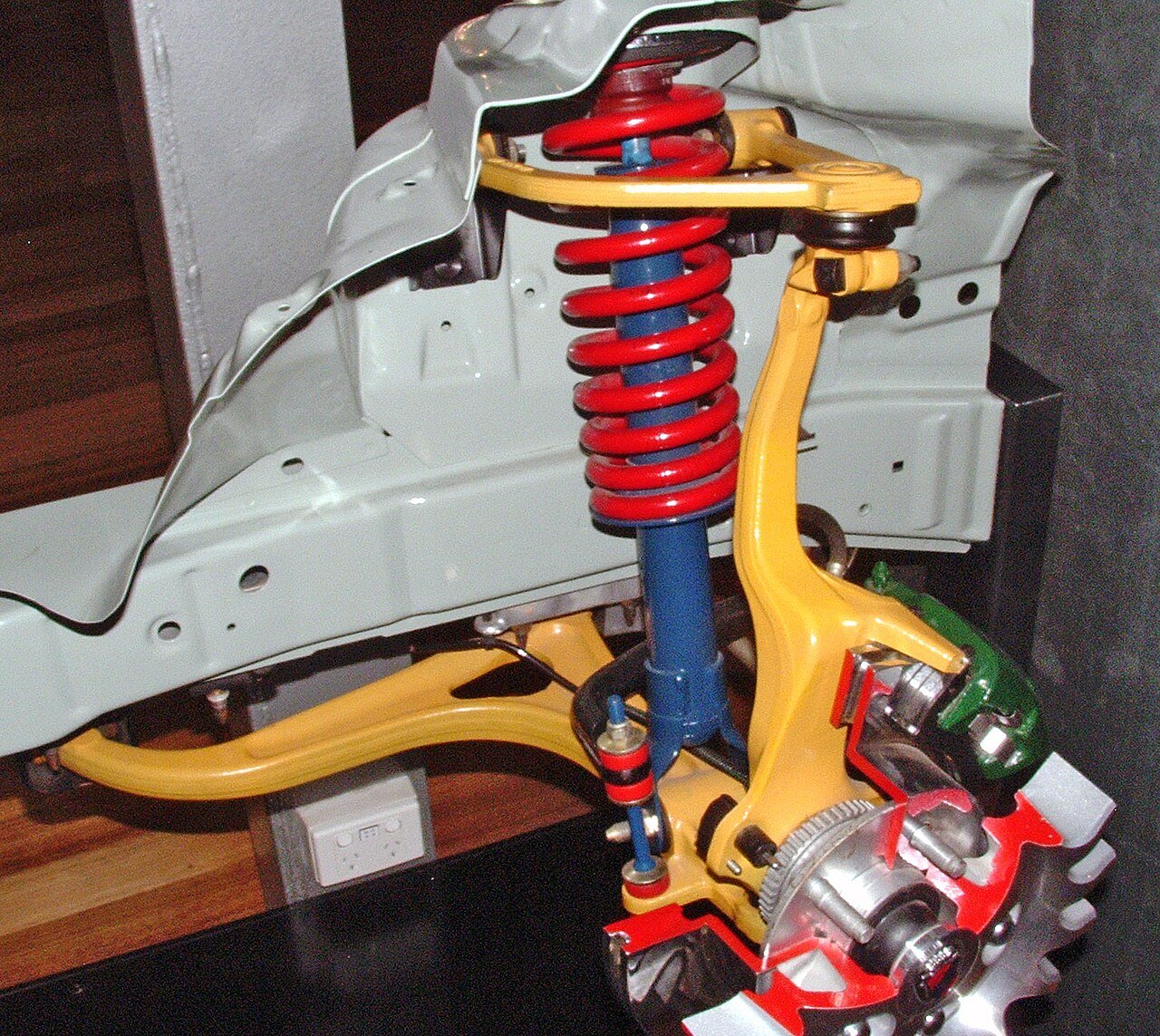
Double wishbone suspension, also called A-arm or unequal-length control arm suspension in some configurations, uses two separate triangular arms, an upper and a lower, to locate each wheel. Each wishbone pivots on the chassis at two points and connects to the wheel hub, allowing engineers to control how the wheel moves relative to the road surface with more precision than single-arm designs.
Because the upper and lower arms can be different lengths and angles, engineers have more freedom to fine-tune how camber, caster, and other geometry values change as the suspension compresses and extends through its travel. This allows a double wishbone setup to maintain more of the tire's contact patch with the road during hard cornering or braking, which is a major reason the design is favored in performance and motorsport applications.
The tradeoff for this added control is complexity and space; double wishbone suspension requires more components and generally more room than a MacPherson strut design, which adds cost and can be harder to package in smaller vehicles. As a result, double wishbone suspension tends to appear more often on rear-wheel-drive performance cars, luxury vehicles, and dedicated race cars, where the handling benefits are considered worth the added engineering and packaging demands.