Smart Fortwo
Smart
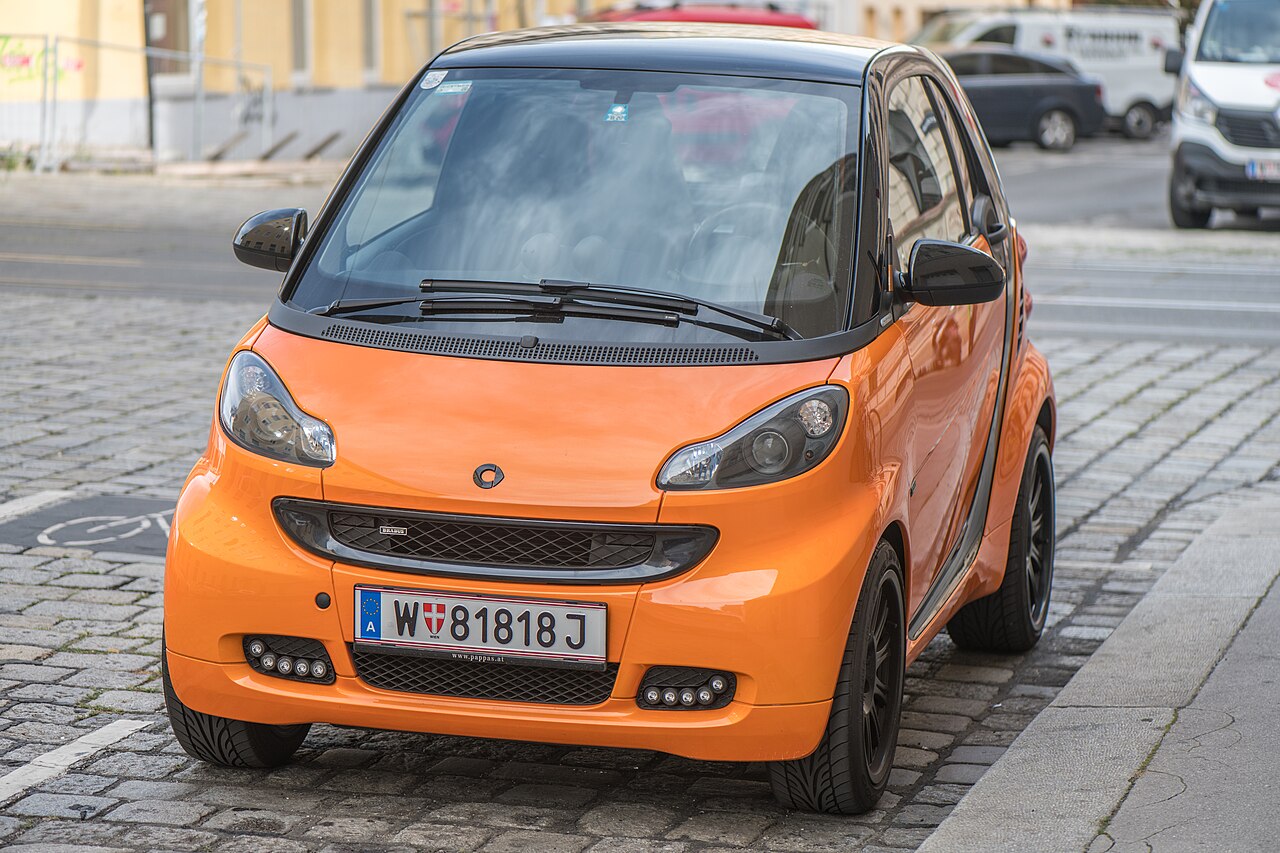
Smart Fortwo: The Original Tiny City Car
The Fortwo is the two-seat microcar that launched Smart in 1998 and became the defining symbol of ultra-compact city motoring.
The Smart Fortwo debuted in 1998 as the first product of the Mercedes-Benz and Swatch joint venture, and it was unlike anything else on the road. At barely over eight feet long, it could park nose-first into curbside spaces that would swallow half a normal car, and its tight turning circle made weaving through narrow European city streets effortless. The tridion safety cell, a rigid steel structure surrounding the two-seat cabin, let Smart make bold safety claims despite the car's tiny footprint.
Early Fortwo models used small gasoline engines tuned for efficiency rather than speed, and the car became a familiar sight in cities like Rome, Paris and London where parking space is scarce and every inch matters. Smart later introduced the EQ Fortwo, a fully electric version that kept the same city-first mission while replacing the combustion engine with a battery and electric motor, quiet and well suited to short urban trips.
The Fortwo remains the car most people picture when they hear the Smart name, even though the brand has since moved on to larger electric crossovers under the Mercedes-Benz and Geely joint venture. Its legacy is a proof of concept: that a car built almost entirely around parking convenience and maneuverability could carve out a lasting niche in dense urban markets.