DuelsLeaderboardGarageBlogCarsGlossaryBrowse

Lexus LFA

Lexus

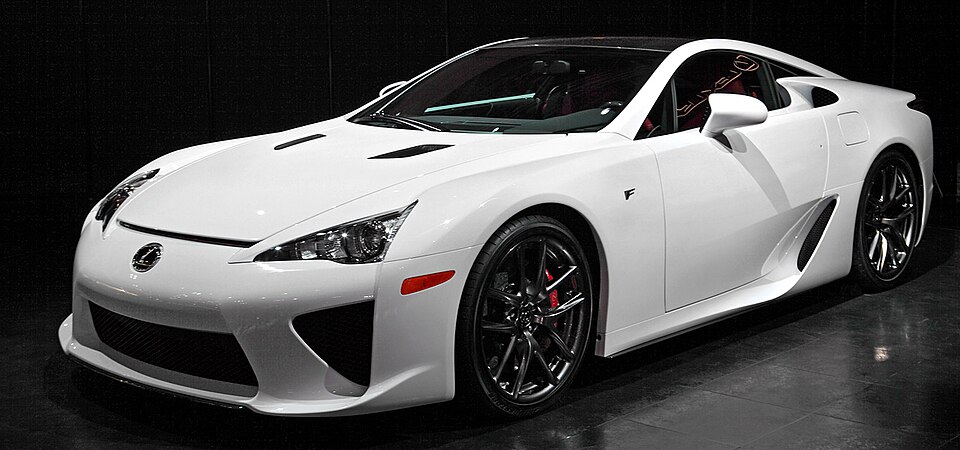
Lexus LFA: Lexus halo car (2010-2012). Bespoke 4.8 V10 (built with Yamaha) revs to 9,000 rpm. Carbon fiber tub. Only 500
Photo: Tennen-Gas / Wikimedia Commons · CC BY-SA 3.0

Lexus halo car (2010-2012). Bespoke 4.8 V10 (built with Yamaha) revs to 9,000 rpm. Carbon fiber tub. Only 500 units globally.

The Lexus LFA is a halo supercar produced from 2010 to 2012. The LFA was Lexus most ambitious project: a clean-sheet supercar with bespoke engineering rather than parts-bin construction. The 4.8-liter naturally aspirated V10 (developed jointly with Yamaha) revs to 9,000 rpm and produces 553 horsepower. Carbon fiber tub. Single-clutch automated manual transmission. Production was limited to 500 units globally. The LFA development began around 2000. The original prototype used aluminum but was scrapped in 2005 in favor of carbon fiber, pushing the program back five years. The V10 redline transition takes 0.6 seconds (faster than mechanical tachometer needles can follow), which is why Lexus used a digital display. The LFA is widely considered one of the great driver cars of any era. Reviewers consistently rank it among the best-sounding modern cars; the V10 at 9,000 rpm is widely considered the closest a road car has come to F1 sound. Reportedly Toyota lost money on every LFA despite the $375,000+ MSRP. On WhipJury, LFA submissions are extremely rare but reliably top voting on heritage and engineering alone.

LFA specifications

1LR-GUE 4.8L naturally aspirated V10, 553 horsepower at 8,700 rpm, 9,000 rpm redline. Carbon fiber tub. Curb weight around 3,500 pounds. Top speed 202 mph. Production: 500 units total (178 to North America). 50 of the production cars were Nurburgring Edition variants.

Frequently asked questions about Lexus LFA

Why did Toyota lose money on the LFA?
Bespoke engineering with no parts shared with other Toyota or Lexus models. The carbon fiber chassis required investment in dedicated weaving facilities. The V10 was built jointly with Yamaha at significant cost. The development took over a decade. Reportedly Toyota lost money on each LFA despite the $375,000 MSRP, but the technology developed influenced later Toyota and Lexus engineering.
How much does an LFA cost?
Used pricing: $700,000-$900,000+ for clean examples. Nurburgring Edition variants are at the higher end ($900,000-$1.2 million+). The LFA has appreciated significantly above its $375,000 MSRP and continues to climb.
Will Lexus make another LFA?
Lexus has shown the LFR concept and confirmed a successor is in development. The new car is expected to use a hybrid V8 powertrain related to the upcoming Toyota Le Mans Hypercar program. Production targeted for late 2020s; specific timing has not been announced.
Why is the LFA dashboard digital?
The V10 redline transition (idle to 9,000 rpm) takes 0.6 seconds, faster than mechanical tachometer needles can follow. Lexus designed a digital tachometer with multi-color display that can match the engine RPM rate. The digital display was a necessary engineering choice for the high-revving V10 character.
Is the LFA the best Lexus ever?
Among Lexus enthusiasts, often yes. The LFA represents the peak of Lexus engineering ambition. Combined with the bespoke V10 and carbon fiber chassis, the LFA stands apart from anything else Lexus has produced. The IS F, GS F, RC F, and LC 500 are excellent but the LFA is the recognized halo.

More on the Lexus LFA

The Most Overrated Car Designs of the Last 10 Years

Overrated doesn't mean ugly. It means the hype didn't match the reality. These are cars that got praised, won awards, moved units, and generated magazine covers, but when you really look at them, something is off. The proportions don't work. The details clash. The design made a promise it couldn't keep...

Other Lexus models

CTESGSGS FGXISIS 500IS FLCLSLXNX
More Lexus models