DuelsLeaderboardGarageBlogCarsGlossaryBrowse

Honda NSX

Honda

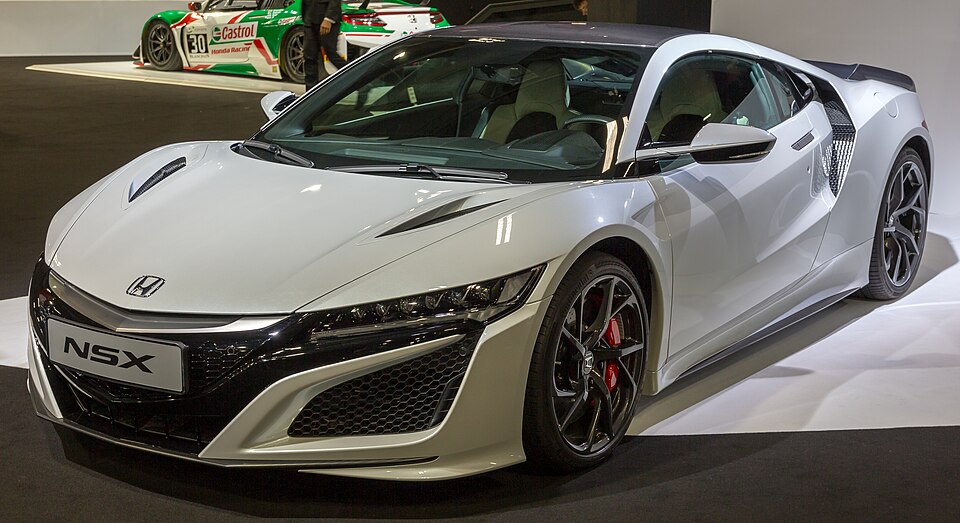
Honda NSX: The car that proved Japanese makers could build a true mid-engine supercar. Designed with input from Ayrton Se
Photo: Travis Rigel Lukas Hornung / Wikimedia Commons · CC BY 2.0

The car that proved Japanese makers could build a true mid-engine supercar. Designed with input from Ayrton Senna.

The Honda NSX (sold as Acura NSX in North America) is a mid-engine supercar produced from 1990 to 2005 (first generation, NA1 and NA2) and 2016 to 2022 (second generation, NC1). The original NSX was developed under code name HP-X and was the first production car to use an all-aluminum monocoque chassis extensively. The transverse-mounted C30A V6 made 270 horsepower in early NA1 cars, increasing to 290 in later NA2 examples. What set the NSX apart from contemporary supercars (Ferrari 348, Porsche 928, Lotus Esprit) was its drivability. NSX owners could daily drive their cars without drama. The aluminum chassis, sophisticated suspension geometry, and Honda engineering reliability made the car as easy to live with as a regular Acura sedan, while delivering supercar performance. Ferrari executives reportedly studied the NSX after launch and significantly improved the 355 in response. The Type R variants (NSX-R, NA1 1992 and NA2 2002) were the most extreme expressions. Stripped of interior weight, fitted with sport-tuned suspension and chassis, and finished in Championship White, the NSX-R is widely considered one of the great driver cars of any era. Production was limited; the 1992 NSX-R was 483 units, the 2002 NSX-R was 140 units. On WhipJury, NSX submissions are rare but always do well in voting. Both NA1 and NA2 generation cars appear; the NC1 (2016-2022) hybrid second generation has a smaller but growing presence. Clean Championship White or Long Beach Blue examples reliably top voting.

The first NSX (NA1, NA2)

NA1 (1990-2002). Original NSX. Aluminum monocoque, C30A V6 (3.0 liter, 270 horsepower). Five-speed manual or four-speed automatic. Pop-up headlights through 2001.

NA2 (1997-2005). Refresh. C32B V6 (3.2 liter, 290 horsepower in some markets). Six-speed manual replaced five-speed. Various other refinements. Pop-up headlights replaced with fixed headlights from 2002 model year.

Type R variants (1992 and 2002). NSX-R is the focused track-oriented variant. Stripped interior, lighter wheels, sport suspension, Championship White paint. Limited production (483 units of 1992 NSX-R, 140 units of 2002 NSX-R).

Second-generation NSX (NC1, 2016-2022)

Hybrid powertrain: twin-turbo V6 plus three electric motors making around 573 horsepower combined. Dual-clutch automatic. Carbon fiber chassis components. Heavier than the NA1 (3,803 lb vs 3,060) but more powerful and faster. Reception was mixed; the car was capable but lacked the original NSX cultural significance.

NSX on WhipJury

NA1 and NA2 submissions are rare but always do well. Track-prepped builds (NSX with sticky tires, lower suspension, aero kit) are common. The Type R variants are unicorns. The community recognizes the NSX as one of the seminal Japanese cars and votes accordingly. NC1 second-generation cars are increasingly common as they age into the used market.
Frequently asked questions about Honda NSX

Why is the NSX so significant?
Multiple reasons. First production aluminum monocoque supercar. Reliability that matched Toyota economy cars while delivering supercar performance. Tuning input from Ayrton Senna. Pricing significantly below European competitors. The combination convinced the world that Japanese makers could build mid-engine supercars; subsequent Ferrari development was reportedly influenced.
How much does an NSX cost?
NA1 NSX: $80,000-$200,000+ depending on year and condition. NA2 NSX: $100,000-$300,000+. NSX-R variants: $400,000-$1,000,000+. NC1 second generation: $80,000-$150,000+. Pricing has been climbing; NSX Type R variants in particular are now collector items at any tier.
Are NSX cars reliable?
Yes, exceptionally for a supercar. The C30A and C32B engines are durable when maintained. The NSX has been famous for reliability throughout production. Common issues are timing belt service (every 60,000-90,000 miles), suspension wear at higher mileage, and occasional electrical issues. Many NA1 NSXs have crossed 200,000 miles on stock engines.
Did Senna really tune the NSX?
Yes. Ayrton Senna provided feedback on chassis tuning during his time as a McLaren-Honda Formula 1 driver. Senna drove the NSX prototype at Suzuka and at the Nürburgring, providing input that influenced the final suspension geometry. Various Honda engineers have confirmed the Senna involvement; the input was meaningful, though the basic NSX architecture preceded his involvement.
Is the second-generation NSX really an NSX?
Subjective. The NC1 (2016-2022) is mechanically very different from the original (hybrid V6 vs naturally aspirated V6, dual-clutch vs manual, carbon fiber chassis vs aluminum). Whether it qualifies as a true successor is debated. Critics argue it lacks the original NSX simplicity and analog character. Supporters argue it represents Honda modern engineering ambition.

More on the Honda NSX

The Honda Beat is a mid-engined roadster that revs to 8,500 and makes 63 horsepower

The Honda Beat is a mid-engined, rear-drive kei roadster with a 656cc triple that revs to 8,500 rpm, makes 63 horsepower, and weighs 1,680 pounds. Pininfarina drew it, Soichiro Honda approved it as his last car, and it's now legal to import into the US.

What Is VTEC, and why do people Yell about it?

VTEC is Honda's variable valve system, and it is why so many Honda engines feel like two engines in one: calm and efficient at low rpm, then suddenly frantic up top. That switch is the moment behind the famous meme, and here is what is actually happening when VTEC kicks in.

What is the Best Color for the Honda Civic Type R?

The Honda Civic Type R comes in five colors and the answer to which one is best is more settled than almost any other car color debate. It's Championship White. It has been Championship White...

Why Japanese Car Design Quietly Became the Best in the World

Japanese automakers have been quietly building the strongest design portfolio in the world, and the automotive press is only now catching up to what has been happening. This did not happen overnight. It is the result of a philosophy shift that started in Hiroshima with one mid-size brand and spread outward in ways that are still playing out...

Other Honda models

AccordBeatCityCivicCivic SiCivic Type RCR-VCR-XCR-ZDel SoleElement
More Honda models