Honda CR-X
Honda
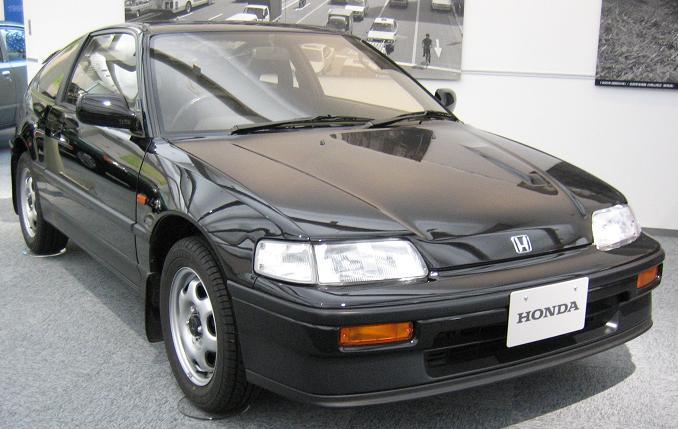
Honda's lightweight, two-seat sport hatchback. Three generations from 1983 to 1991, with the Si variant becoming a defining canyon weapon.
The Honda CR-X (originally Civic CR-X, sometimes written Honda CRX) is a small two-seat sport hatchback produced from 1983 to 1991 across two generations (with a third generation Del Sol from 1992-1997). The CR-X was Honda lightweight performance answer for the 1980s, weighing under 2,200 pounds and making 100-130 horsepower depending on variant. The first-generation CR-X (1983-1987) was based on the third-generation Civic platform. Two trims existed: the standard CR-X (with the lightweight focus) and the Si (Sport Injection) with fuel injection and slightly more power. The second-generation CR-X (1988-1991) was based on the fourth-generation Civic. The Si trim of this era used the D16A6 engine making 105 horsepower, with the chassis tuned for canyon and autocross performance. The CR-X became a defining canyon weapon of the late 1980s for West Coast enthusiasts. The combination of light weight, balanced chassis, and rev-happy Honda four-cylinder made it ideal for spirited mountain driving. The car also became a popular drag racing platform, with various engine swaps and forced induction extending the platform performance ceiling significantly. The Del Sol (1992-1997) replaced the CR-X but with a removable Targa-style roof rather than a hatchback. The Del Sol was less successful than the original CR-X and is generally considered a less focused product despite its name connection. On WhipJury, CR-X submissions are common, particularly the second-generation Si and various JDM imports (CR-X SiR with B16A engines). The cars have become cult classics with a dedicated owner community.
The CR-X generations
First-generation (1983-1987). Based on third-generation Civic platform. Three trims (basic CR-X, HF for fuel economy, Si with fuel injection). The Si is the performance-focused variant.
Second-generation (1988-1991). Based on fourth-generation Civic platform. The breakthrough generation. Si variant uses D16A6 engine making 105 horsepower (slightly more in JDM Si variants).
Del Sol (1992-1997). Replaced CR-X with Targa-roof concept. Different character; generally less respected than original CR-X.
The Si chassis
The CR-X Si chassis was light and balanced. Double-wishbone suspension front, multilink rear. Curb weight around 2,200 pounds. The combination of light weight and the rev-happy D16A6 engine produced exceptional acceleration relative to the engine output. The chassis has been the foundation for countless modified builds, including B-series and K-series engine swaps.
CR-X on WhipJury
Second-generation Si submissions are most common. JDM CR-X SiR cars (with B16A engines) appear regularly. Modified builds with engine swaps, suspension upgrades, and OEM-plus styling are popular. The cars have a dedicated owner community that values both authenticity and creative modification.