Honda Beat
Honda
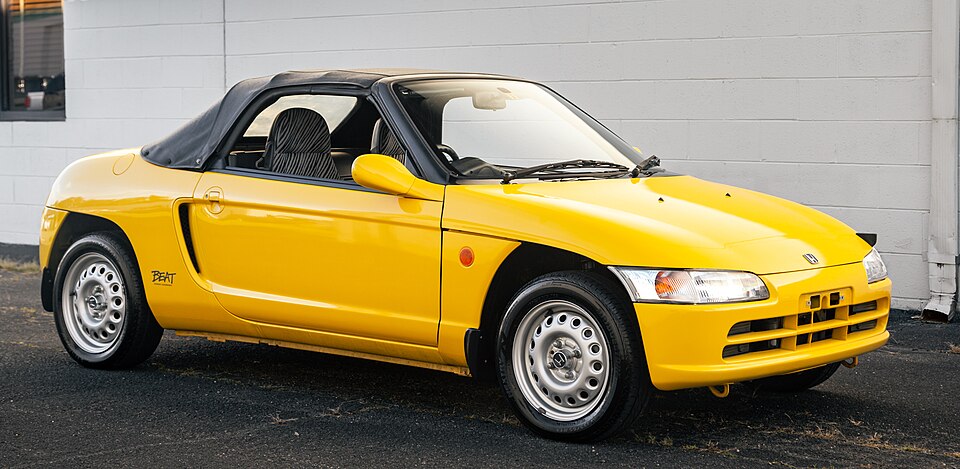
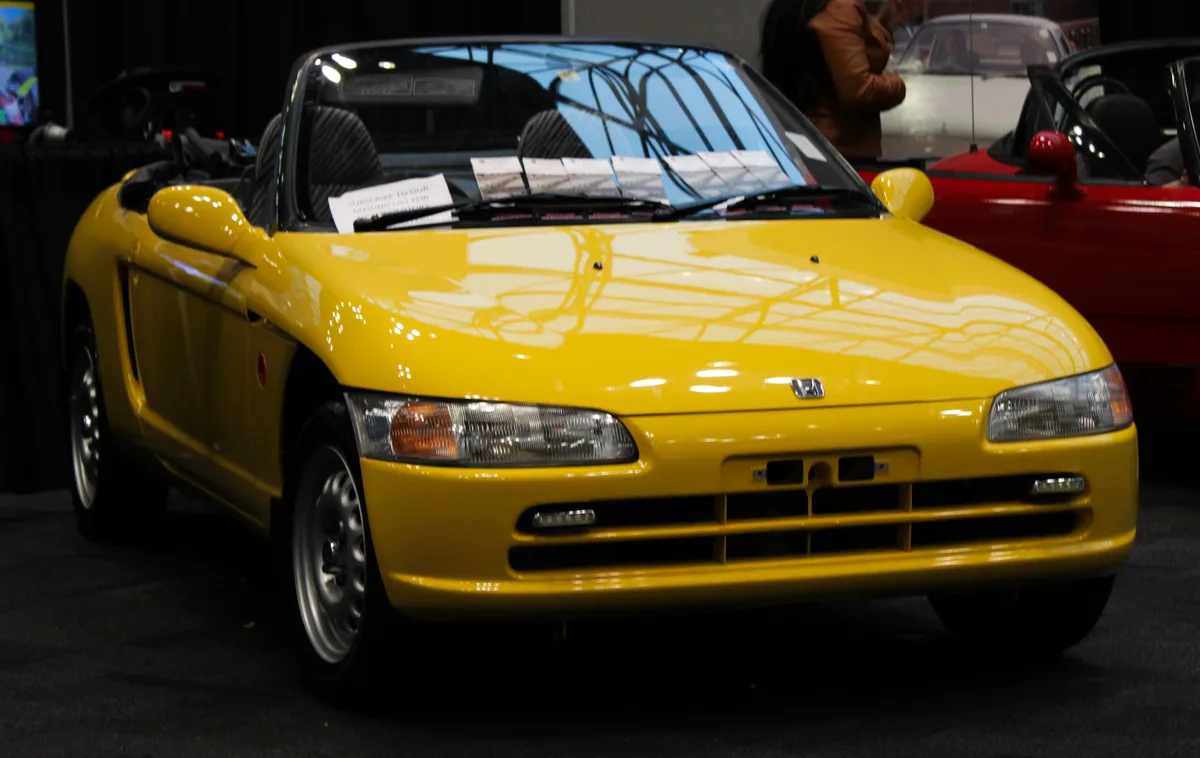
Honda's mid-engine kei sports car. 656cc three-cylinder behind the seats, rear-drive, manual only. The original kei sports trio with the Cappuccino and AZ-1.
The Honda Beat is a mid-engine kei sports car produced from 1991 to 1996, exclusively for the Japanese market. The car was developed within the Japanese kei vehicle classification, which limits engines to 660cc displacement and overall dimensions. Despite the strict regulatory constraints, the Beat is a genuine sports car: mid-engine layout, rear-wheel drive, naturally aspirated three-cylinder engine, and only manual transmission available. The Beat used a Honda E07A 656cc three-cylinder engine making 64 horsepower (the kei output cap). The engine sits transversely behind the seats, driving the rear wheels through a five-speed manual transmission. Suspension is independent front (MacPherson struts) and rear (multilink), allowing genuine sports car handling balance. The chassis weighs around 1,675 pounds, providing one of the best power-to-weight ratios available in factory specification. The Beat was one of the three Japanese kei sports cars of the early 1990s (alongside the Suzuki Cappuccino and the Mazda Autozam AZ-1). The trio defined the kei sports car category and remains highly regarded among enthusiasts of focused, lightweight, mid-engine cars. Production ended in 1996 with no successor; the Honda S660 (2015-2022) revived the kei sports car concept but at a different scale. On WhipJury, Honda Beat submissions are rare in North America. With the 25-year import rule satisfied since 2016, more Beats are appearing. The cars are increasingly sought after by enthusiasts who appreciate genuine kei sports car character.
The Beat formula
Mid-engine layout (rare in any market, particularly in a kei car). Rear-wheel drive. Naturally aspirated three-cylinder making 64 horsepower at 8,100 rpm. Five-speed manual only. Curb weight around 1,675 pounds. The combination produces a remarkably balanced and engaging driving experience despite modest performance numbers.
The kei sports car trio
The Beat was one of three Japanese kei sports cars from the early 1990s. The Suzuki Cappuccino used a turbocharged three-cylinder. The Mazda Autozam AZ-1 used a turbocharged three-cylinder with gullwing doors. Each of the three has dedicated enthusiast followings; the Beat is the only naturally aspirated of the three.
Beat on WhipJury
Honda Beat submissions are rare in North America given the limited import volumes. JDM imports of Beat (and broader kei car community) are growing as the cars become legal under the 25-year rule. Modified Beats (with displacement increases, turbo conversions, or chassis upgrades) appear occasionally and reliably do well on rarity alone.