DuelsLeaderboardGarageBlogCarsGlossaryBrowse

Scandinavian flick

Car culture term

Scandinavian flick
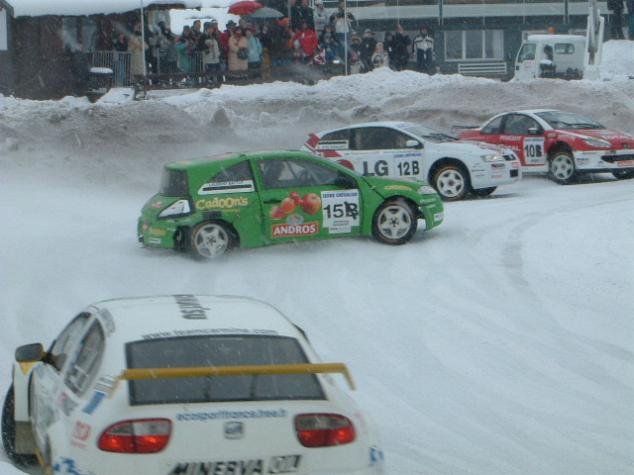
Photo: Benj05 / Wikimedia Commons · CC BY-SA 3.0

What is Scandinavian flick?

A rally driving technique where the driver intentionally flicks the steering opposite of the corner direction before turning in, using weight transfer to rotate the car.

Scandinavian flick is a rally driving technique where the driver makes a quick steering input opposite to the desired corner direction before turning into the corner. The brief opposite-direction input causes the rear of the car to slide outward; when the driver then steers into the corner, the rear continues sliding while the front grips, rotating the car around its center of gravity. The technique allows fast cornering with the car rotating into the corner direction.

The technique originated in Nordic rally driving (hence "Scandinavian"), where drivers needed to handle low-grip surfaces (gravel, snow, ice) at high speeds. On low-grip surfaces, the technique works without significant tire stress. On high-grip surfaces (tarmac, dry asphalt), the technique still works but generates more tire wear. Modern rally drivers use Scandinavian flicks routinely on gravel and snow stages.

The technique is also used in some drift applications. The initial opposite-direction input establishes drift angle, and the driver then maintains the slide through the corner. Some Scandinavian flick drift entries are dramatic and crowd-pleasing. The technique requires significant practice; misjudged Scandinavian flicks can cause spins or off-track excursions.

Related terms

DriftGymkhanaHeel-toe

Frequently asked questions

Where did the Scandinavian flick come from?
Nordic (Scandinavian) rally driving culture. Drivers in Sweden, Finland, Norway, and Iceland needed techniques to handle gravel, snow, and ice on rally stages. The flick was developed as an effective way to rotate the car into corners without scrubbing speed. The technique became globally popular through international rally championships.
Does Scandinavian flick work on tarmac?
Yes, but with more tire wear. The technique works on any surface where the rear can break grip during the initial flick. On gravel and snow, the rear slides easily and the technique flows naturally. On tarmac, more dramatic input is required and tire wear is significantly higher. The technique is used in tarmac rally but is more demanding.
Is Scandinavian flick the same as Pendulum turn?
Pendulum turn is the broader technique of using weight transfer to rotate the car. Scandinavian flick is a specific application of pendulum turning, using the brief opposite-direction steering input to initiate the rotation. The terms are sometimes used interchangeably; some drivers distinguish between them based on the specific technique mechanics.
Can I do Scandinavian flick in any car?
Most performance cars and rally cars can perform the technique. AWD cars often work better because the flick benefits from the four-wheel grip recovery after the initial slide. RWD cars work but require more skill to maintain control. The technique is essentially a chassis dynamics maneuver applicable to most cars with reasonable suspension.
Is Scandinavian flick necessary in modern rally?
Yes, in many situations. Modern WRC and other rally driving still uses Scandinavian flicks routinely on gravel, snow, and ice. The technique remains the fastest way to rotate the car into many corners on low-grip surfaces. On tarmac stages, the technique is used selectively. Top rally drivers include the technique in their fundamental skill set.
Back to Glossary