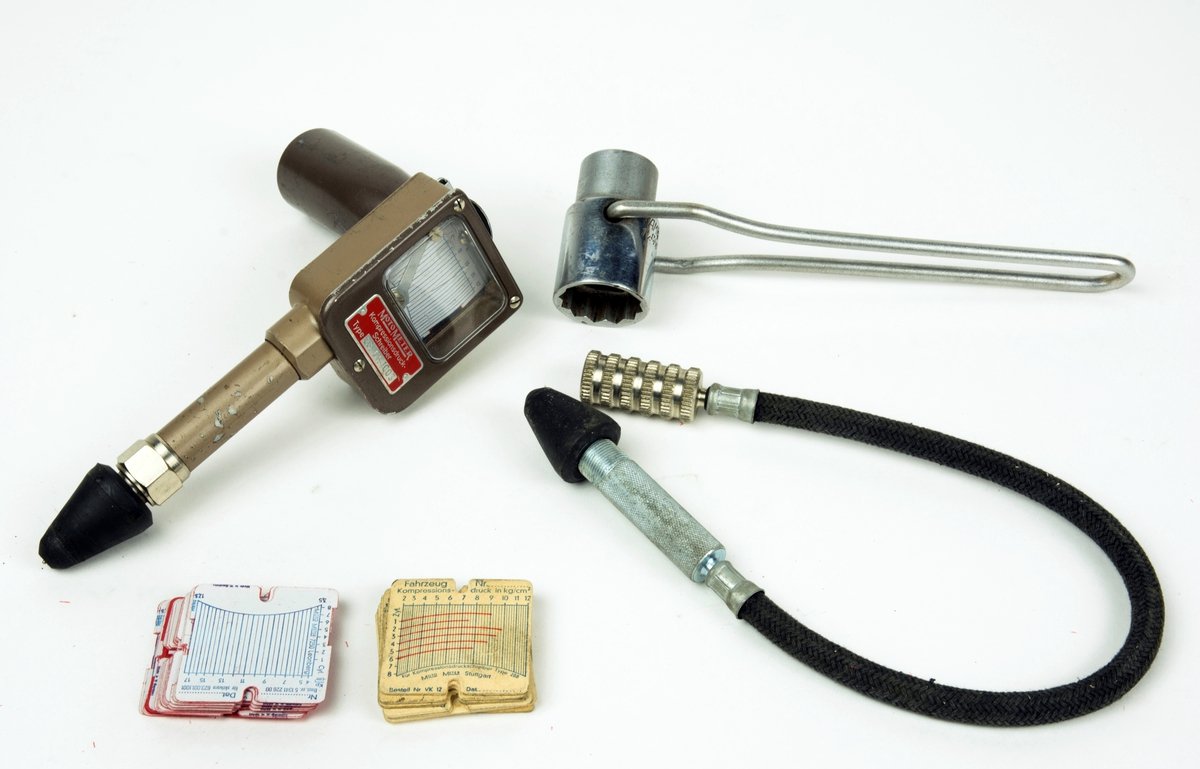
What is Compression test?
Measuring cylinder compression pressure to assess engine health. Compares each cylinder peak pressure to identify problems.
Compression test is a diagnostic procedure that measures the maximum compression pressure in each engine cylinder during the compression stroke. The test reveals problems with valve seating, piston rings, or head gasket sealing. Each cylinder is measured individually; comparison between cylinders identifies which cylinders may have problems.
The test is performed with the engine warm but not hot. The spark plug is removed, a compression gauge is installed in the spark plug hole, and the engine is cranked while measuring the peak pressure. Healthy cylinders typically reach 150-180 PSI (varies by engine compression ratio). Differences between cylinders larger than 10-15% suggest problems. Cylinders below 100 PSI typically indicate serious problems requiring further investigation.
The compression test alone doesn't diagnose specific problems but indicates which cylinders need investigation. A wet compression test (oil added to the cylinder before testing) helps differentiate between piston ring problems (compression improves with oil) and valve sealing problems (compression doesn't improve with oil). Combined with leakdown tests and other diagnostics, compression testing helps identify specific engine repair needs. The cost of a compression test is typically $50-$150 in shop labor, or DIY with the right gauge.