DuelsLeaderboardGarageBlogCarsGlossaryBrowse

Plymouth Superbird

Plymouth
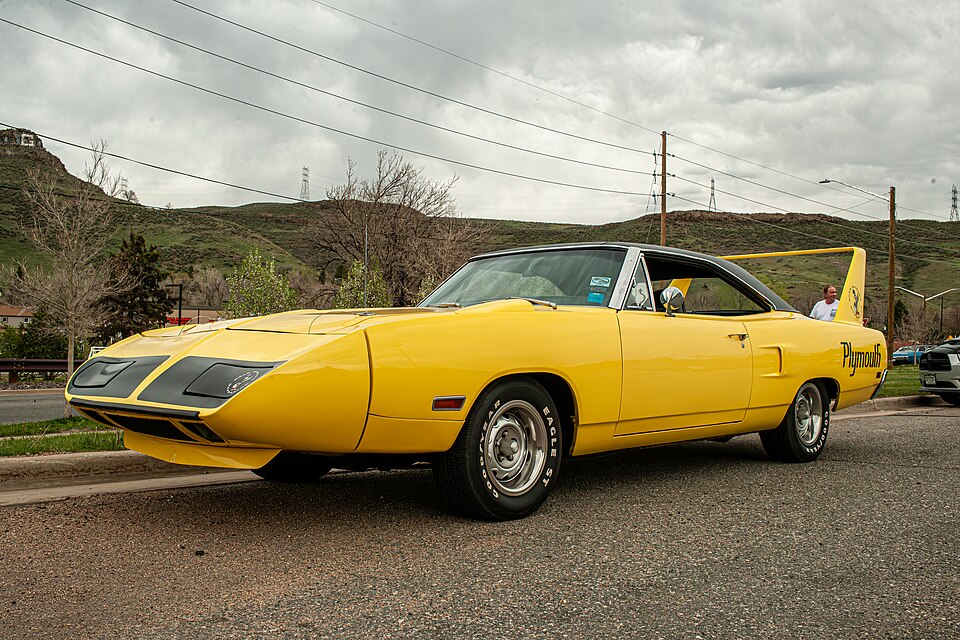
Plymouth Superbird: Plymouth's NASCAR homologation special (1970). Aerodynamic nose cone and tall rear wing. One of the most visua
Photo: BUTTON74 / Wikimedia Commons · CC BY-SA 4.0

Plymouth's NASCAR homologation special (1970). Aerodynamic nose cone and tall rear wing. One of the most visually distinctive American cars ever produced.

The Plymouth Road Runner Superbird is a NASCAR homologation special produced for the 1970 model year. The aerodynamic nose cone (designed in a wind tunnel) and the tall rear wing were required to compete with the Dodge Charger Daytona in NASCAR. NASCAR rules required Plymouth to sell at least 1,920 production Superbirds (one for every two dealers). Sales were initially slow because the cars were perceived as ugly and impractical for street use. Today, of course, the Superbird is one of the most collectible American cars ever produced. The wing-and-nose-cone aesthetic is the most visually distinctive American car ever made. The cars have been continuously celebrated as Mopar engineering ambition. Engine options ranged from the 440 to the 426 Hemi. The Hemi Superbird is the most desirable variant. Modern Superbird prices have appreciated dramatically; clean examples sell for $250,000-$1 million+ depending on engine and condition. On WhipJury, Superbird submissions are extremely rare but always memorable. The visual signature ensures strong voter response when they appear.

Superbird specifications

1970 model year only. NASCAR homologation special. Aerodynamic nose cone, tall rear wing. Engine options: 440 Six Pack, 440 Magnum, 426 Hemi. Production: approximately 1,935 units total. Convertible variant was not produced (NASCAR allowed only coupe).

Frequently asked questions about Plymouth Superbird

Why does the Superbird have the nose cone?
Aerodynamic optimization for NASCAR competition. The nose cone reduces drag at high speed; the tall rear wing provides downforce. Both were developed in wind tunnel testing. The combination allowed Plymouth to compete with the Dodge Charger Daytona at high-speed NASCAR tracks.
Was the Superbird actually fast?
In NASCAR trim, yes. Superbird road cars were essentially Road Runner coupes with the aerodynamic body kit fitted. Engine options ranged from the 440 to the 426 Hemi. The street car was fast but not dramatically faster than a comparable Road Runner. The aerodynamic body was designed for high-speed NASCAR use, not street driving.
How much does a Superbird cost?
Used pricing varies dramatically by engine and condition. 440 Six Pack Superbird: $150,000-$350,000+. 426 Hemi Superbird: $400,000-$1.5 million+. Numbers-matching examples and unique provenance command premiums. Pricing has been climbing steadily.
Were Superbirds banned from NASCAR?
NASCAR effectively ended the era of homologation specials after 1970 by changing the rules to discourage extreme aerodynamic packages. The Superbird and Charger Daytona were among the last NASCAR homologation specials of the type. Modern NASCAR uses more standardized car bodies.
Is the Superbird related to the Roadrunner?
Yes. The Superbird is based on the Plymouth Road Runner with the aerodynamic body kit added. The Road Runner was the affordable muscle car (intended to be cheap and fast). The Superbird took the Road Runner platform, added the aerodynamic package for NASCAR homologation, and created one of the most recognizable American cars ever produced.

Other Plymouth models

BarracudaBreezeCudaDusterFuryGTXLaserNeonProwlerRoad RunnerSatelliteValiant
More Plymouth models